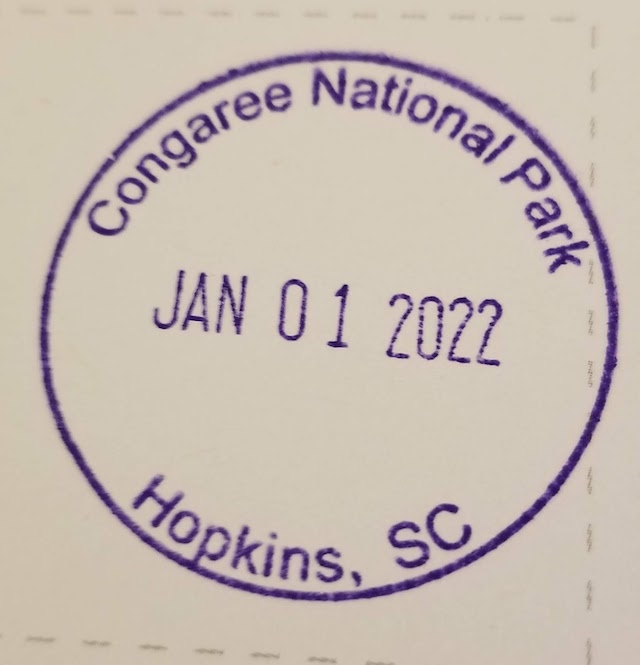
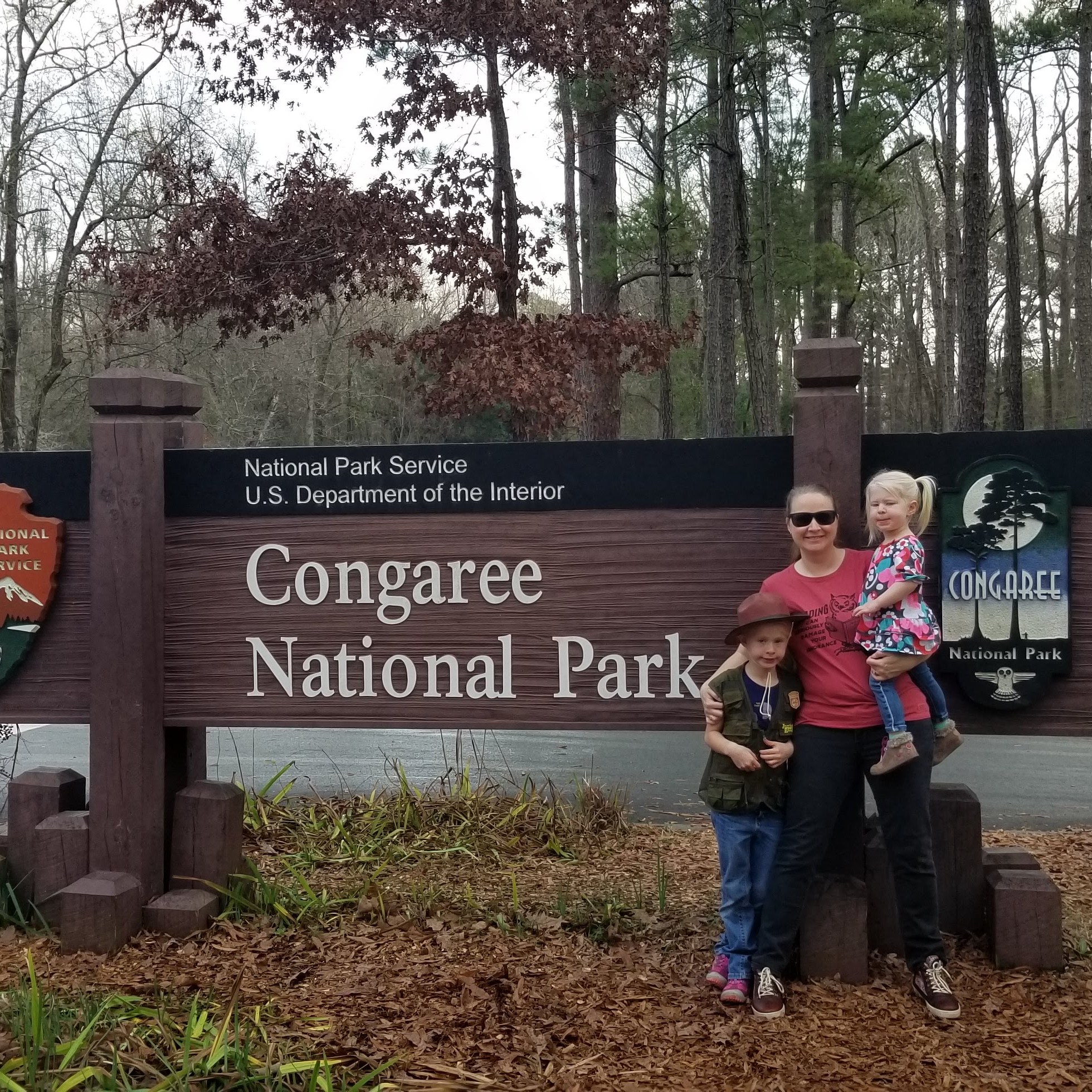
We live in Columbia, SC, which is just a few minutes away from Congaree National Park. We’ve been here many times, but today (January 1, 2022) was the first time we’ve been since acquiring our National Park passport. We love being so close to a national park, and one of the rangers is also a member of our church.
While there is signage on the interstate pointing you in the direction of the park, it’s definitely an out-of-the-way place. Famed for having the largest tract of old-growth bottomland hardwood forest in the country, it’s a place that is full of new things to see each time you visit.
One of our favorite visits was in May of 2019 when we were able to see the synchronous fireflies, something that must be seen to believe. Imagine being in a forest surrounded by fireflies that are all lighting up in unison. Eerie, enchanting, and mysterious all at the same time.
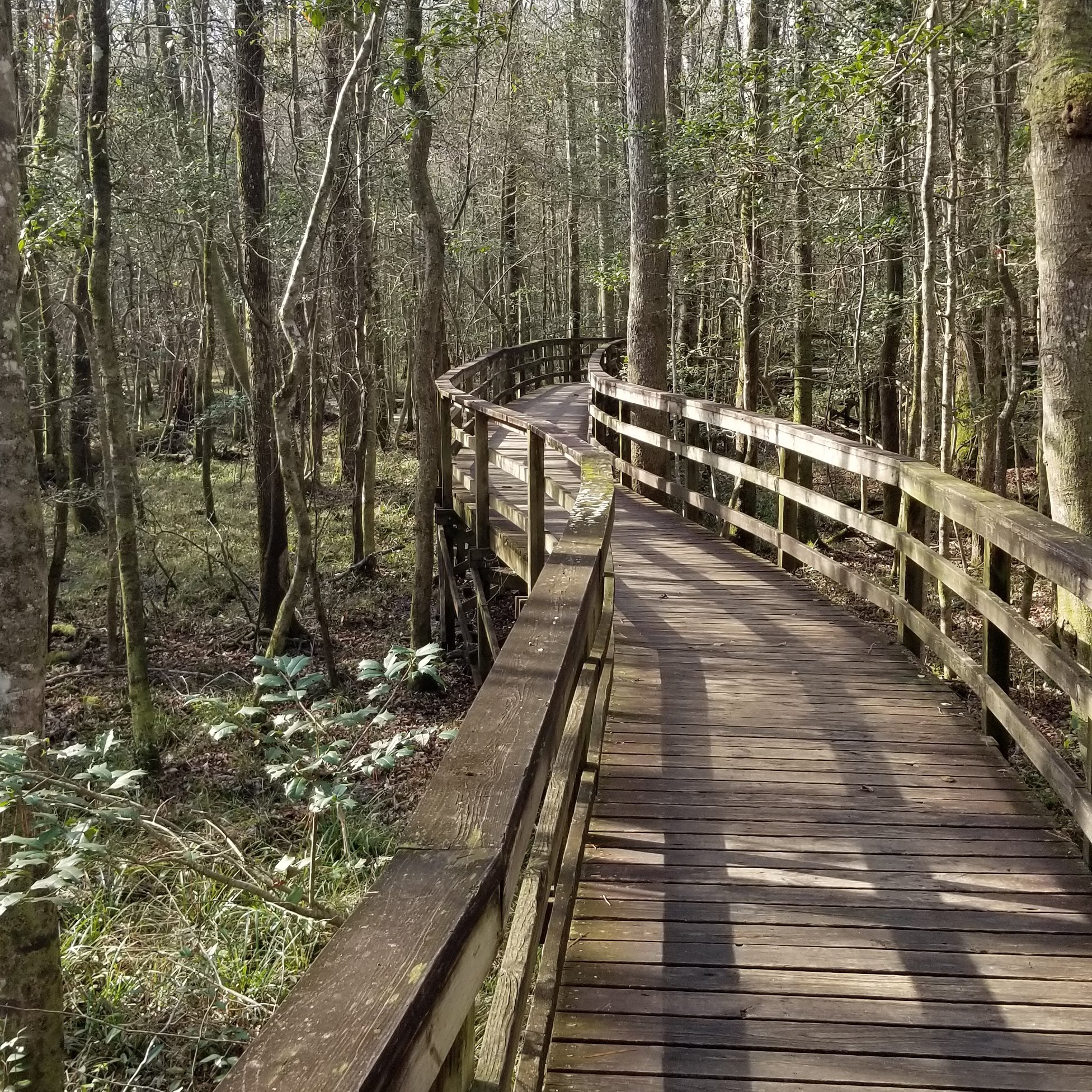
Because the park is located within the floodplain, we’ve been here when the lower boardwalk was completely submerged and inaccessible. Today, there was some visible water, but it has been very dry recently.
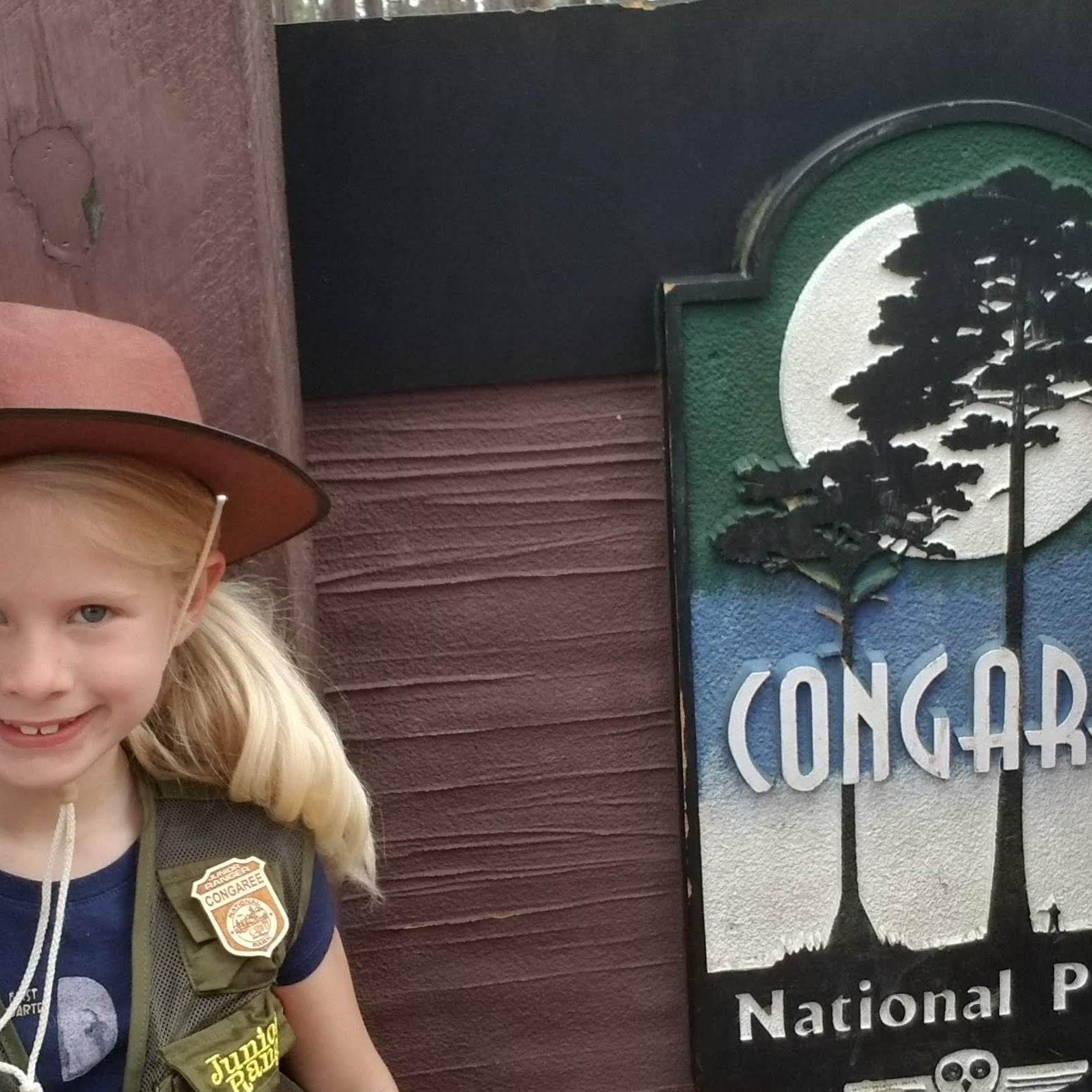
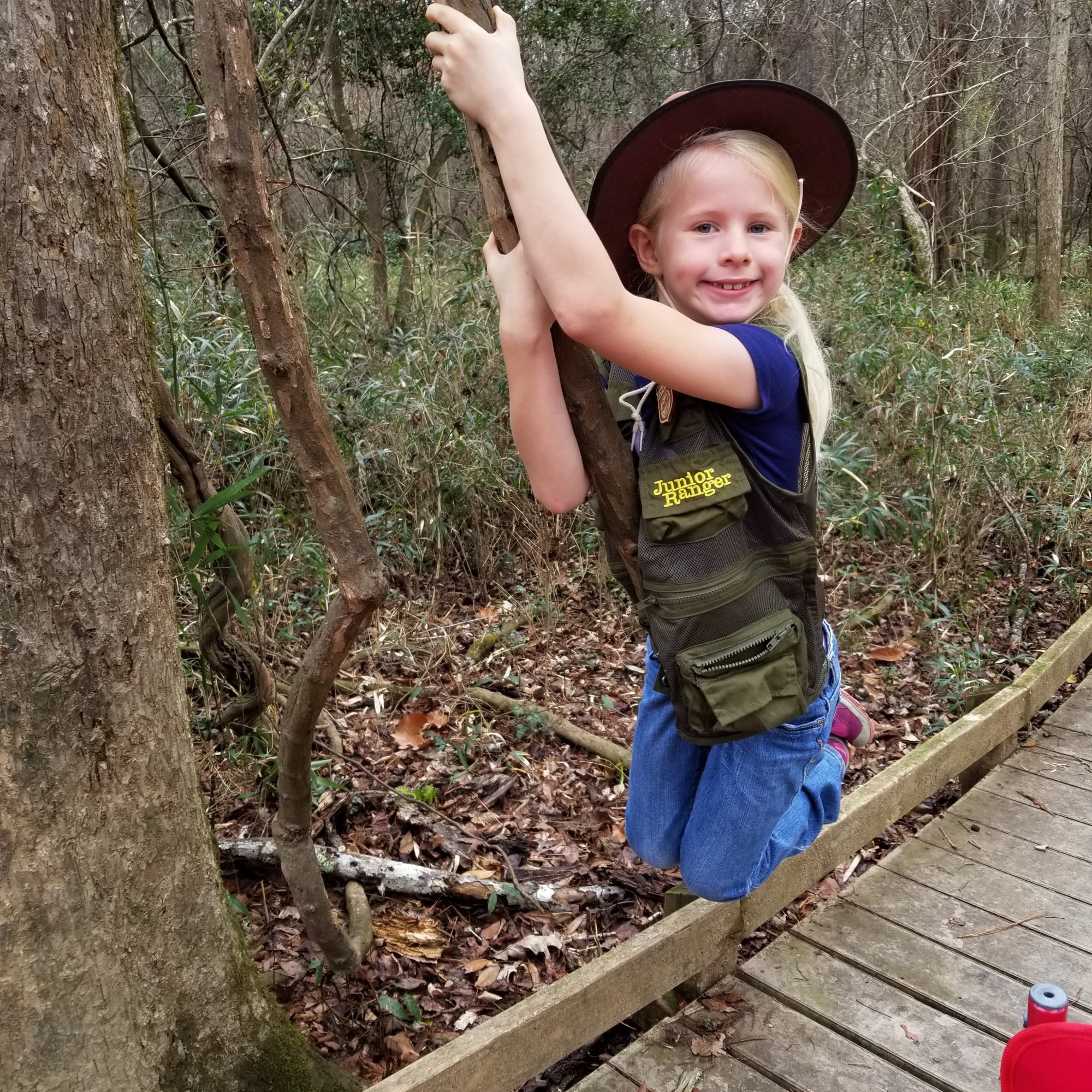
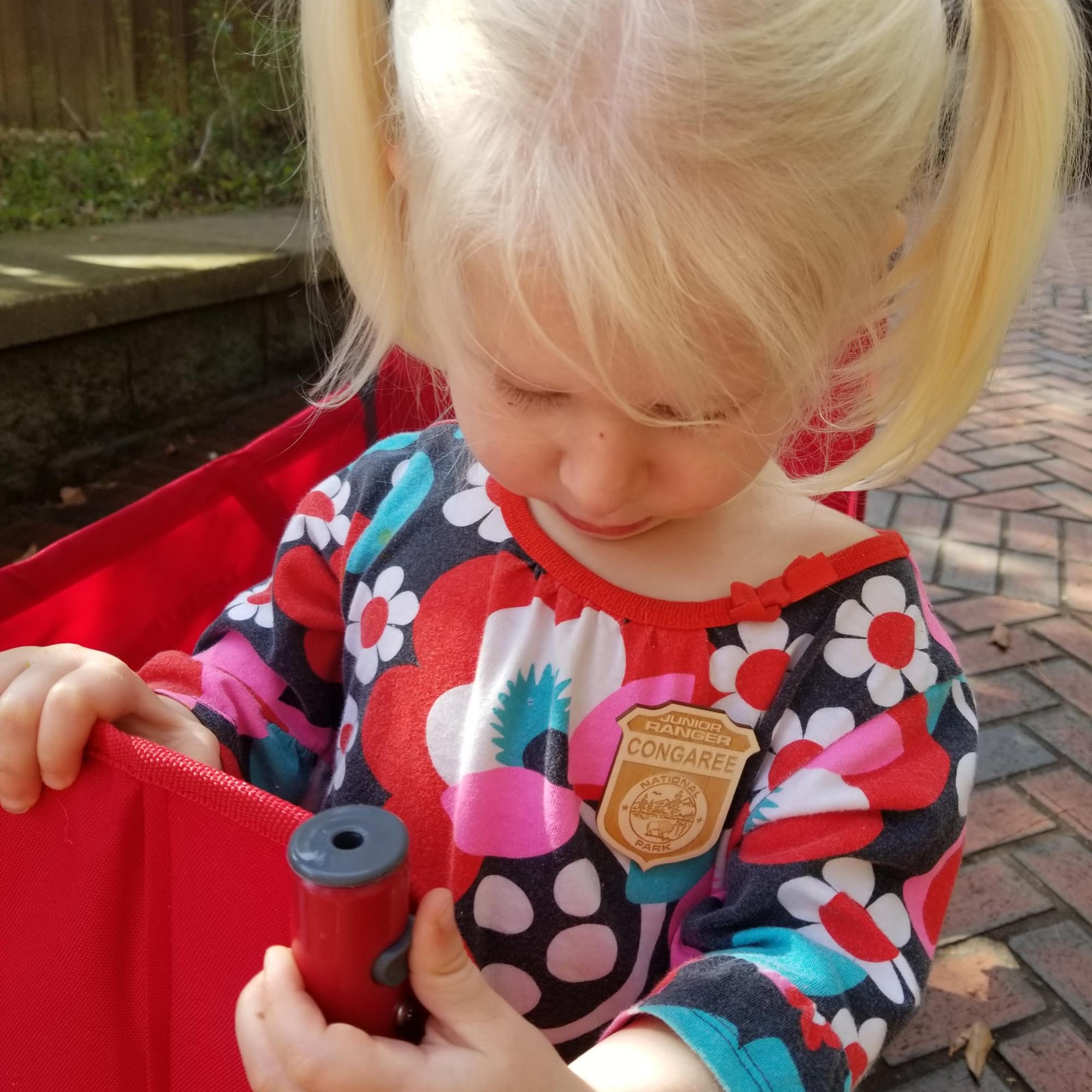
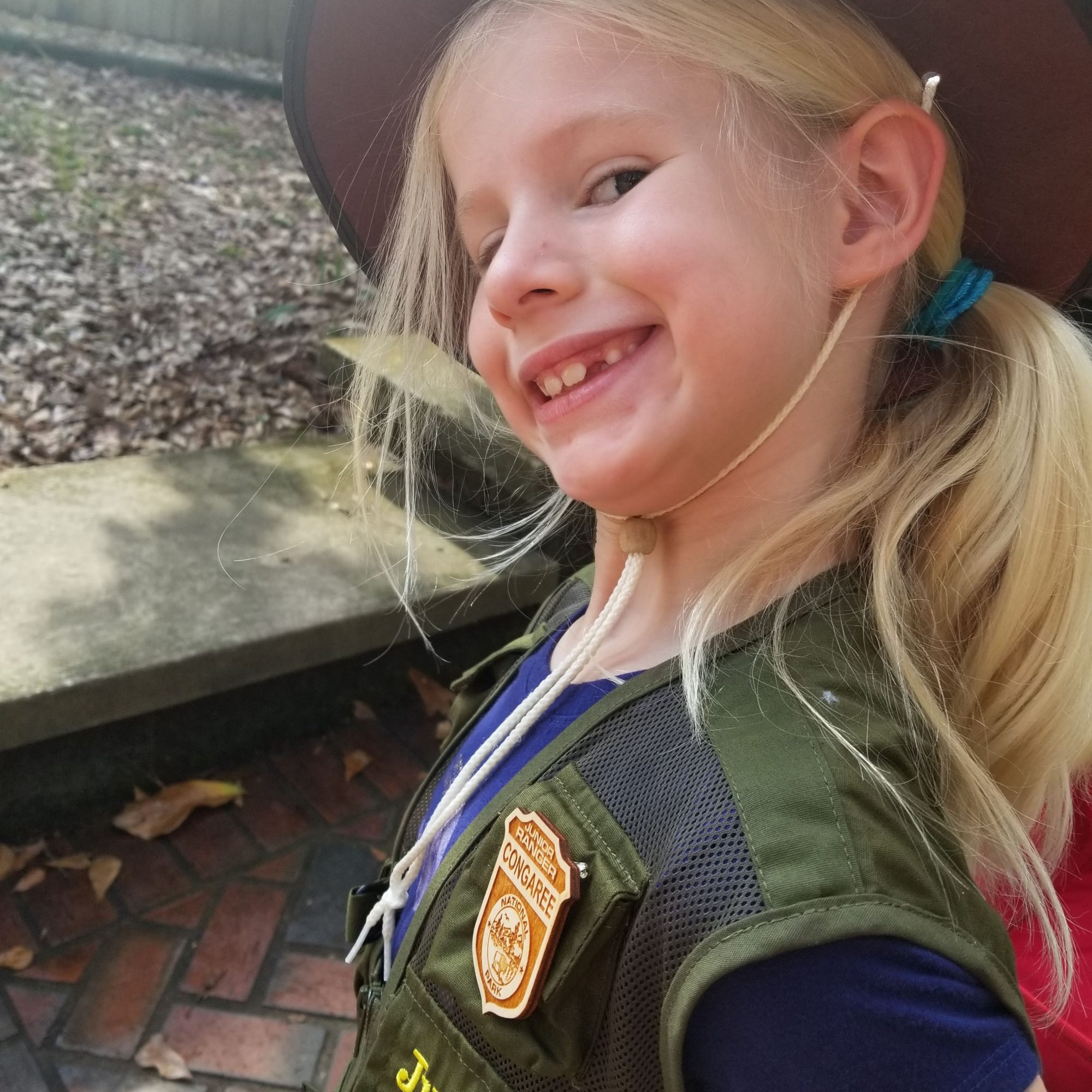
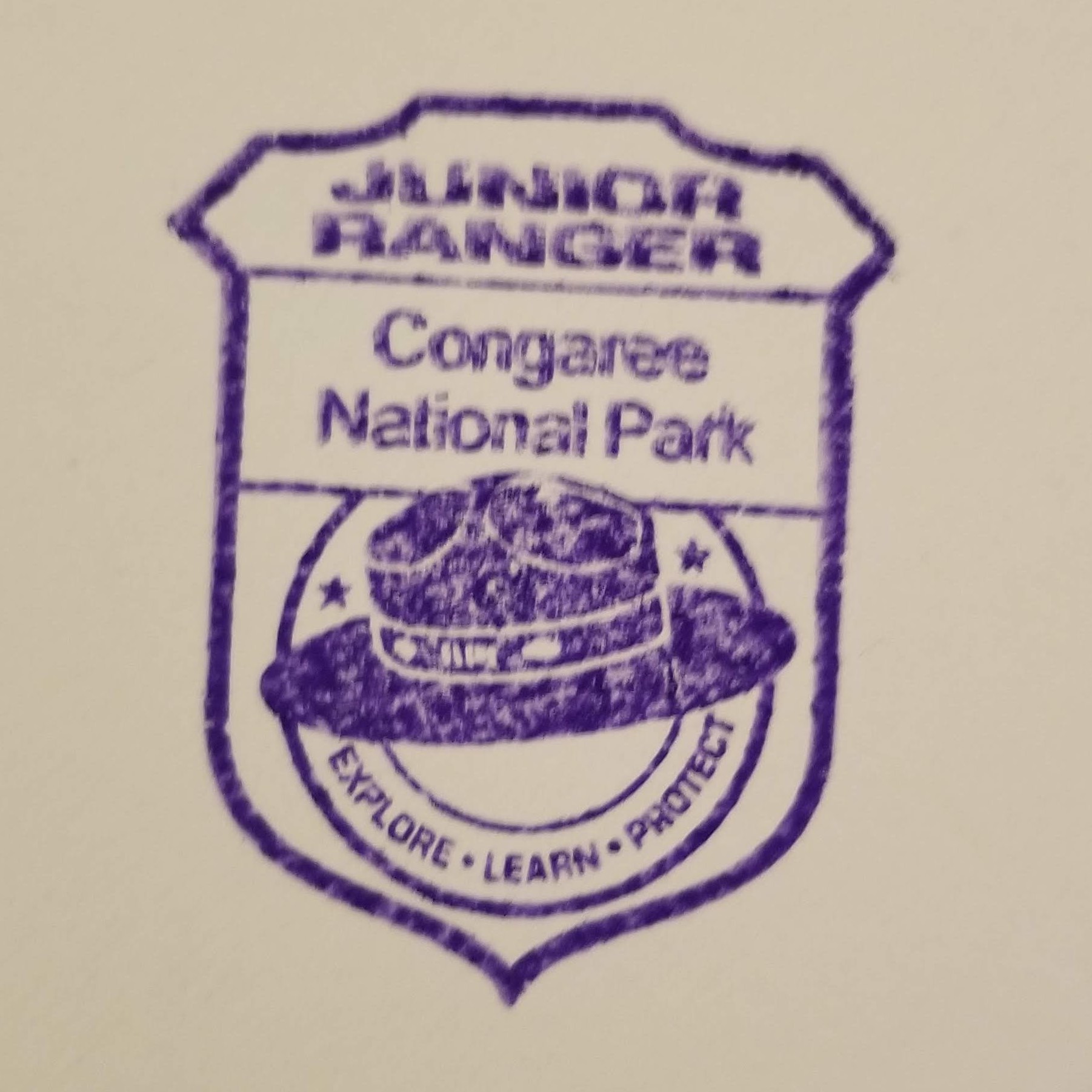
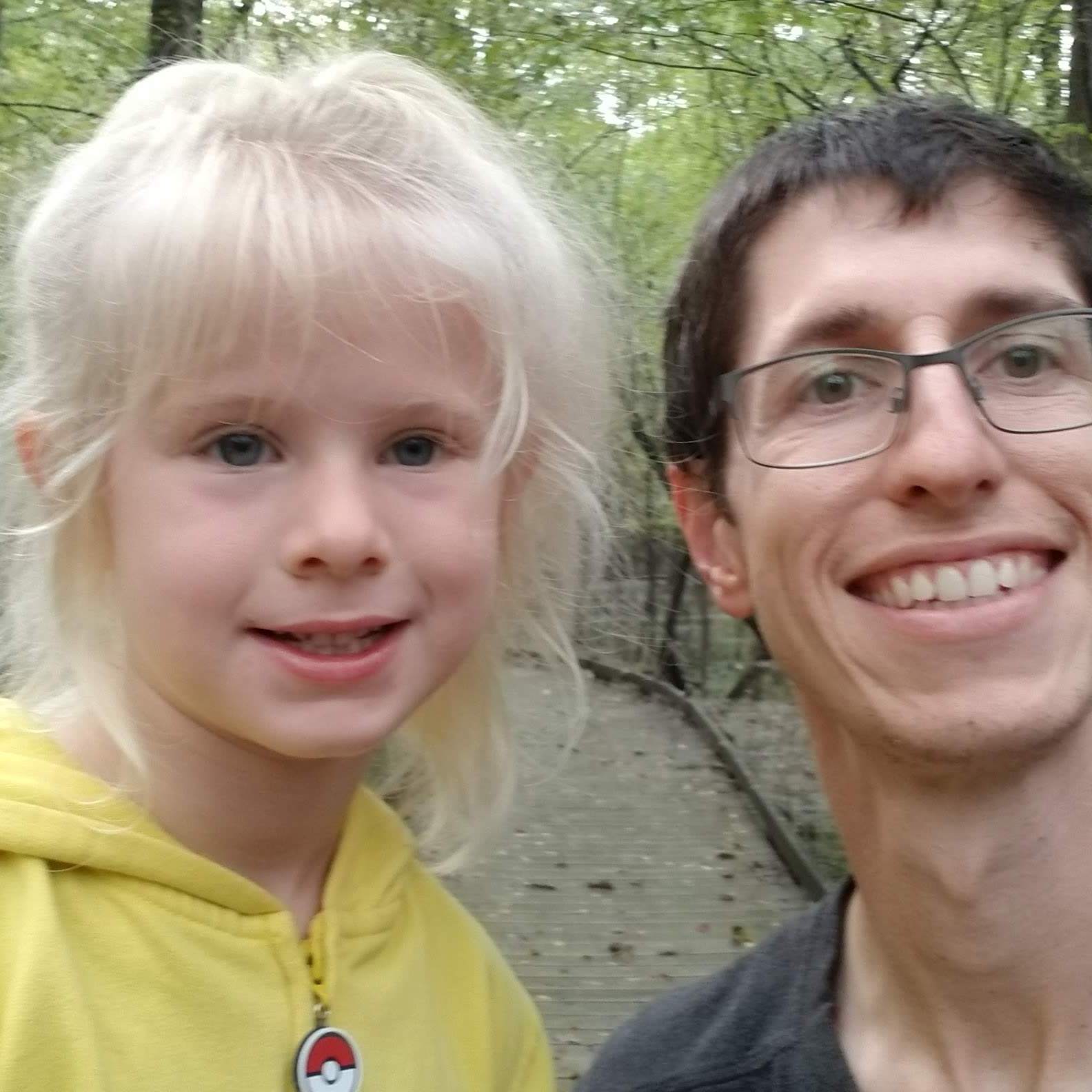
We came to the park today to take advantage of the First Day Hike that the park put on. Teagan sported her new Junior Ranger vest (thanks to a Christmas present from her grandma) and hat (thanks to the SC State Park Junior Ranger program). Teagan had completed the Junior Ranger booklet back in 2021, so she also had that badge proudly displayed on her vest, and she also got to put her first stamps in her Junior Ranger Passport. The attendant in the visitor’s center even gave Sage her own Junior Ranger badge today, and as soon as she’s a little older, I know she’ll be completing activities on her own!
(For those who aren’t aware, both the SC State Park system and most parks belonging to the National Park Service have a fantastic Junior Ranger program that allows anyone young or old to complete activities to learn about the parks and be sworn in as official Junior Rangers.)
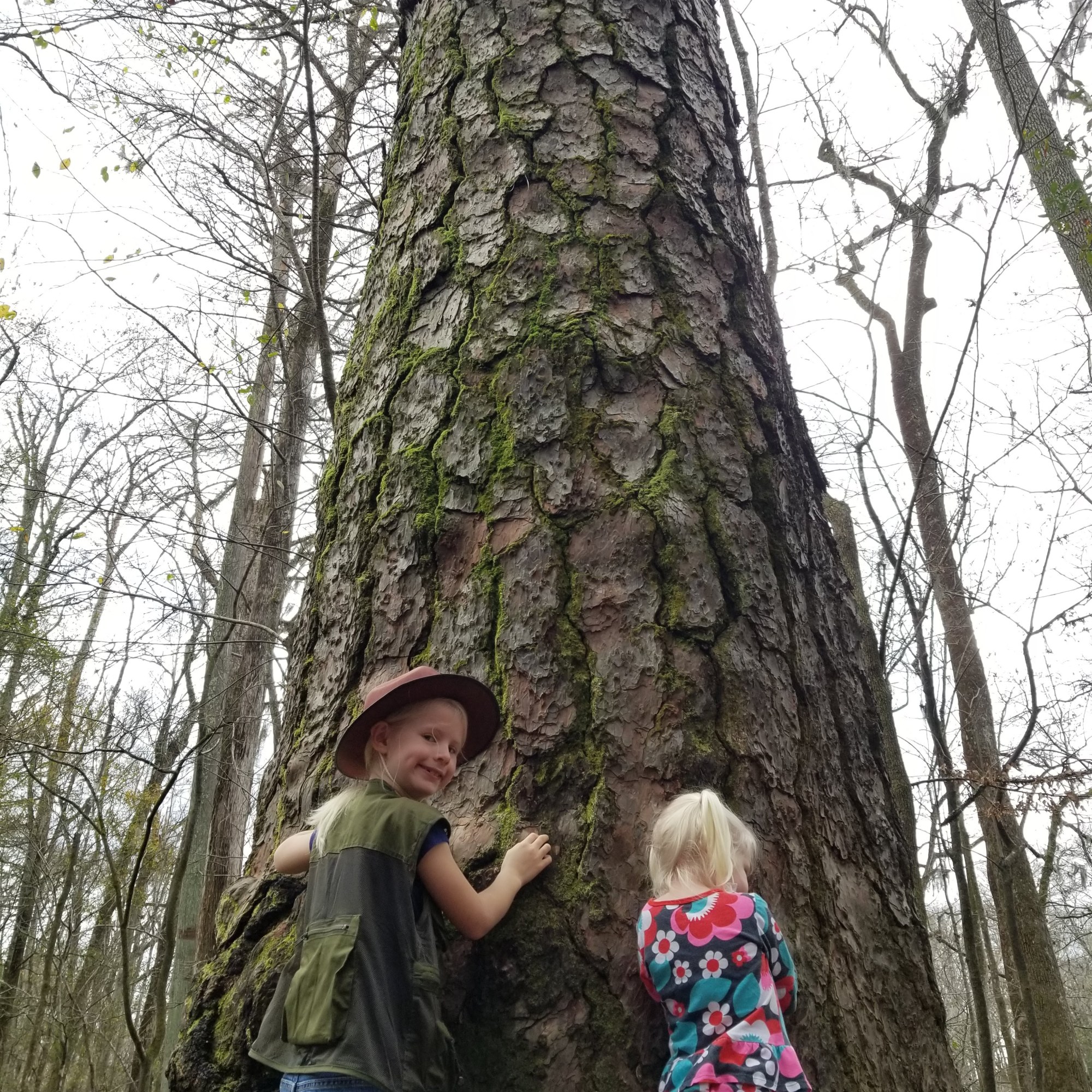
On the hike today, a park volunteer took us around the Boardwalk Loop. We stopped for a picture at one of the largest loblolly pine trees (near Weston Lake). We also learned about beech trees and how they don’t lose their brown leaves until the new ones emerge, as well as how the beech nut itself was ground for various purposes. Also, we learned that the famed bald cypress trees are called ‘bald’ because they do drop their needles.
No snakes today, though we did see a couple of large pileated woodpeckers. And though it was about 70 degrees on this way-too-muggy-to-be-January day, no mosquitoes could be found thankfully! In previous visits, we’ve seen red-bellied water snakes, some kind of owl, deer, a fox squirrel, various wading birds, and other wildlife. Hopefully at some point we’ll see otters! (And hopefully we won’t ever run into the wild pigs.)
We’ve never canoed in the park, but hopefully once Sage is bigger we can take a trip.
Interesting cultural history things to explore: Maroon communities (communities formed by runaway slaves), the 16th-century De Soto expedition and Cofitachequi
Have any of you ever visited this park? What did you think? Did you do anything else while you were in the Columbia area?
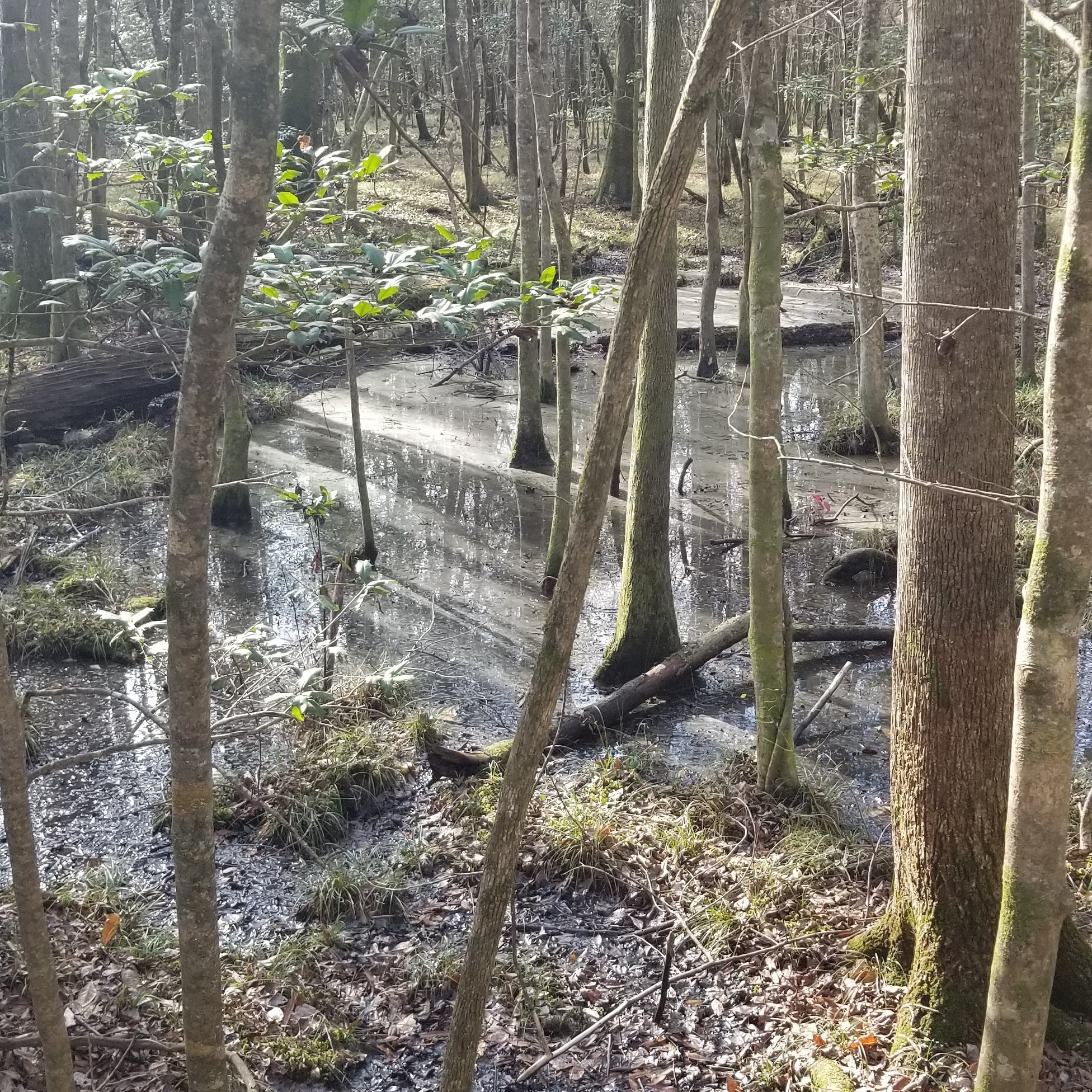
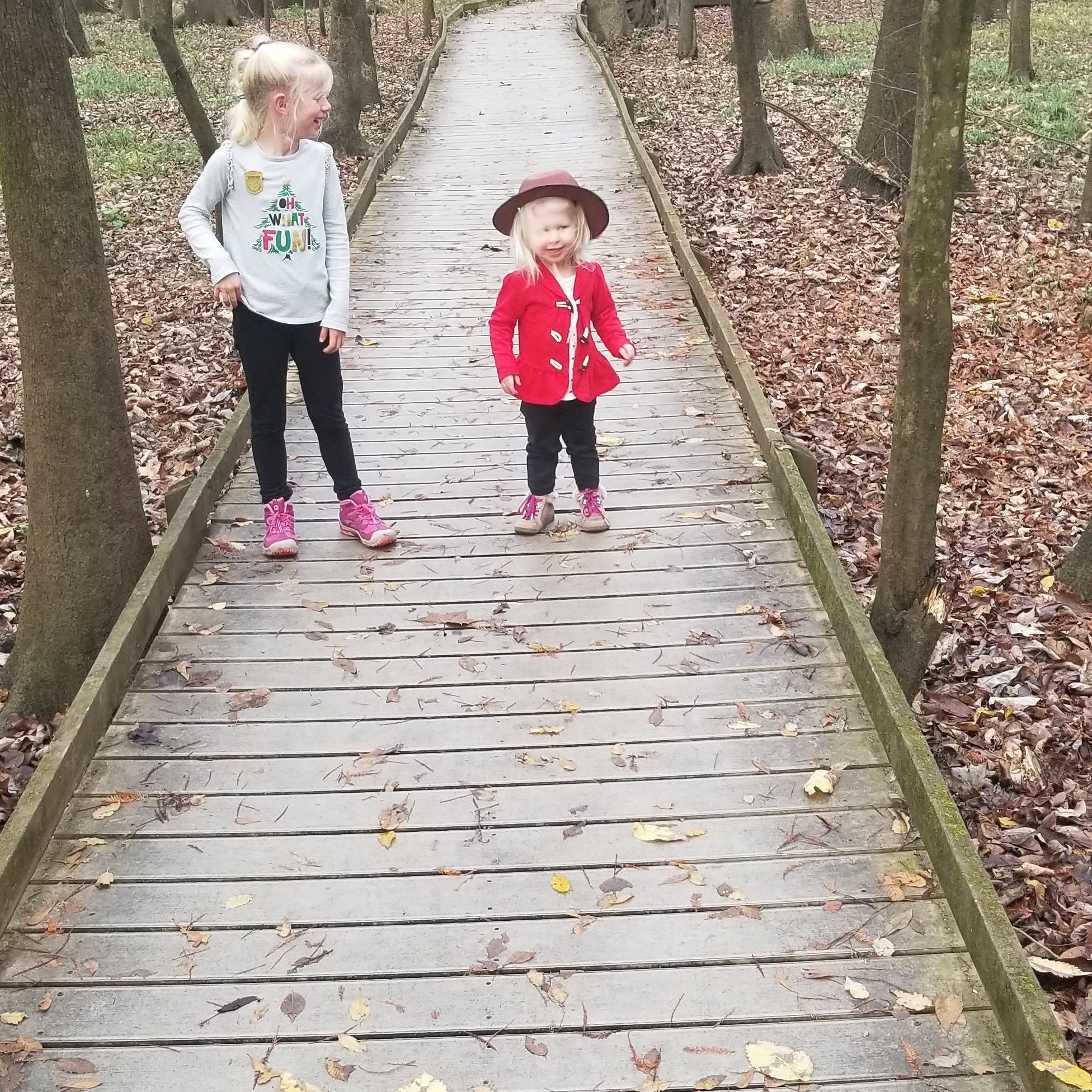
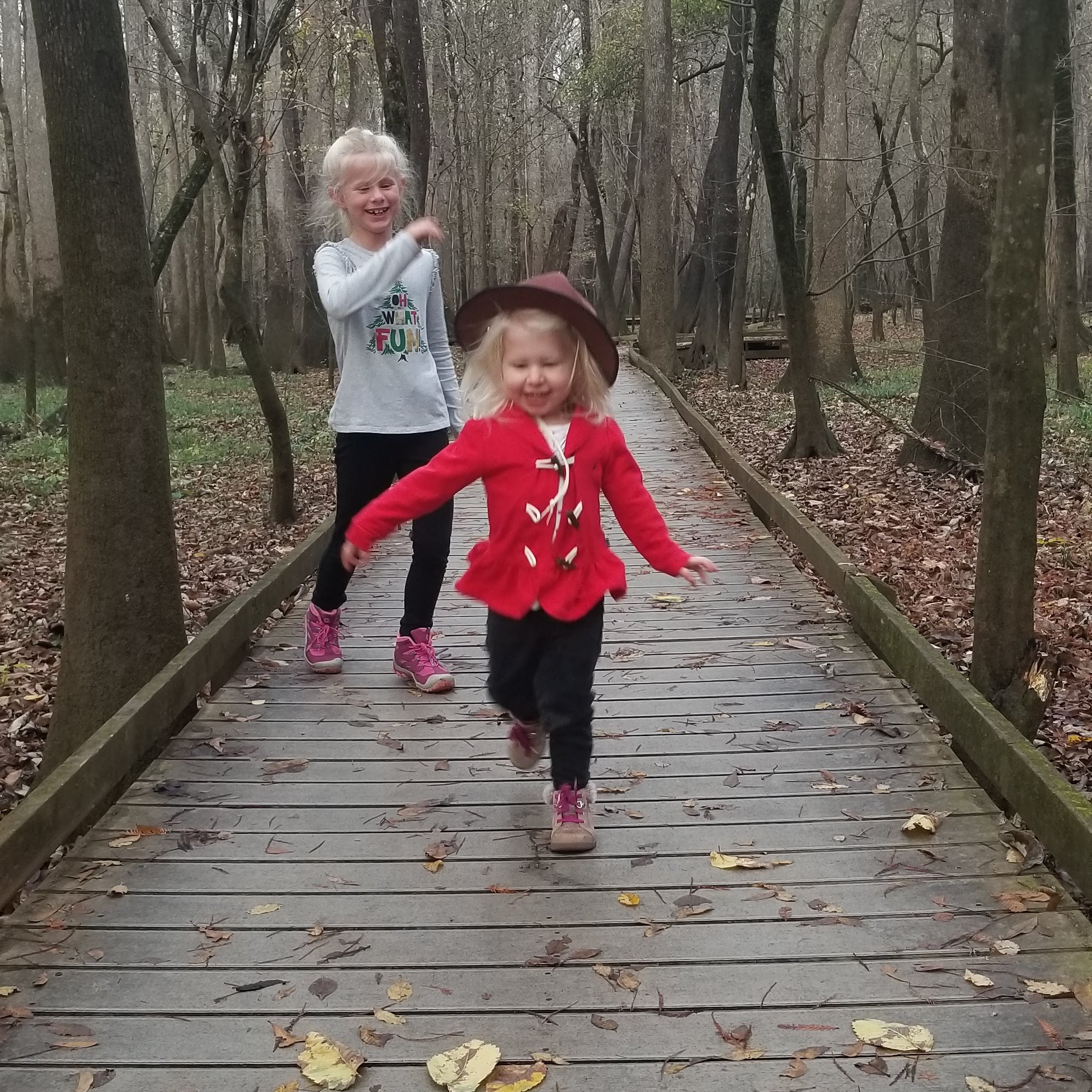
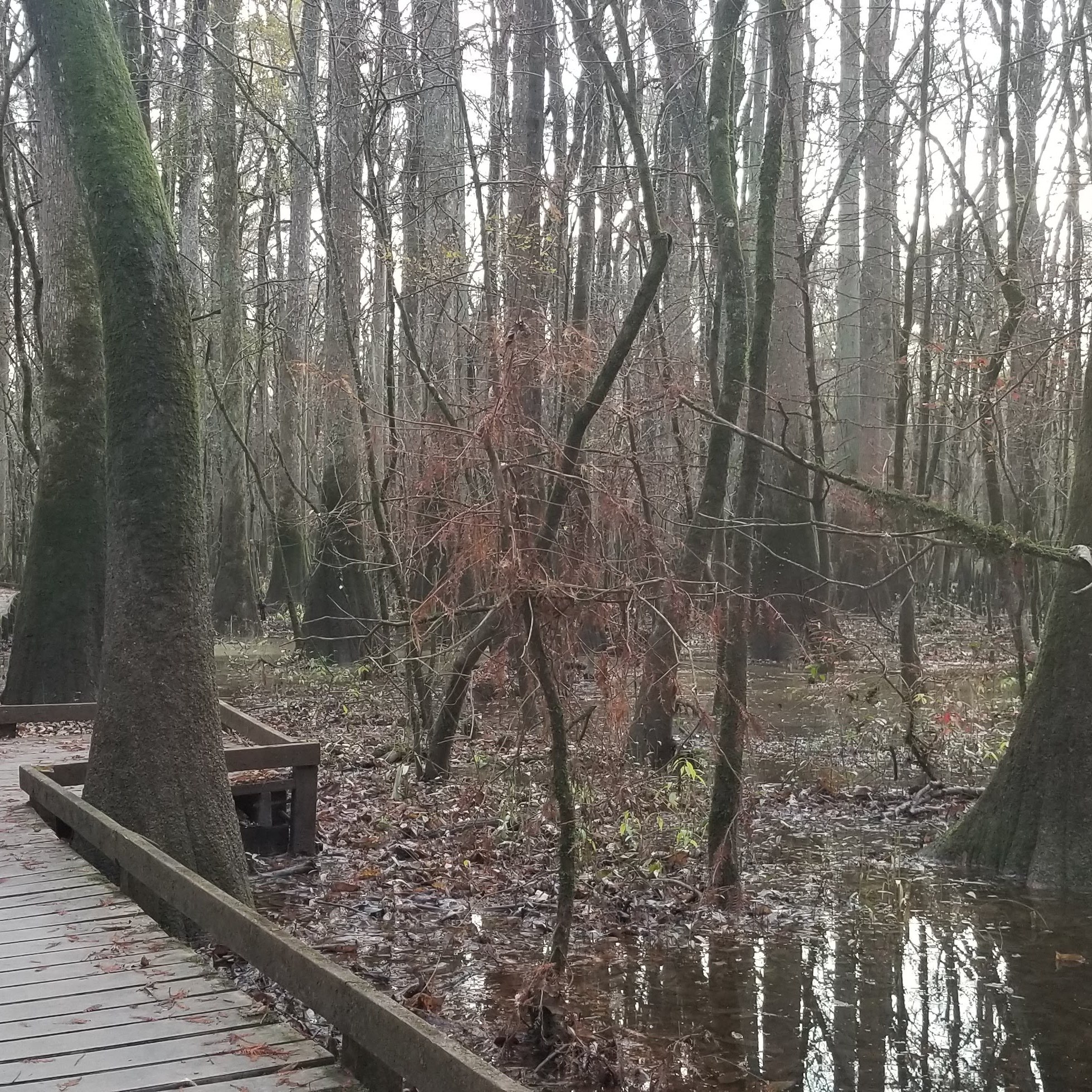
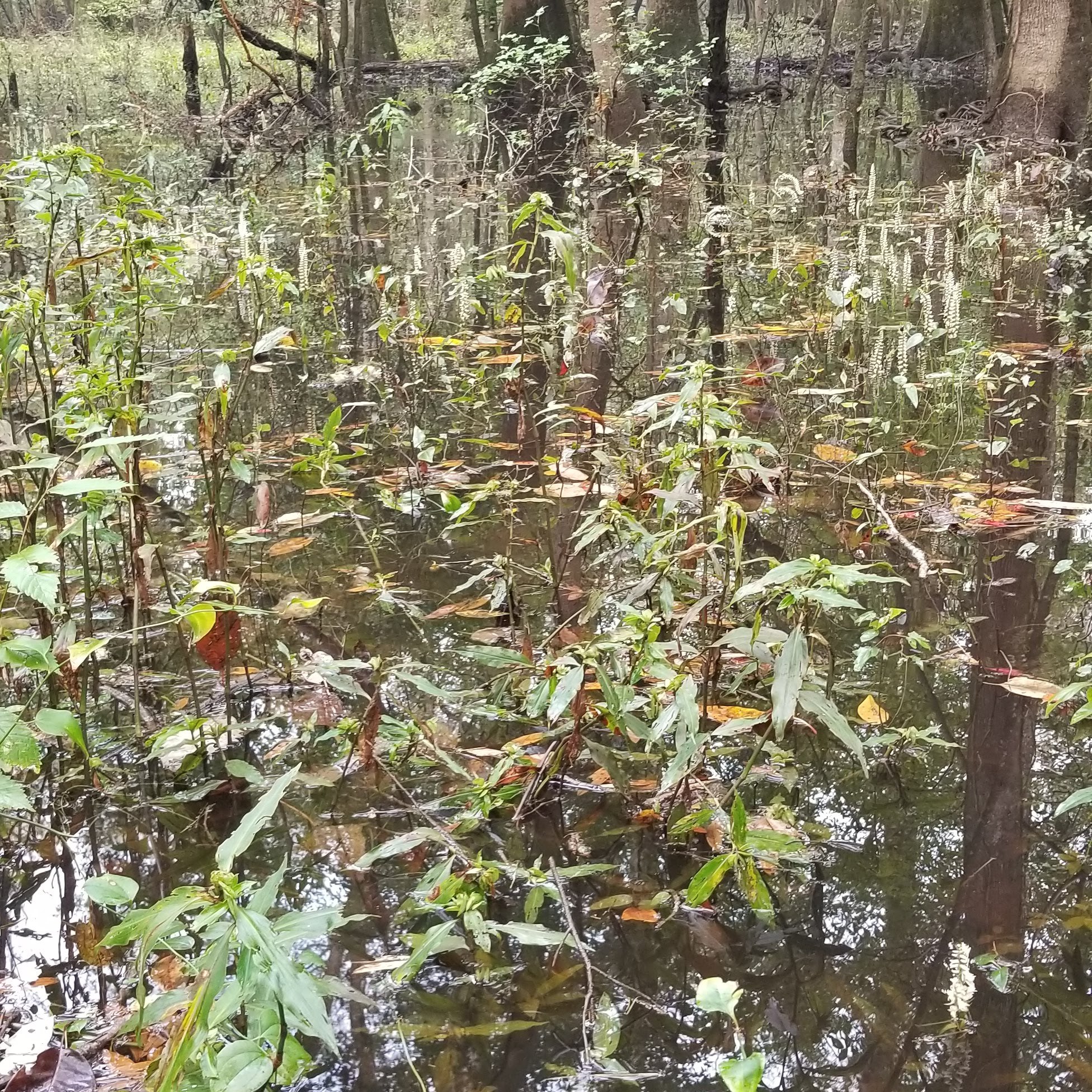
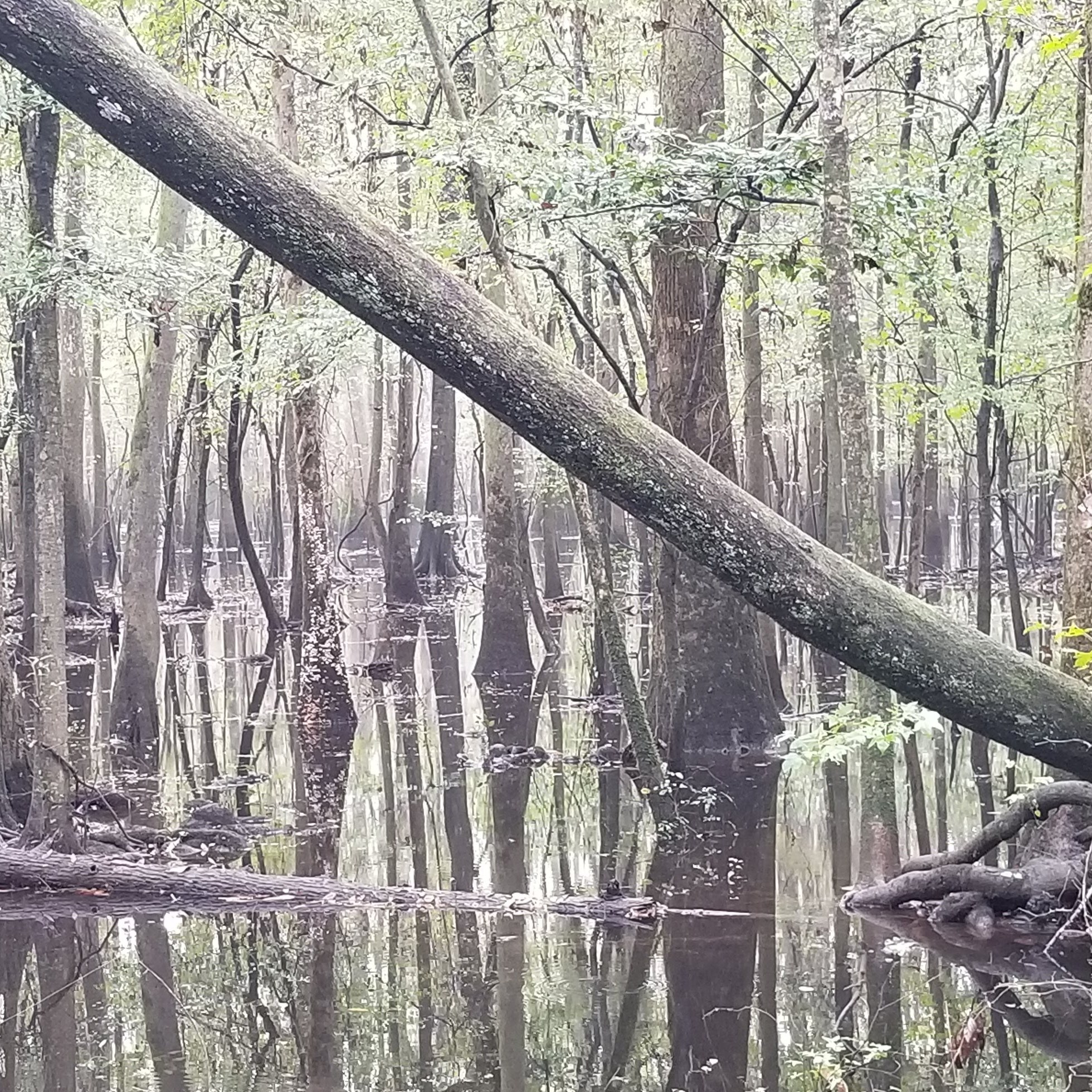
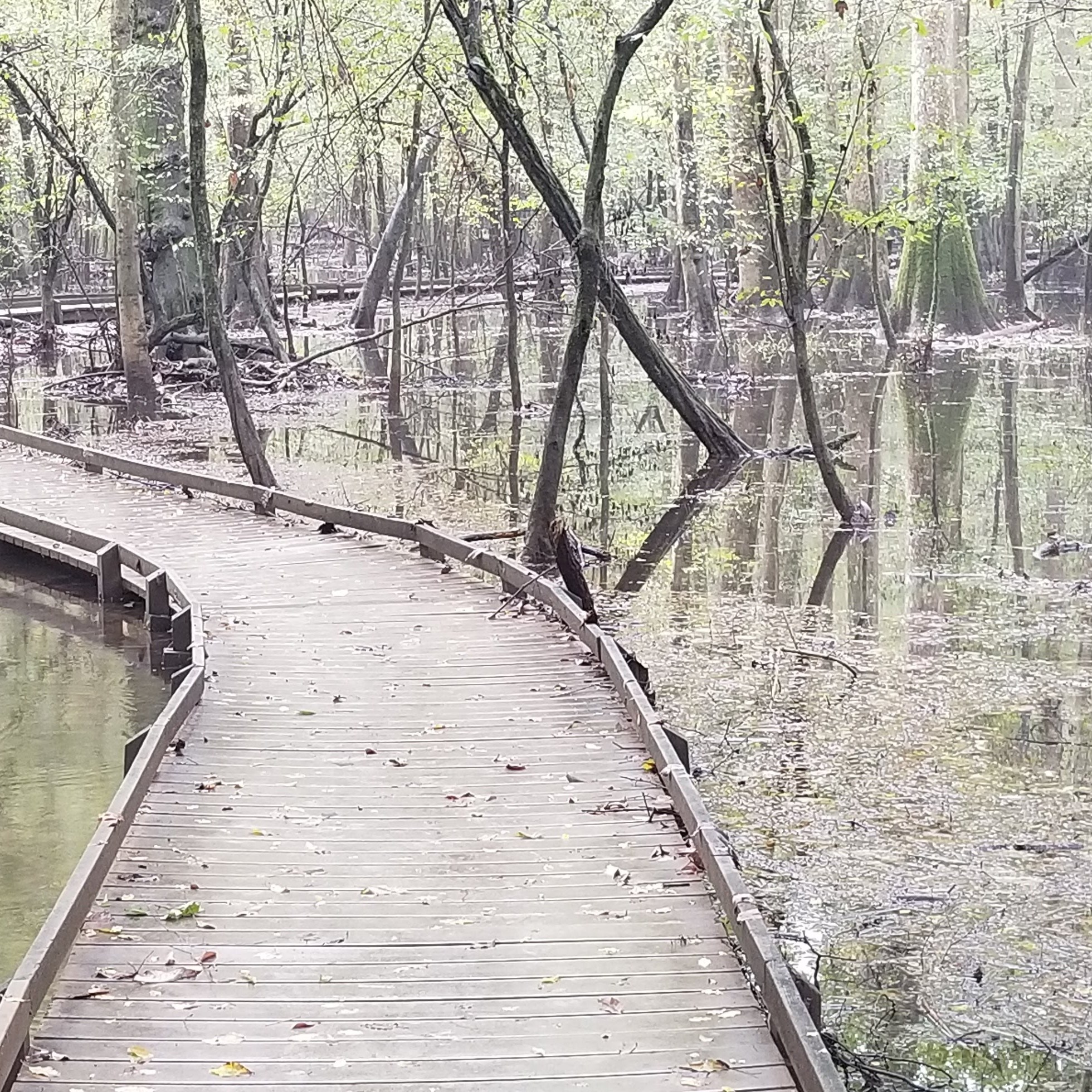
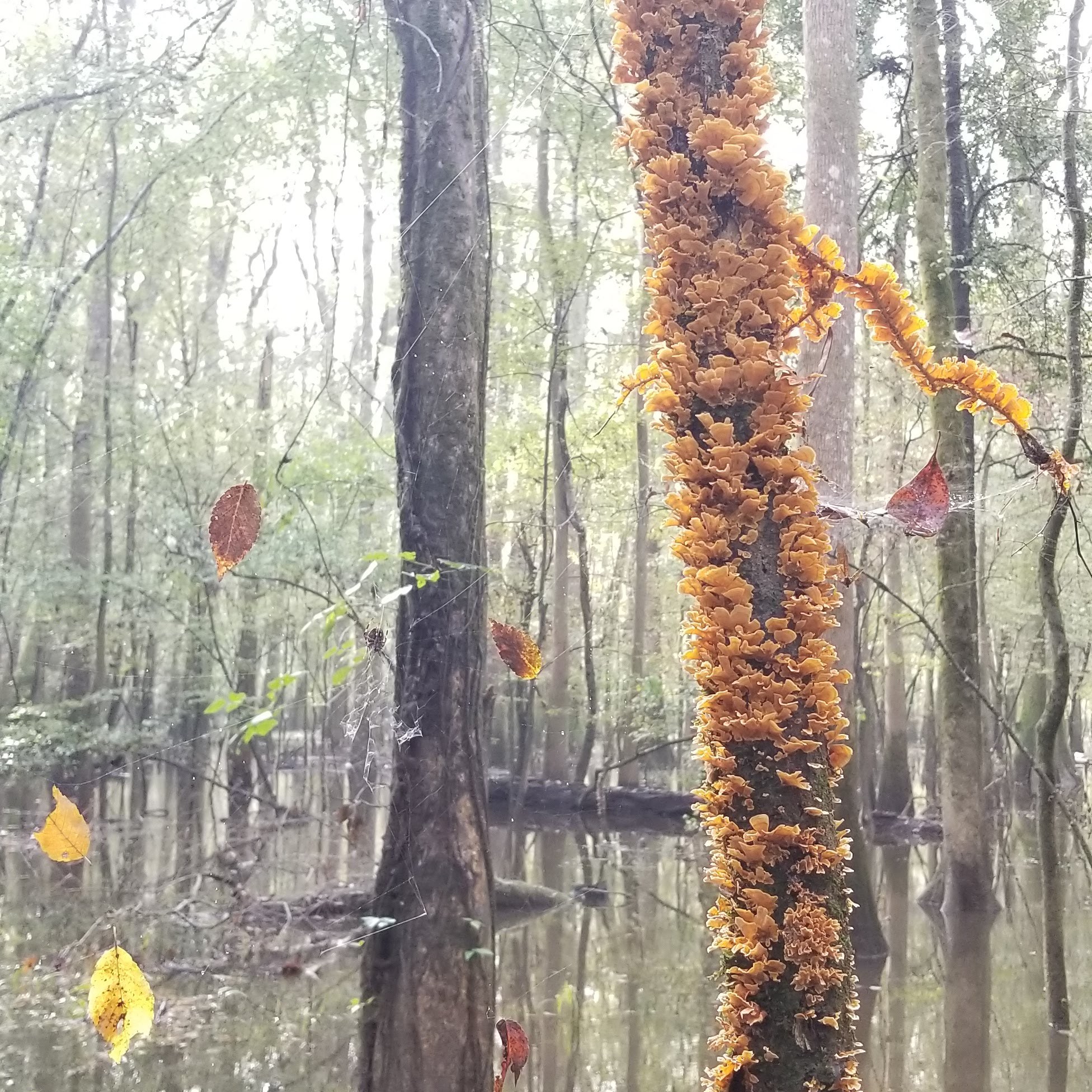
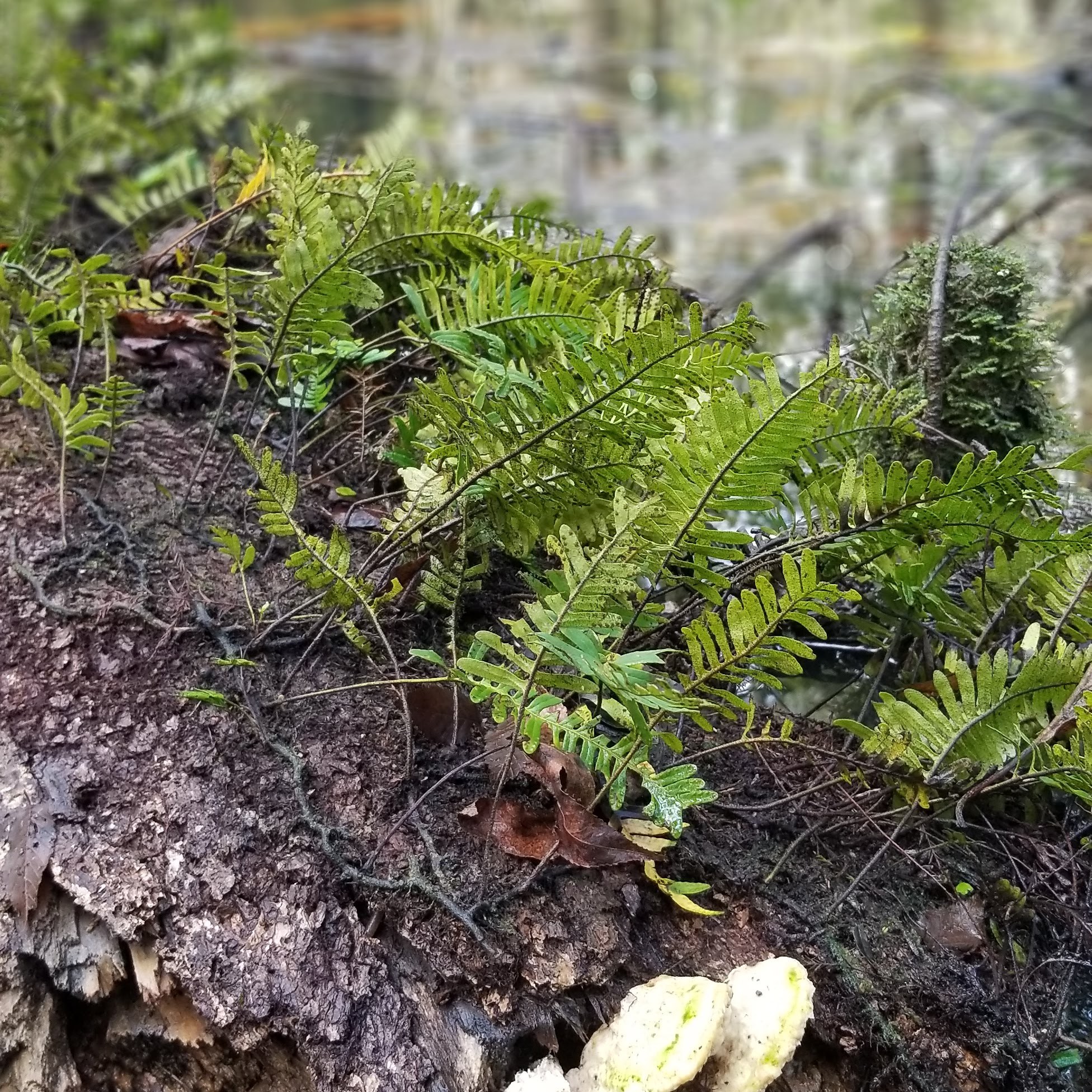
Below are pictures from other visits to the park.
 Beavers in the Park