
The trip that we Beavers took to the coast not only allowed us to visit the last state park currently in the system, but we also had an opportunity to visit the last national park site currently in the system in South Carolina. (I say ‘currently’ because there are other state and national parks in the works…stay tuned over the next couple of years!)
This national park site is interesting for what it represents. Whereas Cowpens National Battlefield is located at a specific site where a specific event took place and Congaree National Park preserves a specific natural resource, Reconstruction Era National Historical Park interprets several years in American history that didn’t solely happen in the Beaufort area of SC.
There’s so much that needs to be said about our time in Beaufort. Instead of trying to pare it down, I’m just going to say it all (at least a lot of it). I could call this area ‘Untold Stories’, as there is so much to be learned in this area (and not all are part of the national park site). Below are three sections to this post, so click to navigate if you want to skip to a section. I know it’s long, but this park is all about the stories it can tell, so I wanted to share my own.
Background | Our Visit to the Park | Other Sites
Background
I’ll get to talking about our visit in a second, but let’s be honest, first. It’s been a hot minute since most of us have studied American history. Reconstruction was the time during and following the Civil War, from about 1863 until 1877 officially, during which the United States was trying to build itself again (reconstruct itself, literally). Many societal changes were happening, specifically as it relates to blacks. The Emancipation Proclamation was issued, blacks could become citizens, and black men could vote.
So, why, then, was Beaufort selected as the national park site to interpret the Reconstruction Era?
This is such an interesting part of history that I don’t remember learning about. Just about 7 months after the first shots of the Civil War were fired at Fort Sumter in 1861, there was the Battle at Port Royal (the Port Royal Sound is the waterway leading to the ocean in the Beaufort area). The Union won and maintained possession of the Beaufort/Port Royal area for the duration of the war.
As such, if you were a white planter sympathetic to the Confederate cause, you fled. The results? The blacks you had enslaved (assuming you left them behind) are now there and occupy the land. (There were 10,000 of them.) Thus begins the Port Royal Experiment, which basically sought to see whether or not blacks could be integrated into society (participating in education, governance, etc.).
Educators from Pennsylvania came down to start the Penn Center, offering blacks a chance at education. Black men enlisted in the 1st and 2nd volunteer infantry regiment of the US Army. Some blacks purchased land (including the land vacated by their previous owners, that land having been sold at auction due to delinquent taxes). Thousands of people were gathered at Camp Saxton at Port Royal (where the new regiments were trained) to hear the Emancipation Proclamation be read on January 1, 1863, the first reading of this document in the South.
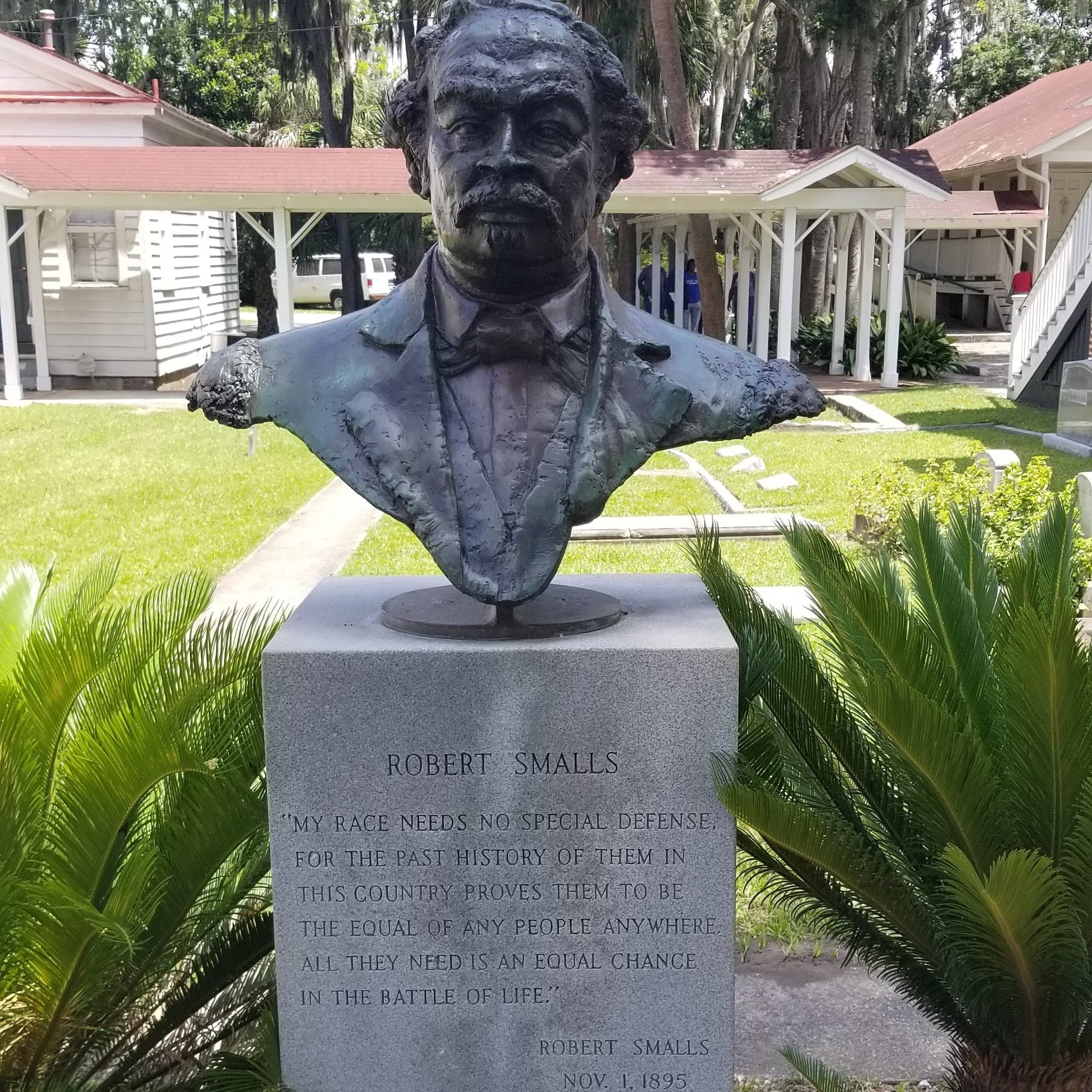
Beaufort is also the home of Robert Smalls, a name that I only learned about within the past year or two. He was born into slavery in the Beaufort area; however, in 1862, while he was in Charleston, he commandeered a Confederate ship, transporting himself and a few others into Union hands. To make a long story short, he ends up serving in the SC Senate, SC House, and the US House from 1868 until 1887. One of his major contributions includes trying to ensure public education for all South Carolinians.
During this time, and much to the chagrin of many southerners, there was a large federal presence (i.e. troops) in the South. The Freedmen’s Bureau was established to help provide aid (education, hearing complaints, etc.). South Carolina, a majority black state at this time, had a majority black legislature.
This is where it is important to talk about the end of Reconstruction. Not a fan of the societal changes, the KKK and other white supremacists start coming around to forcefully strip away rights granted to blacks (or, in their words, to ‘redeem’ the state). (Read Ben Tillman’s biography by Kantrowitz if you want a glimpse into the extent of violence, intimidation, voter fraud, and murder that happened during this time.) After Reconstruction, much of the old ways had returned after a few years, and we enter the time of Jim Crow (enforced segregation), lasting until the Civil Rights movement in the 1960s.
All of this is too oversimplified, to be certain. Not every white Northerner was willing or excited to embrace the black as his/her equal. And not every white Southerner was wearing a pointed hood. But Reconstruction was the first time for many blacks to be afforded an opportunity to have some skin in the game.
I know I’ve typed a lot…but I haven’t even gotten to the main star of our visit: Harriet Tubman.
Your first reaction perhaps is one that the park rangers said they get a lot. ‘Tubman? In Beaufort?’ Yep. She came down to South Carolina in 1862 to aid the Union cause. She spent much of the war here and was in the area when the Emancipation Proclamation was read. She provided medical care among other things, but she wanted to do more. She started trying to secretly gather information to pass on to the Union army. But the single most notable act came 160 years to the date from our visit.
Imagine the scene. June 2, 1863. 4:00 am. Combahee River, just north of Beaufort. Surrounded by rice fields and marsh. Harriet Tubman (yes, an African-American woman) is leading a military raid. She has one boat with soldiers and firearms. The other boat that made it ends up collecting around 750 enslaved people who were already out in the fields. Much is set ablaze (read: the fields and the plantation homes) as the ships sail downstream. Though there were plenty who were left behind, those 750 sailed down to Beaufort and into freedom, many of the men joining the United States Army that day once the sun came up.
What an incredible event that I had no idea about. I went and double-checked, but even Walter Edgar in his South Carolina: A History only mentions the Combahee Raid in passing within a single sentence (not mentioning Harriet Tubman at all), and on the previous page comes the only mention of Robert Smalls, mentioning only his liberation act in Charleston Harbor and subsequent military service, but not his years of service in government.
These times during and after Reconstruction have been of particular interest to me over the past 16 months, starting with a visit to Rose Hill State Historic Site last year. It was there that I first had it sink in about the monumental importance of blacks in our state, as well as the injustices done towards them following the Civil War. Their stories, unfortunately, often don’t get told. Or, at least, I haven’t listened well or asked the right questions. It was at this time, too, that I realized that my ancestors owned slaves, and even during the time of Reconstruction, one black man working at one of my relative’s farm even had the KKK called in on him. It made this history a lot more personal.
Our Visit to the Park
Since our visit corresponded with the 160th anniversary of Harriet Tubman’s Combahee Raid, we were treated to some wonderful programming based around this.
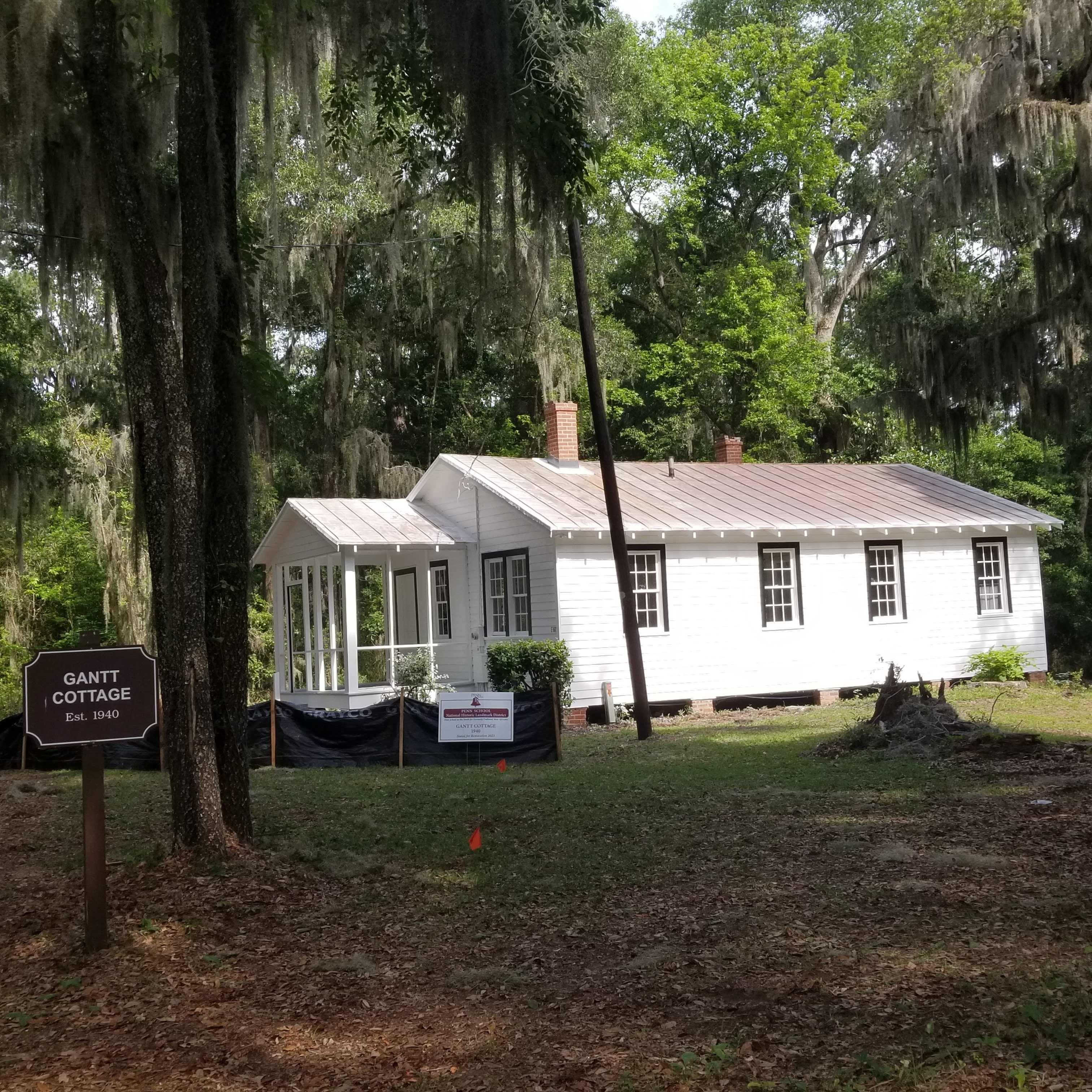
On June 1, after spending a morning out at the beach at Hunting Island, we came back to our AirBnB on St. Helena Island, got showered and changed, then headed right down the road to the two buildings managed by the National Park Service there: Darrah Hall and Brick Baptist Church. These buildings each used to be part of the Penn Center, educating the newly-freed blacks. Darrah Hall then later became a community center, even hosting basketball games, the paint lines outlining the key still visible faintly. Brick Baptist Church is still a functioning church there on the island.
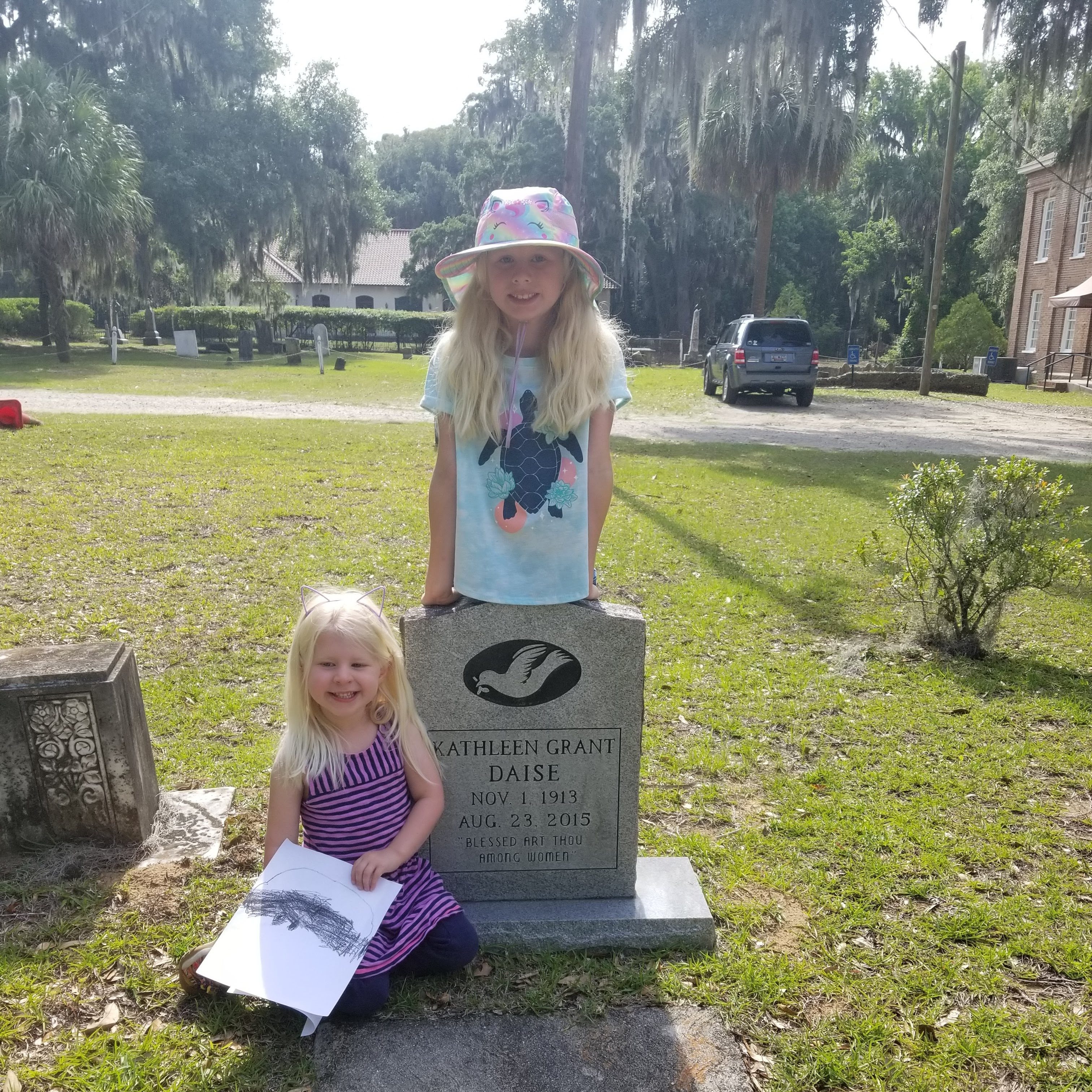
Visiting these sites was special, too, because one of our good friends has a grandmother who was one of the last cohorts to be educated at the Penn Center. She is buried at Brick Baptist Church.
That evening, we got a special treat. I almost didn’t have us go, as it required us driving more than 30 minutes out of town. On Highway 17 going towards Charleston, there is Harriet Tubman bridge over the Combahee River, which is the site of the raid I’ve described. That night, the NPS had promoted a talk/ceremony about those involved in the raid. We drove out to the boat ramp that is next to the bridge, and we were met with a small group of people. We sat overlooking the river and the marshland in the distance.
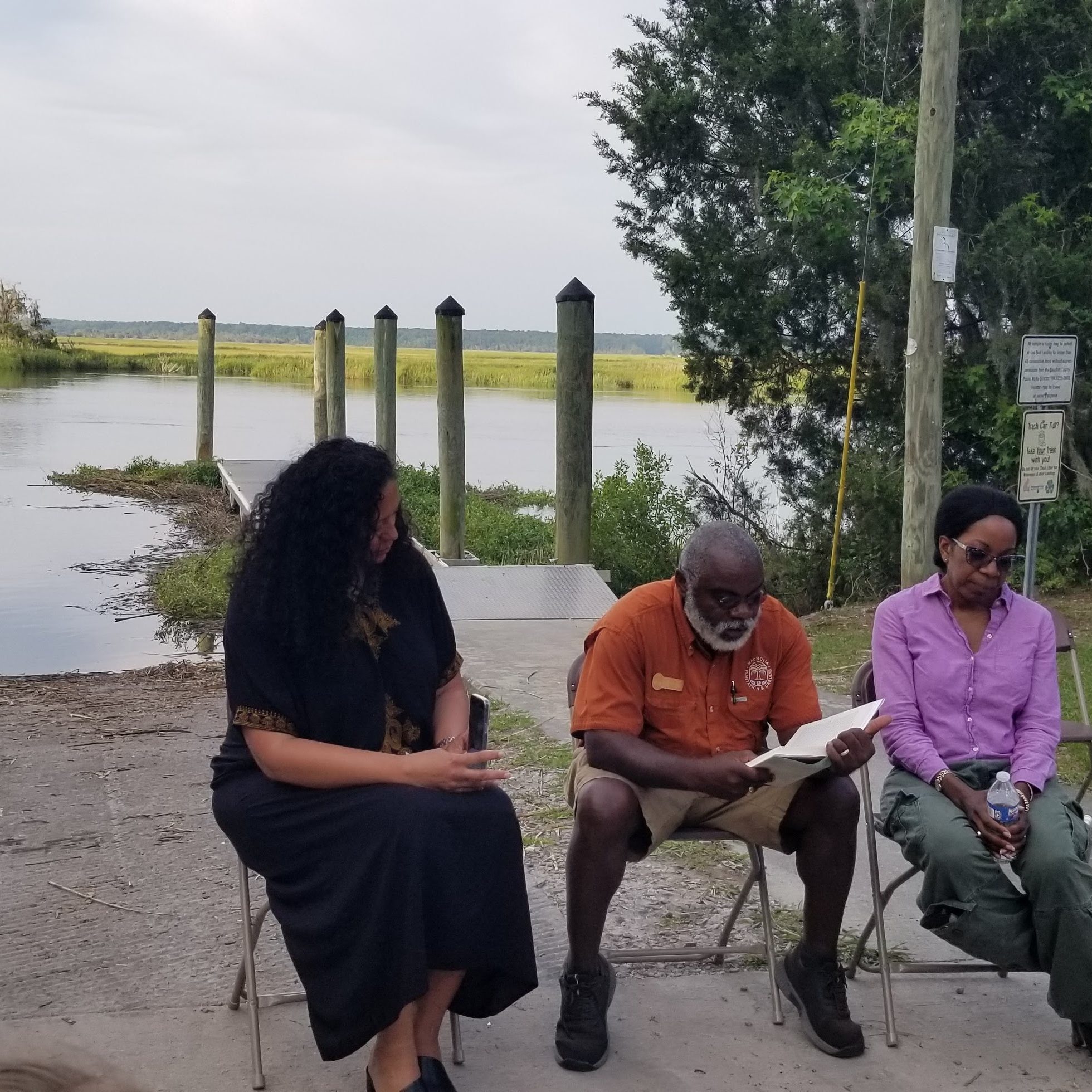
Present at this talk were three individuals from different agencies. Each of them gave a presentation. Victoria Smalls is the executive director of the Gullah-Geechee Cultural Heritage Corridor. Joseph McGill, Jr. is the founder of the Slave Dwelling Project and author of Sleeping with the Ancestors. Dr. Edda Fields-Black is an associate professor of history at Carnegie Mellon University and the author of the upcoming book ‘Combee’: Harriet Tubman, the Combahee River Raid, and Black Freedom during the Civil War.
One thing I appreciated about Ms. Smalls’s talk is her connection to the Gullah people (African-Americans living in this area with cultural ties to West Africa, having created a creole language based around English and the various African languages represented). She shared a lot of her own story and her ties to this place. She greeted us in the Gullah language. It was a reminder that the people that were enslaved here were, in fact, a people. They had culture and language. They were not sub-human, as was the prevailing thought at the time.
Dr. Fields-Black shared a lot of her research about the raid that will be in her forthcoming book. Interestingly, though she knew she had ancestors who lived in this area at that time, once she started doing research, she realized that her third-great-grandfather participated in the raid. Think about it. This wasn’t that long ago. Do you remember your great-grandfather? Well, imagine his grandfather, and that’s who this is the equivalent of.
As she described the raid, we could envision the ships coming down the river. The slaves, already in the fields at 4:00 that morning, ran to the ship. It gave me chills thinking about that moment. She also noted that the ship couldn’t hold everyone, that many had to be left behind. I can only imagine the agony.
Through Mr. McGill’s talk (part of which had him reading from his book in which he goes and sleeps in former slave dwellings), we were again reminded of the humanity of those people who were enslaved.
Another gentleman in the audience also pointed out that the beautiful marshlands that I had been admiring the whole time weren’t always there. He noted that originally, it was all forest; however, the plantation owners wanted it converted into fields where rice could be grown, so the slaves themselves cut down the trees to form the rice fields. Then, using their expertise in rice growing from their upbringing in West Africa, they produced the crop (‘Carolina Gold’) that gave the plantation owner his wealth.
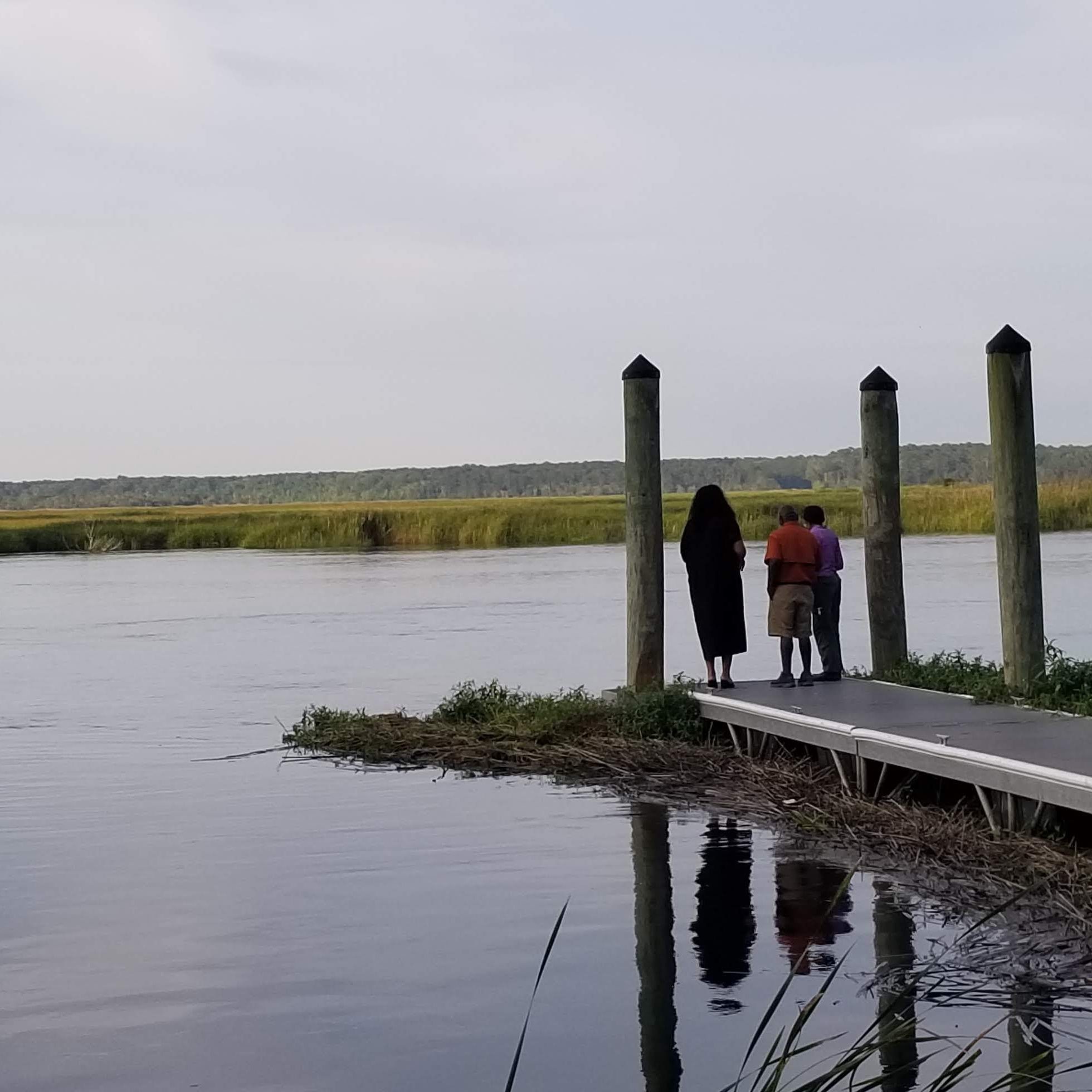
After a lovely discussion, the ranger brought flowers. Then, in commemoration of those who spent their years in servitude, those who only dreamed of freedom, and those who helped pave the way for freedom for all, the three presenters walked out along the dock at the boat ramp, arm in arm, and cast the flowers in the river. It was a moment that had me tear up, as I can only imagine what was going through their minds, especially since this story was so personal for them.
The next day, we went into downtown Beaufort to see that part of the park. We went first to the visitors center at the Old Fire House. There, we saw one of the rangers from the previous evening, looked around at the exhibits, and the girls became Junior Rangers.
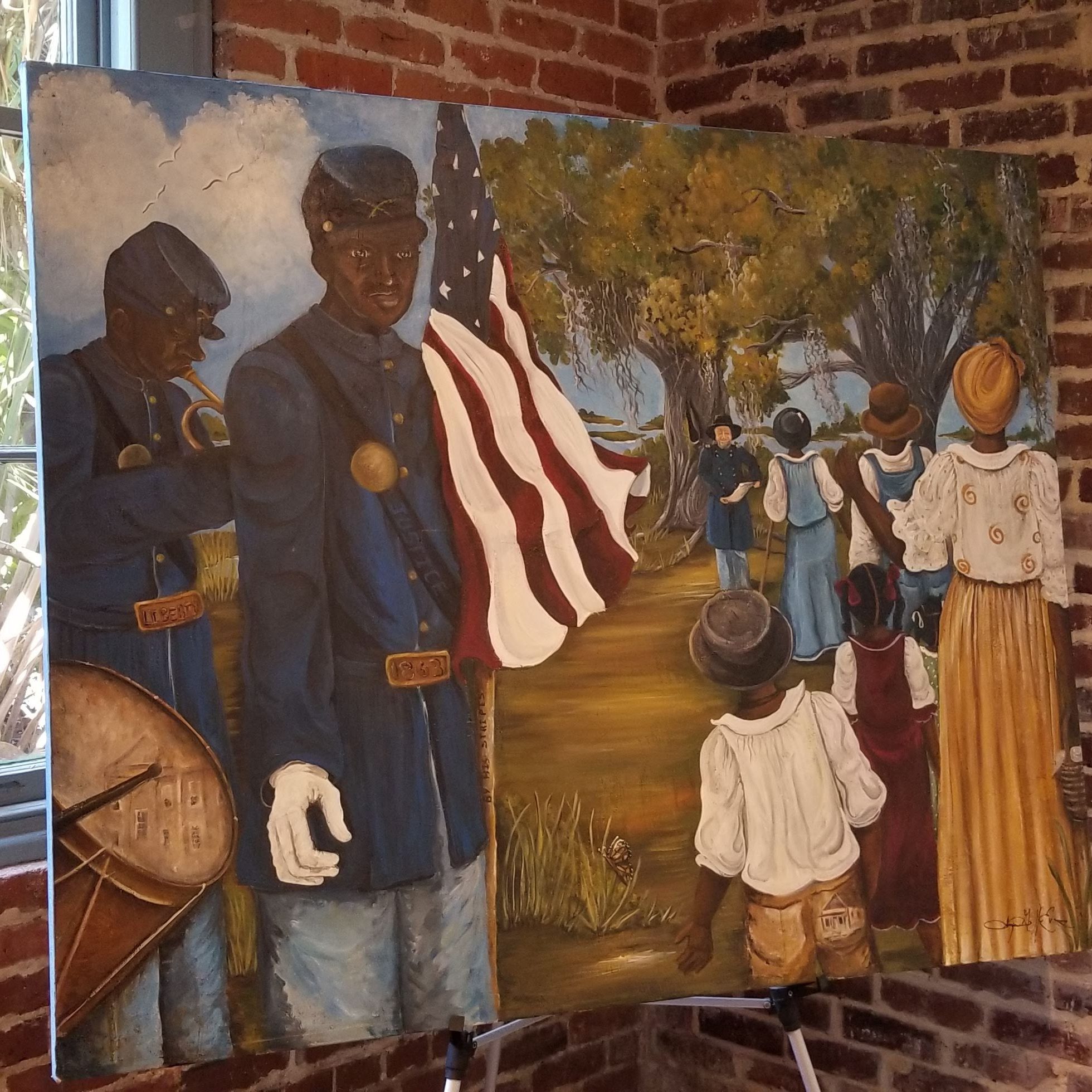
(Side note: The artist above is also featured in the newly-released National Underground Railroad Network to Freedom: Southeast Region Junior Ranger Book, which my kids picked up a couple of weeks ago at the Beidler Forest up in Harleyville.)
At 11:00, the ranger was giving a walking tour around Beaufort, focusing on areas that would have been important to Harriet Tubman. We saw the house that served as the hospital where she worked to supply medical aid. We saw a house that perhaps was used by her to sell some baked goods to help make ends meet. We walked on the waterfront to see where she and 750 newly-freed slaves would have gotten off the boat. And we ended up at the place where, after walking through the streets, Tubman would have addressed these people. There is a monument of Tubman that will hopefully be unveiled later this year.
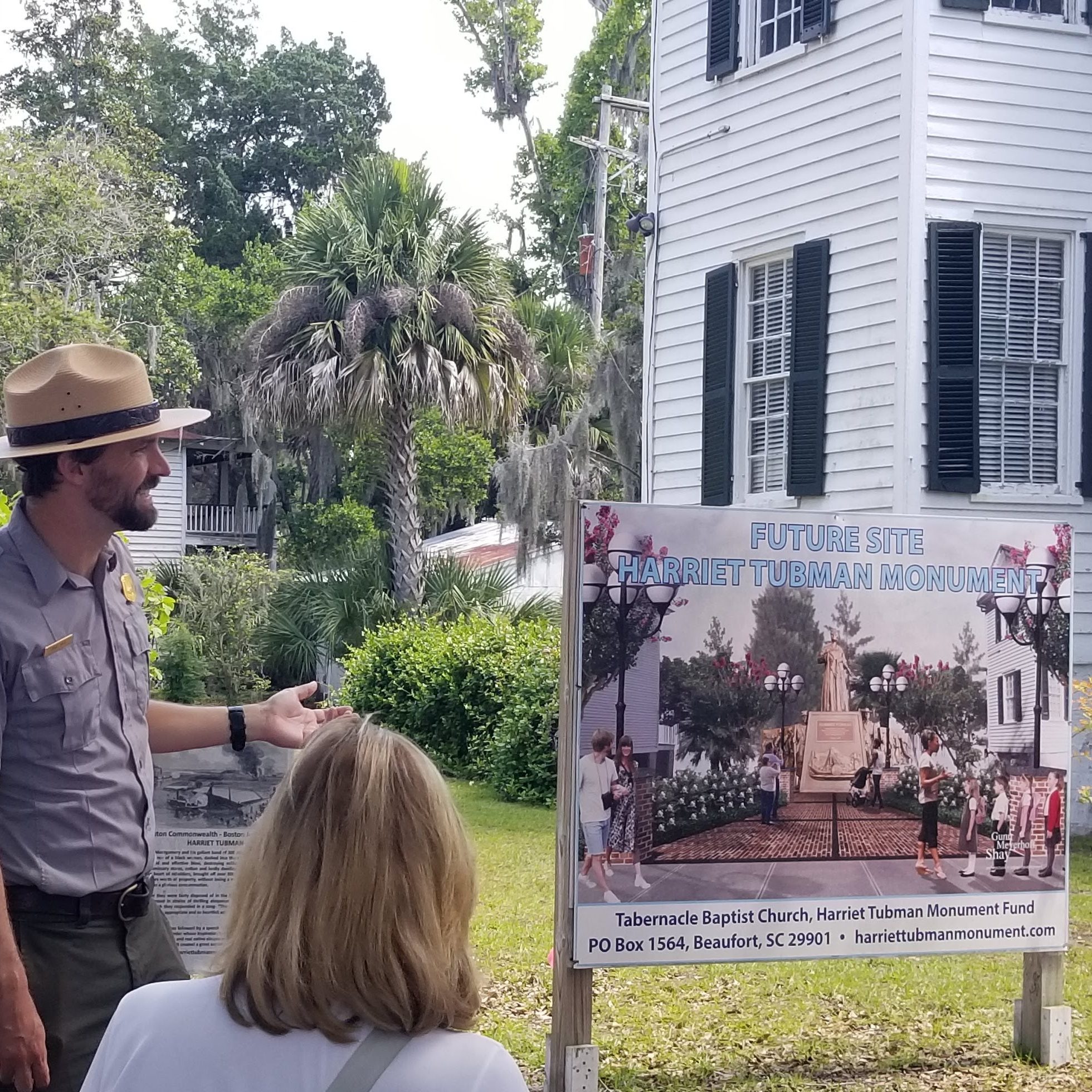
This place where she probably gave the speech is located right next to Tabernacle Baptist Church. This is also where a bust of Robert Smalls is located, as is his grave.
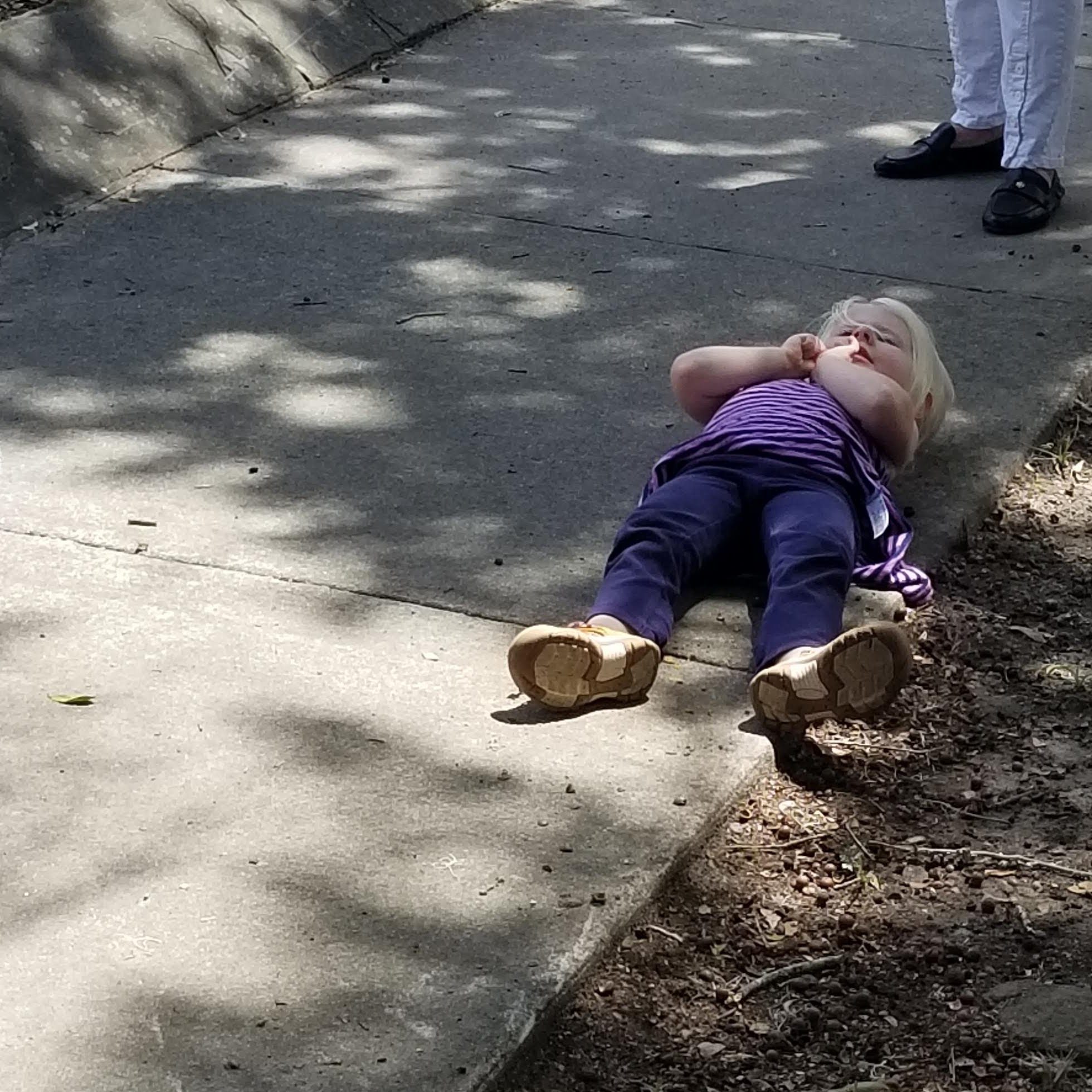
And in case you were wondering how the kids were doing after a late night at the boat ramp for an hour and a half, and a one-hour walking tour today, well, the picture below of Sage tells it all.
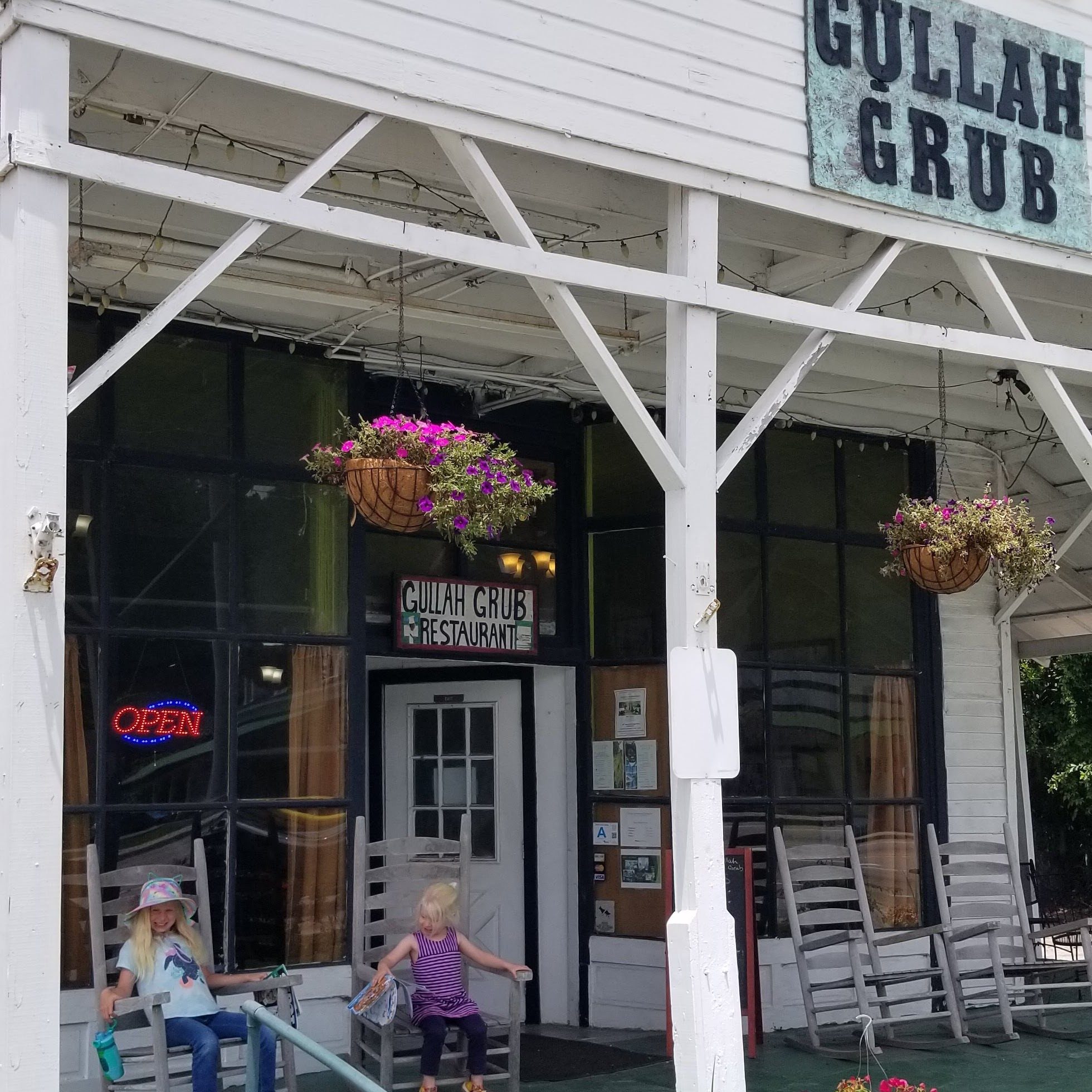
We spent the afternoon at the beach at Hunting Island again. For dinner, we stopped at a restaurant right down the road from our AirBnB on St. Helena Island. It is called Gullah Grub, and I had seen it featured on Padma Lakshmi’s series Taste the Nation during an episode focused on the Gullah people. Once we ate some yummy food, we went back to the AirBnB and actually watched the show, which also perhaps helped the kids connect the dots between the history we had been learning and the food we had just eaten. Even Sage perked up when they would mention Charleston, recognizing it as a place we had visited, and Teagan loved seeing on screen the chef that we had just seen at the restaurant.
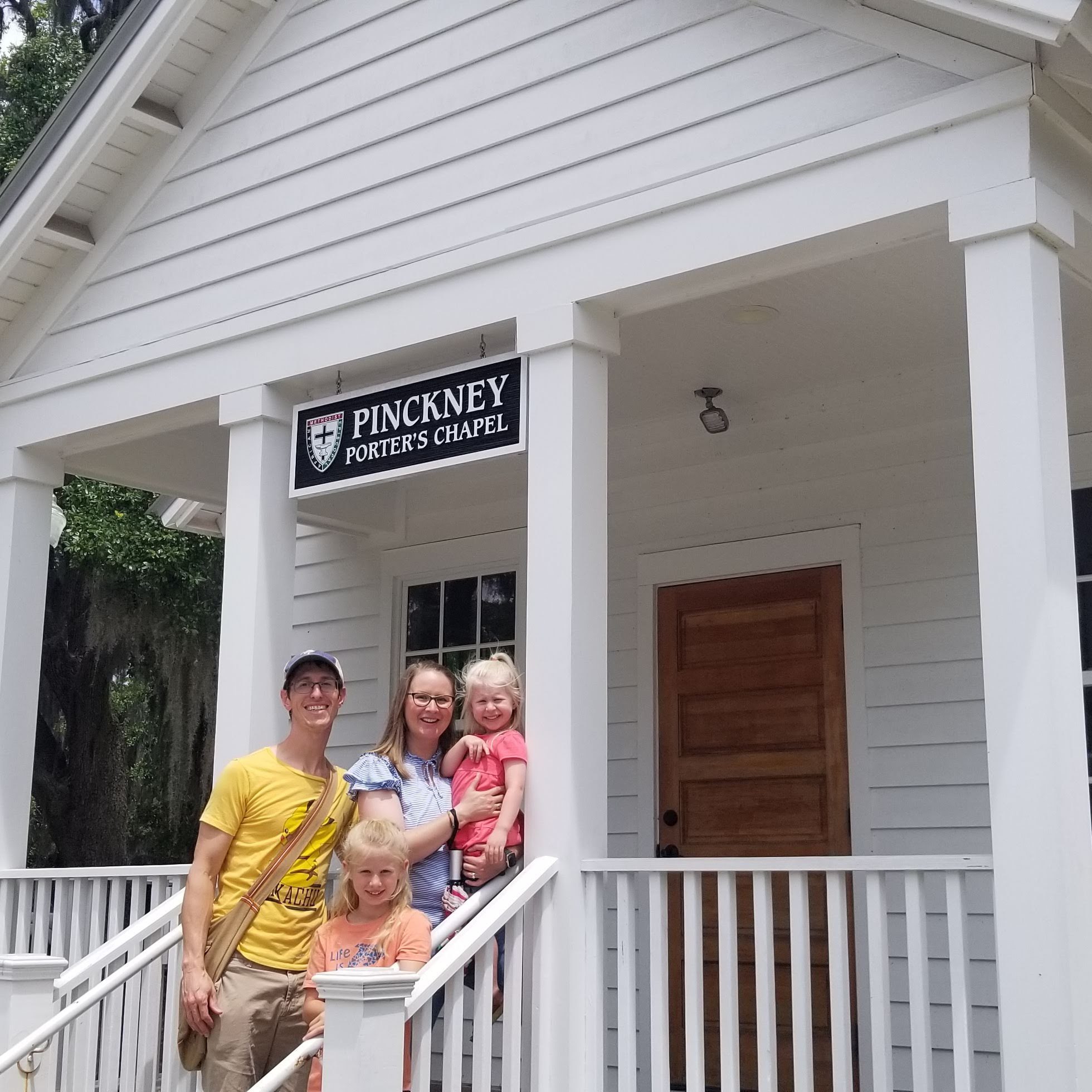
On our final day at the park, we had one final area of the park left to explore, and that was the area of Port Royal. The park uses the Pinckney-Porter’s Chapel as their base there. As this was Saturday, this is also surrounded by the Port Royal Farmers Market. We ate a picnic lunch and the girls enjoyed playing on the playground. What we learned while looking around the chapel was that this was the chapel where Clementa Pinckney (former SC state senator and one of the victims of the shooting at Mother Emanuel Church in Charleston in 2015) first started preaching.
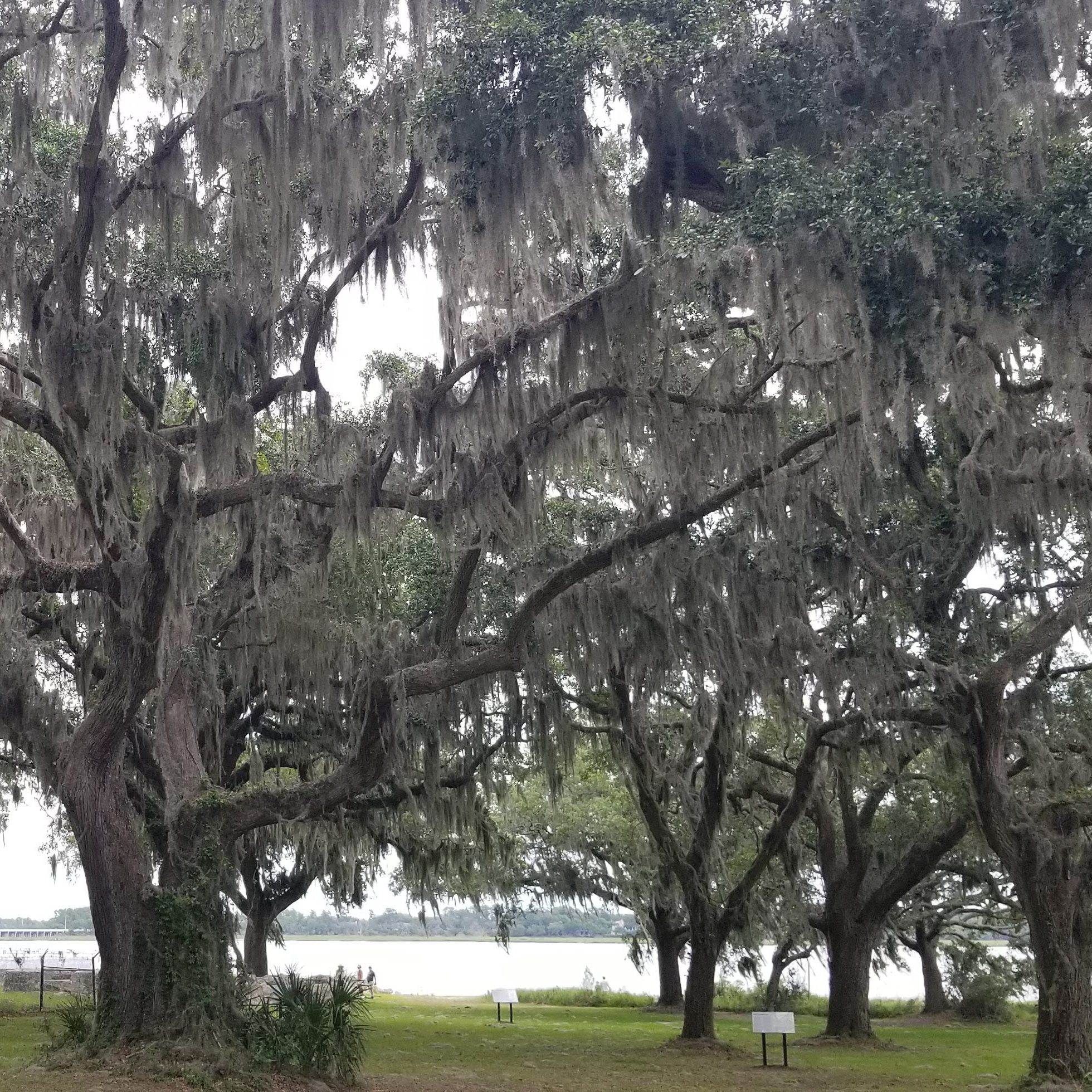
Here, we had one final program, this one focused on Camp Saxton (where the Union troops were trained, including those who were just freed earlier that morning during the Combahee Raid). Dr. Fields-Black joined us again to share some more of her knowledge. It took place on the old grounds of the camp, located under some magnificent oak trees. You might call one of them an ‘Emancipation Oak’, as the ones that are more than 160 years old would have been present as more than 5,000 people gathered to hear the reading of the Emancipation Proclamation.
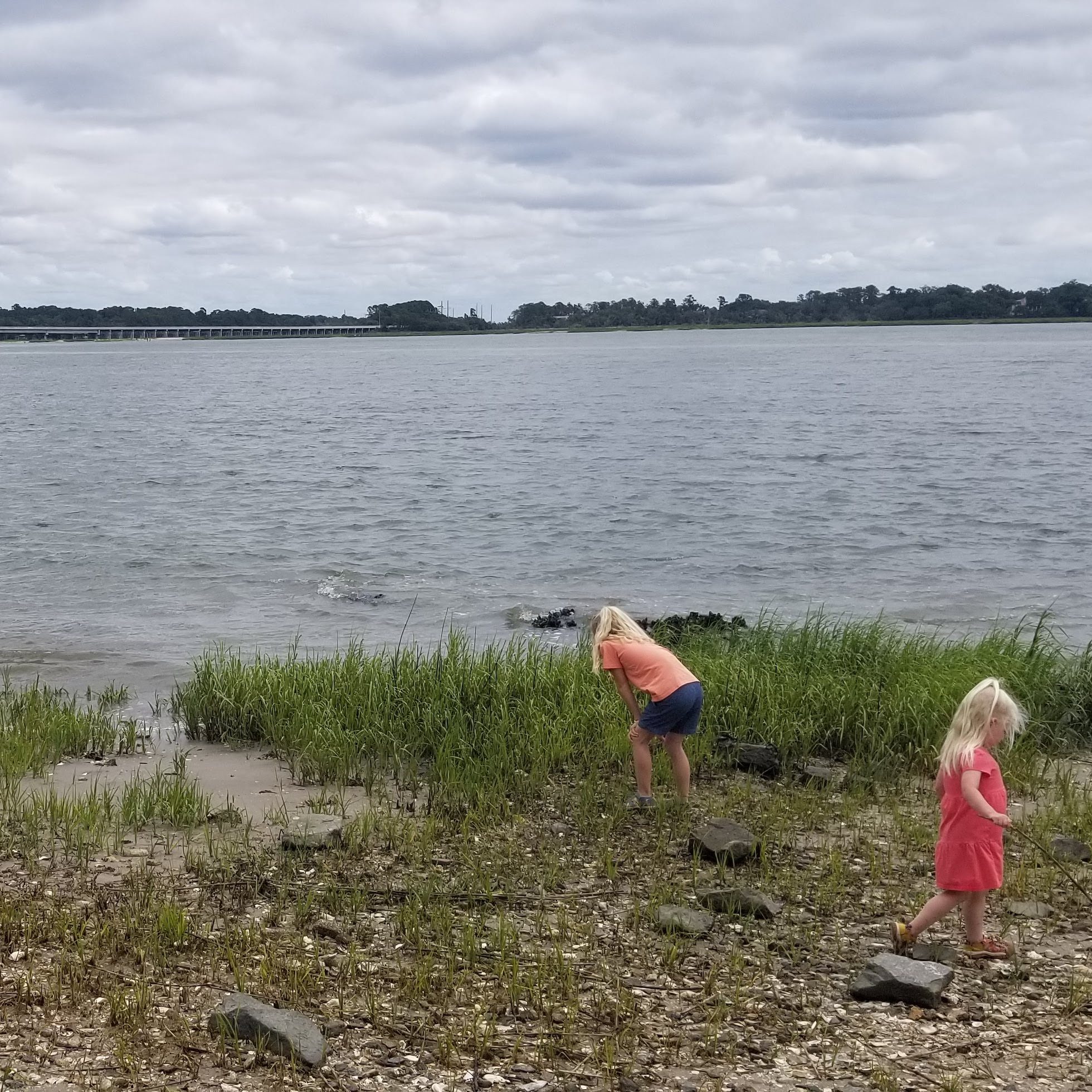
Though Teagan was initially not excited to hear that we were going to one more program, she quickly perked up once she realized that she and Sage could hunt for tiny crabs by the water while Tiffany and I listened to the talk.
So, in short, Reconstruction Era National Historical Park is all about the stories. If you go, please make sure you partake in the ranger-led programs there. (Check the Calendar on the official site, linked at the bottom of this page.)
Other Sites
I would be remiss if I didn’t talk about some of the other history present here in this area of the coast. I’ll start with my favorite: Santa Elena.
While we think of Charleston as being the first English settlement in South Carolina, what we often don’t realize is that they weren’t the first Europeans to establish themselves here. About a half-century earlier, the Spanish were trying to stake their claim in the New World. They had already found the Santee River, which they actually called the Jordan River, since they discovered it on the Day of St. John the Baptist.
The Spaniards were drawn to the deep waters of the Port Royal Sound (named by the French, who were here just a few years prior and established the short-lived Huguenot colony Charlesfort on Parris Island). The Spaniards found this place on the Day of Santa Elena, or as we call it in English, Saint Helena. (Don’t worry…if your mind exploded when you made that connection, just know I did the same.)
The Spanish colony of Santa Elena existed from about 1566-1587. You can now visit the site by going onto the Marine base at Parris Island. (Just drive to the gate and explain why you’re there.) We went first to the Parris Island Museum on base, where they had some incredible artifacts discovered at the site. One of my favorite pieces was pottery that was made in Seville. And while it wasn’t on display here, I believe I read somewhere that they had found pottery from the Aztec region in Mexico, showing how the Spaniards were travelling during this time.
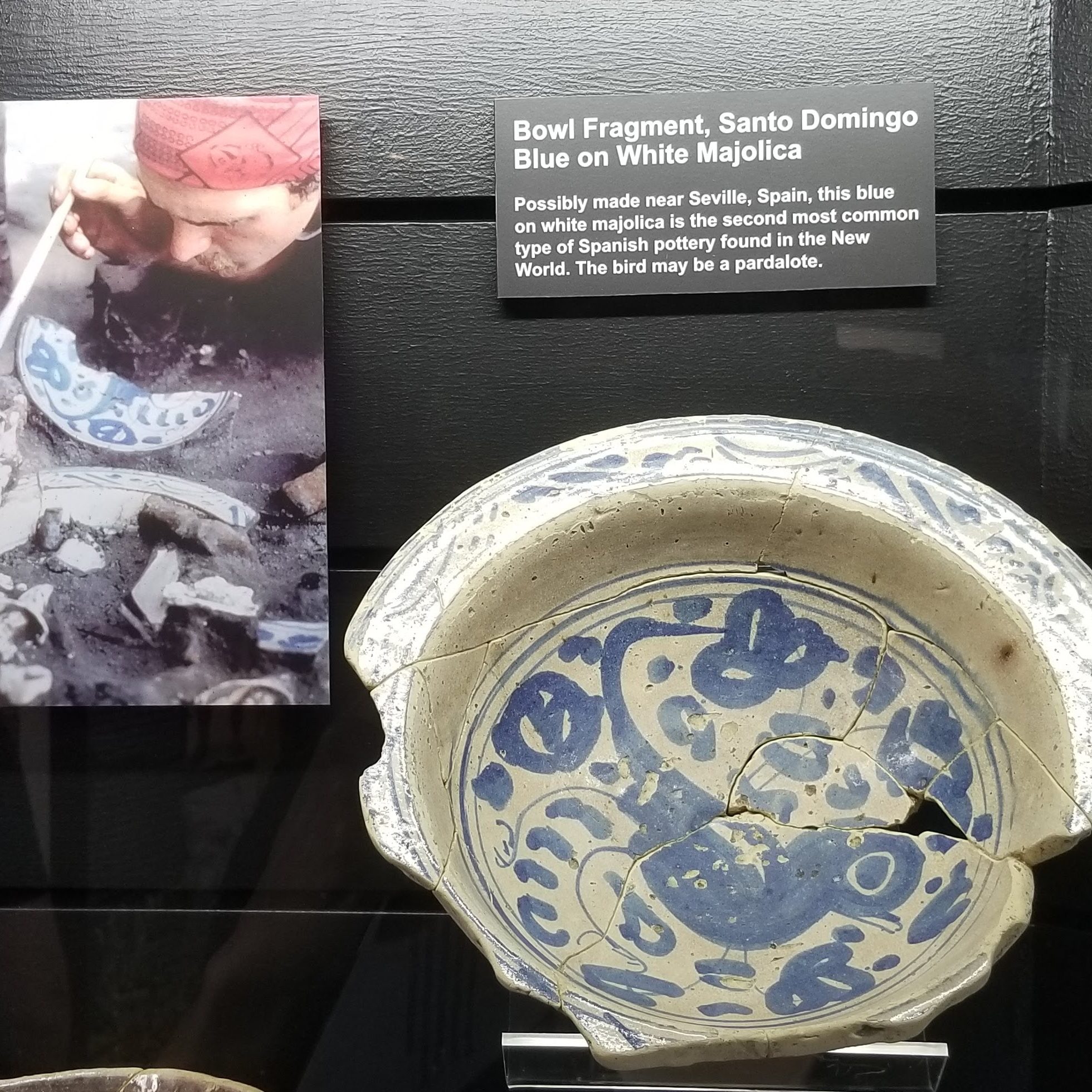
Then, we drove down to the site itself, located near the golf course. While there are no remnants there to see, there are a few markers and interpretive signs. For me, though, it was just surreal standing on the same piece of land where, about 450 years prior, Spanish was spoken. (For those who don’t know, I’m a Spanish teacher. You can bet that this stuff is going to make it into my lessons next year.)
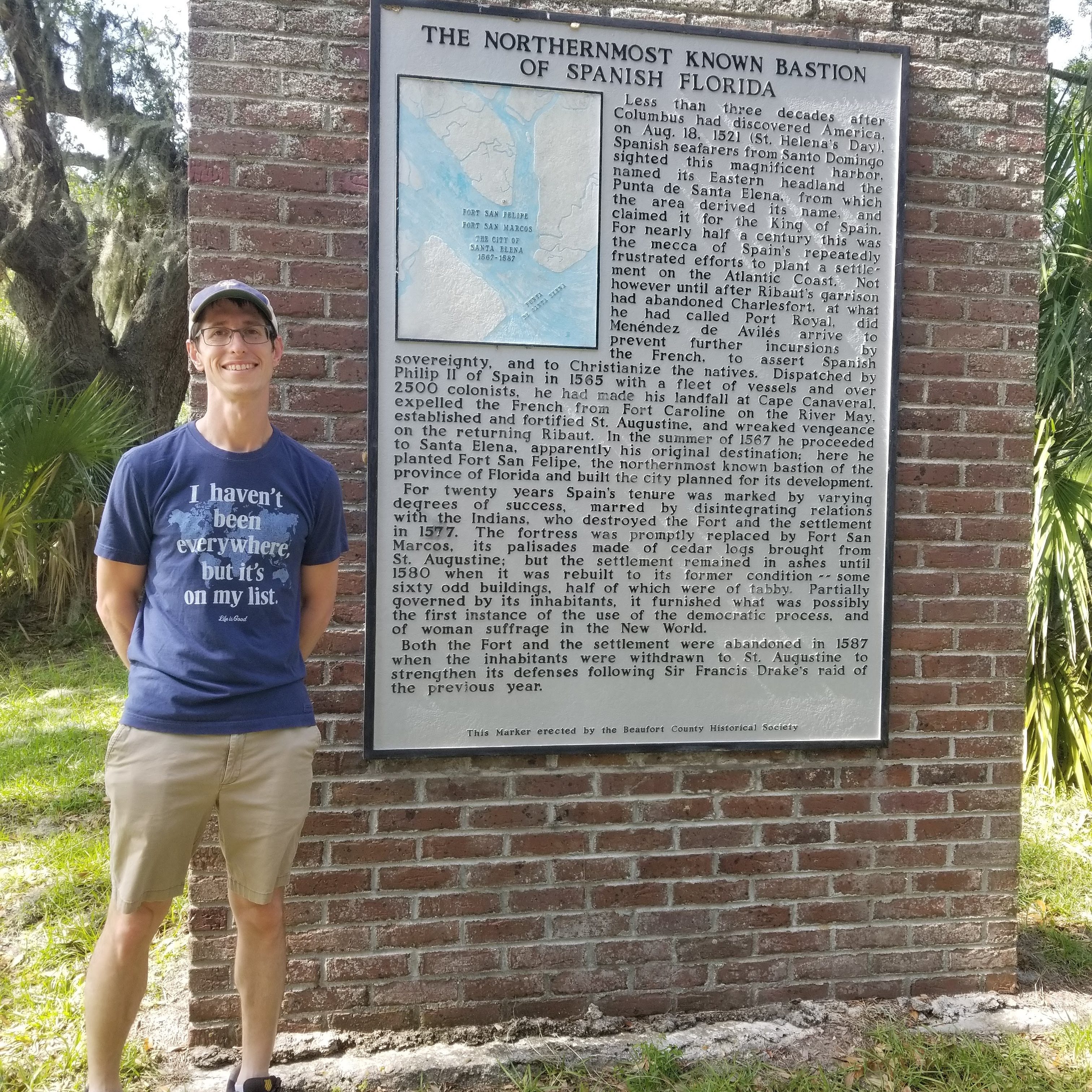
There is some information on Santa Elena at the Beaufort History Museum downtown, but hopefully soon on Hilton Head Island they will be opening up the Santa Elena Museum as part of the Coastal Discovery Museum with more information and artifacts.
Continuing with the Spanish theme, on Saint Helena Island, there are the remains of Fort Fremont, dating to the time of the Spanish-American War at the end of the 1800s. We didn’t really explore the fort much, as mosquitoes were rampant, and we were mostly there because we had heard it had beach access.
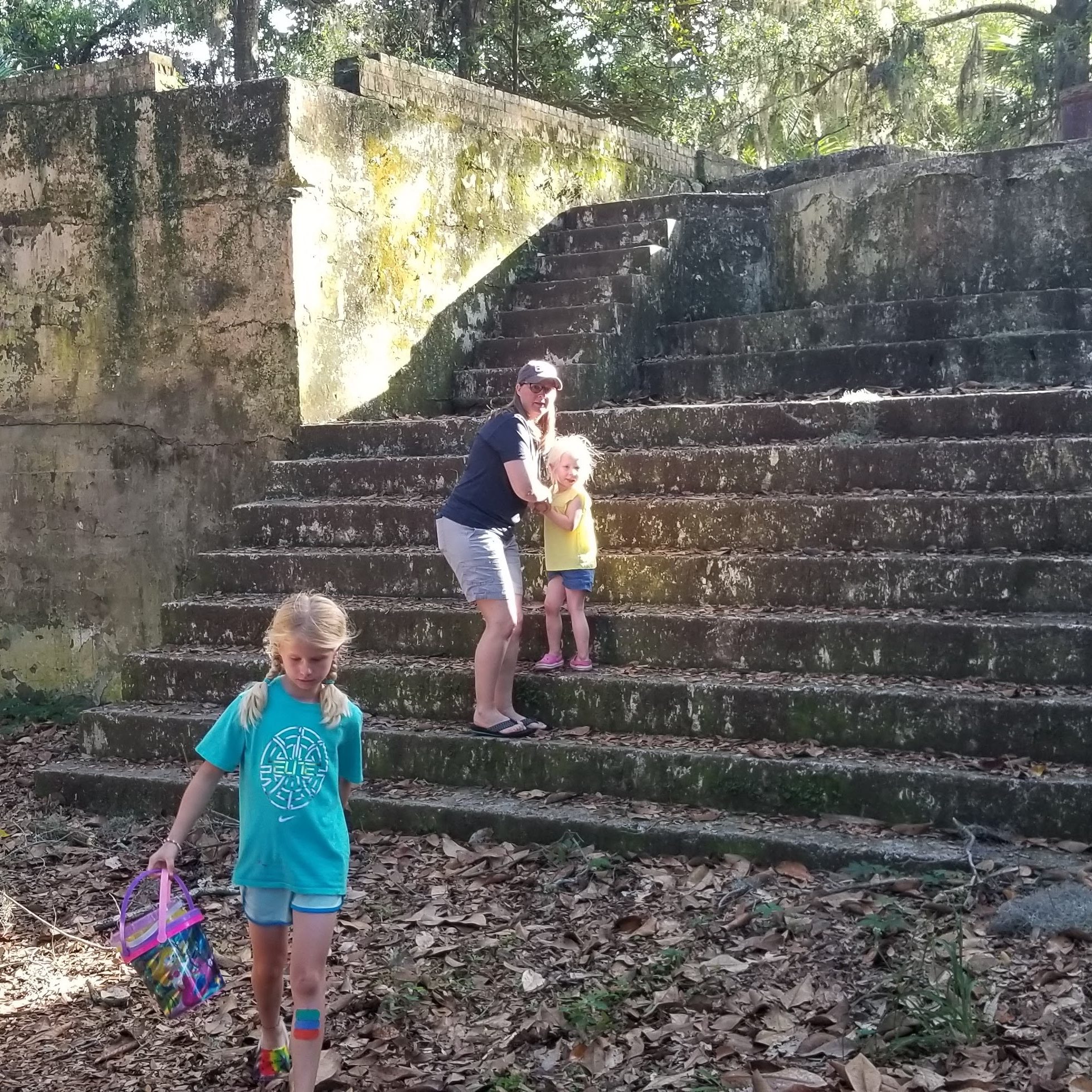
When we walked down the path to where the supposed beach access was, we started hearing music. It sounded like a group of Hispanics were having a party. Sure enough, we got there, discovered that the high tide meant hardly any beach here at this point, and what space was there was taken up by revelers.
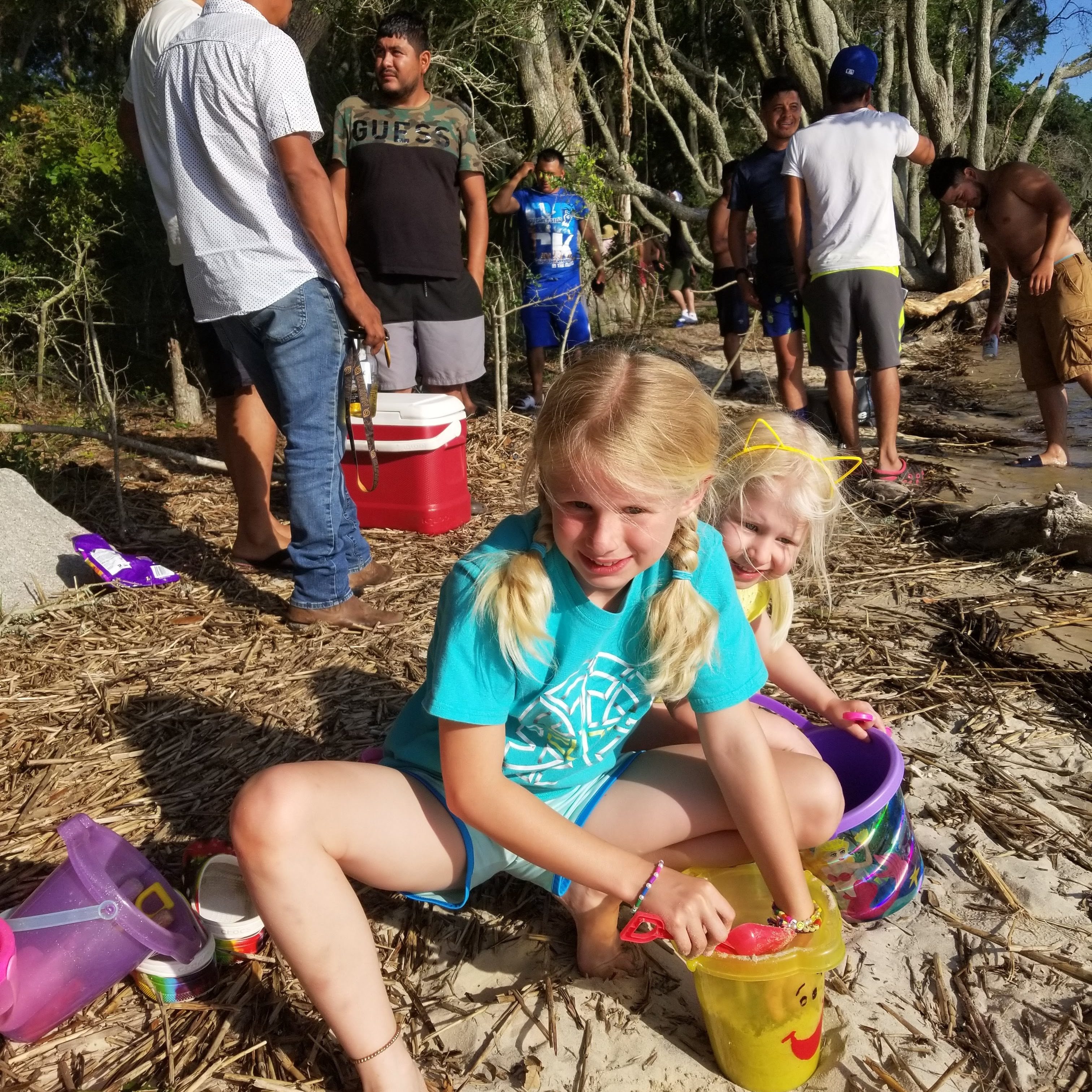
So, just to make sure you’re keeping score…Spain was here at Santa Elena, but they abandoned the site. Fort Fremont was built to keep Spain out of here. But in the end, Spanish-speakers still ended up on the site today…ha!
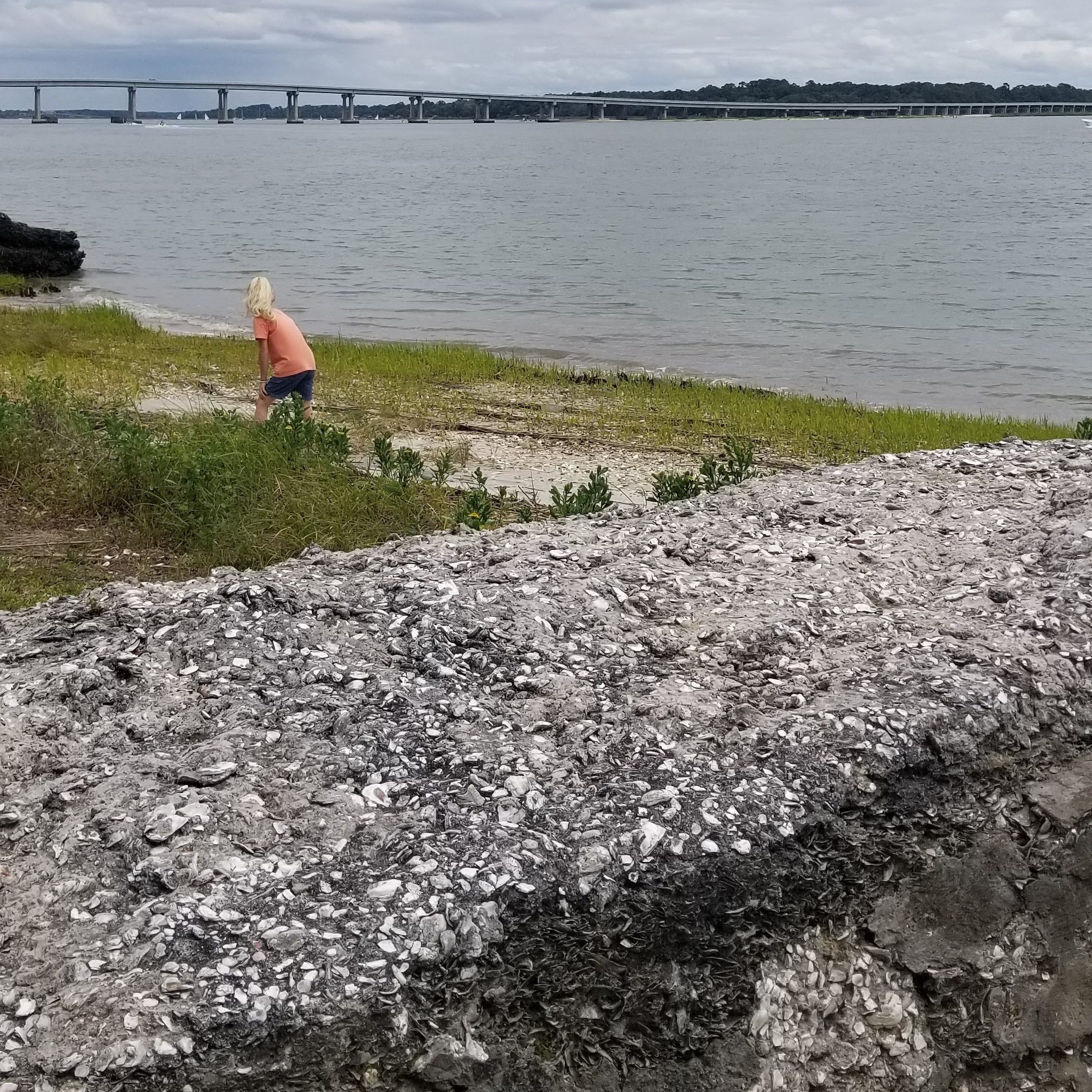
One other fort in the area is over on Port Royal at the site of Camp Saxton where we heard Dr. Fields-Black talk (see above). It is at the remains of Fort Frederick, a British-built tabby fort from colonial times. (‘Tabby fort’, being built using oyster shells, was a term I learned when we visited Colonial Dorchester State Historic Site.)
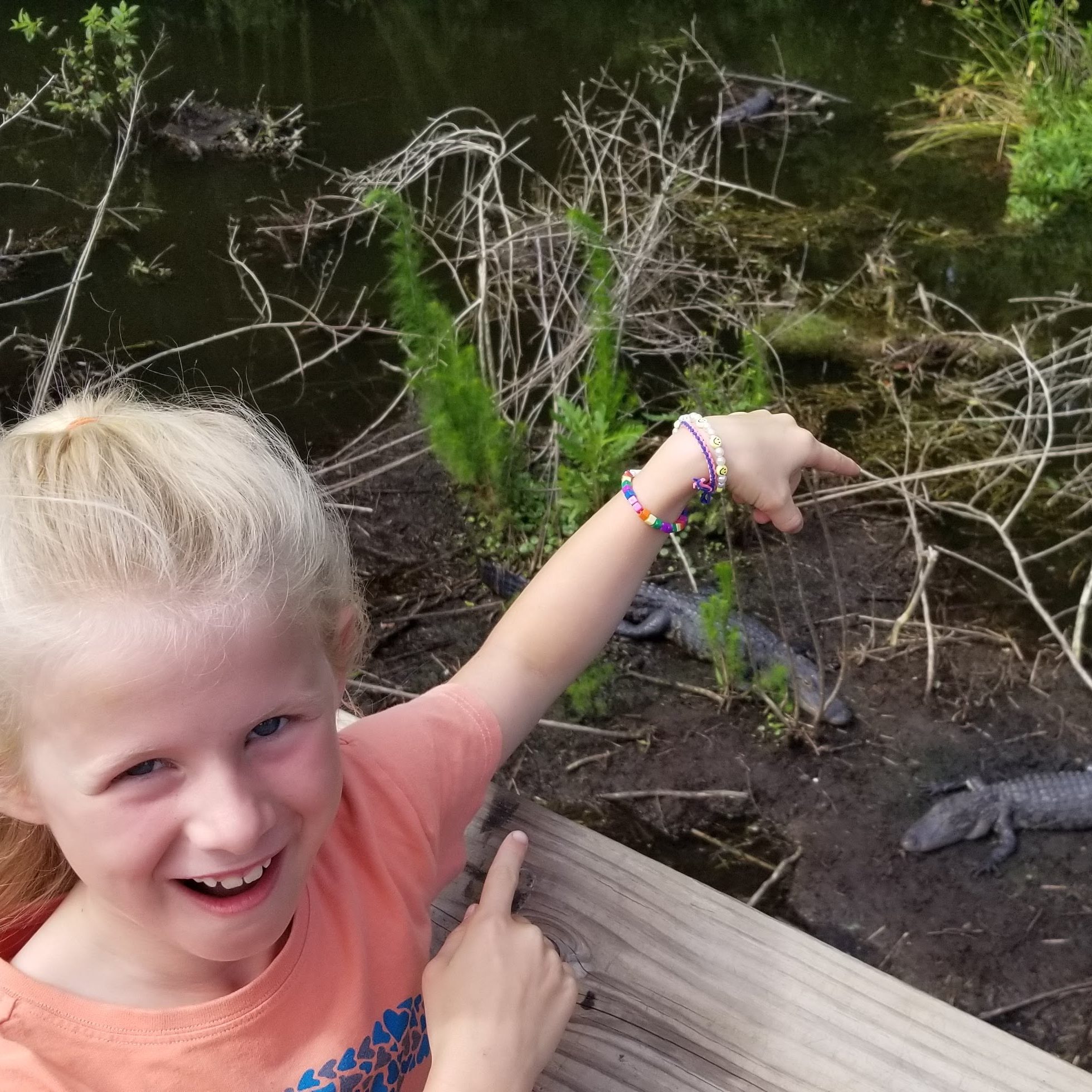
Finally, for those who are in the mood for some natural wonders after so much history, make sure to check out the Cypress Wetlands. It is a small nature reserve there on Port Royal, and we saw so much wildlife–gators, turtles, birds, birds, and did I mention birds? It was nesting season, and there were probably hundreds of wading birds there, either newly born or taking care of the new babies.
And so, having broken my computer’s keyboard due to typing entirely too much, I thank all one or two of you who made it down to the end of this post. I hope you learned something, and I hope you will take the time to visit Beaufort and learn about the history that has taken place here, and the history of Reconstruction that happened throughout the United States.
 Beavers in the Park