
This is the sixth and final entry in our Alabama/Mississippi tour. This post covers what we did as we learned about the history of Natchez, as well as a few places we visited afterward, relating to my own family history. Skip ahead to that section here.
Having successfully navigated to the southern terminus of the Natchez Trace Parkway, the Beavers arrived at the city of Natchez, MS. It was a hot, muggy day, and Tiffany was not feeling too great; however, we got a good taste of the National Historical Park here, which interprets the story of Natchez as an important city to various groups of people at different times.
Natchez’s geographical position made it an important city, being located high on a bluff overlooking on the Mississippi River and at the bottom of the Natchez Trace. Of course, the Natchez people had been here for centuries. There is a (non-NPS) museum dedicated to the Natchez, located in town.
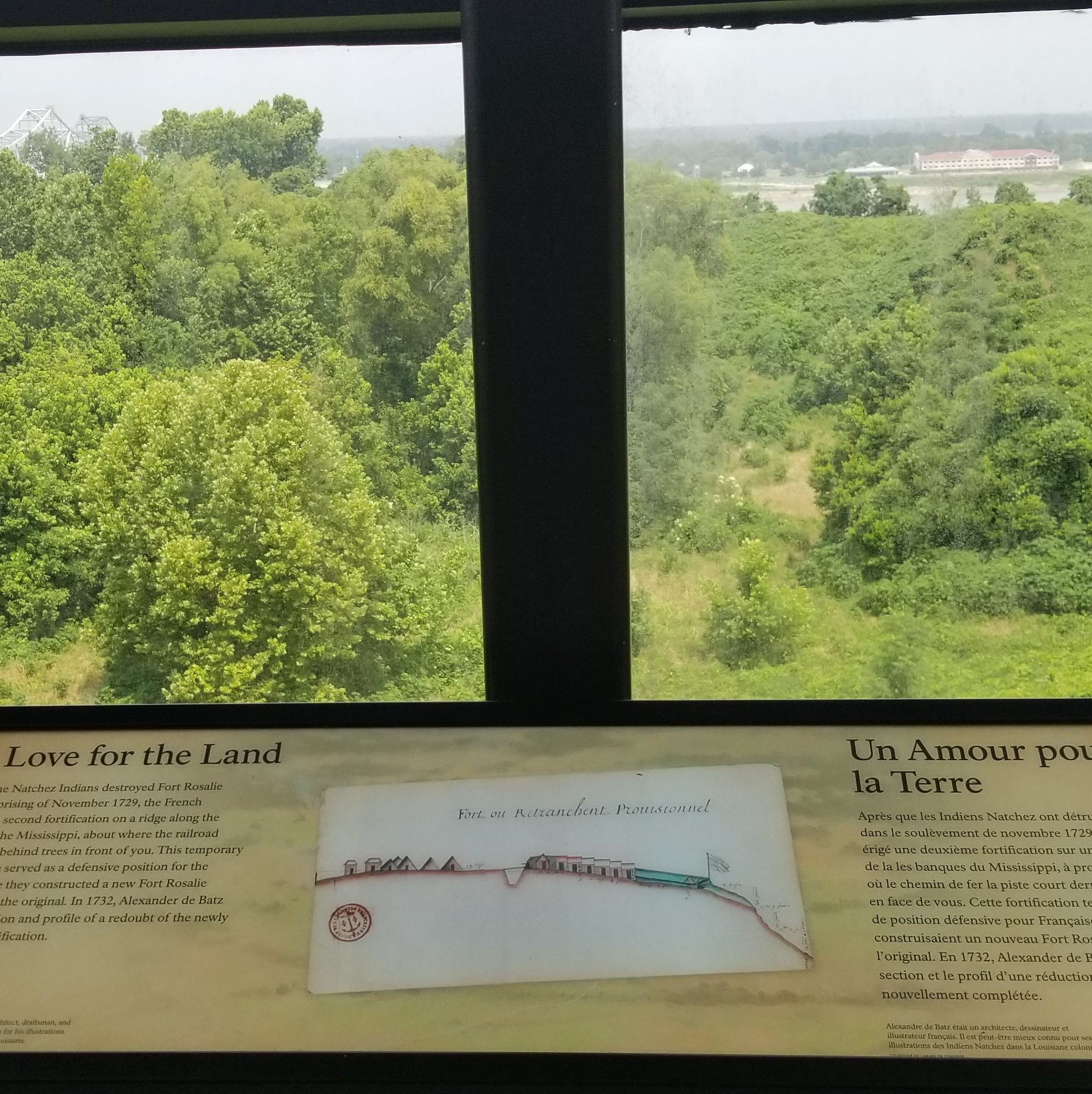
In the early 18th century, as the Spanish and English were also trying to make land grabs, the French established Fort Rosalie on the bluff overlooking the river in order to help control transportation up and down the river. Nothing except some earthworks remain now, but we passed by the site where it was as we drove around. I’m going back and reading now about its history, including the conflicts between the French and the Natchez, resulting in the Natchez killing over 200 of the French and burning everything down.
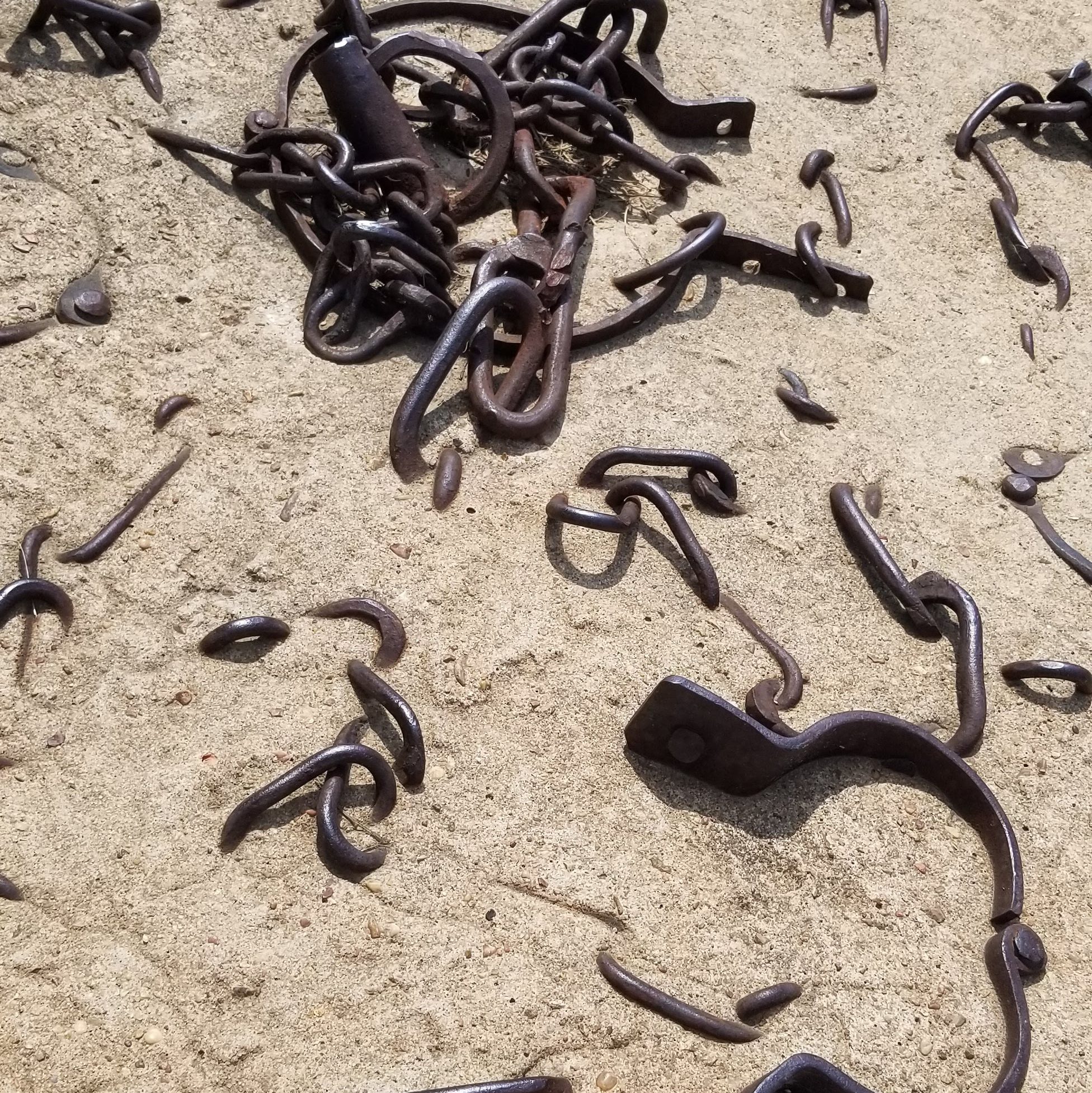
The city also was unfortunately a major slave trading hub, for a while in the 19th century having the second busiest slave market in the Deep South (next to New Orleans, if I’m not mistaken). On our way in, we stopped at the site of this market, called Forks in the Road. Here, there are some signs and a sculpture on the ground that causes visitors to think about the terrible act of selling humans that occurred here.
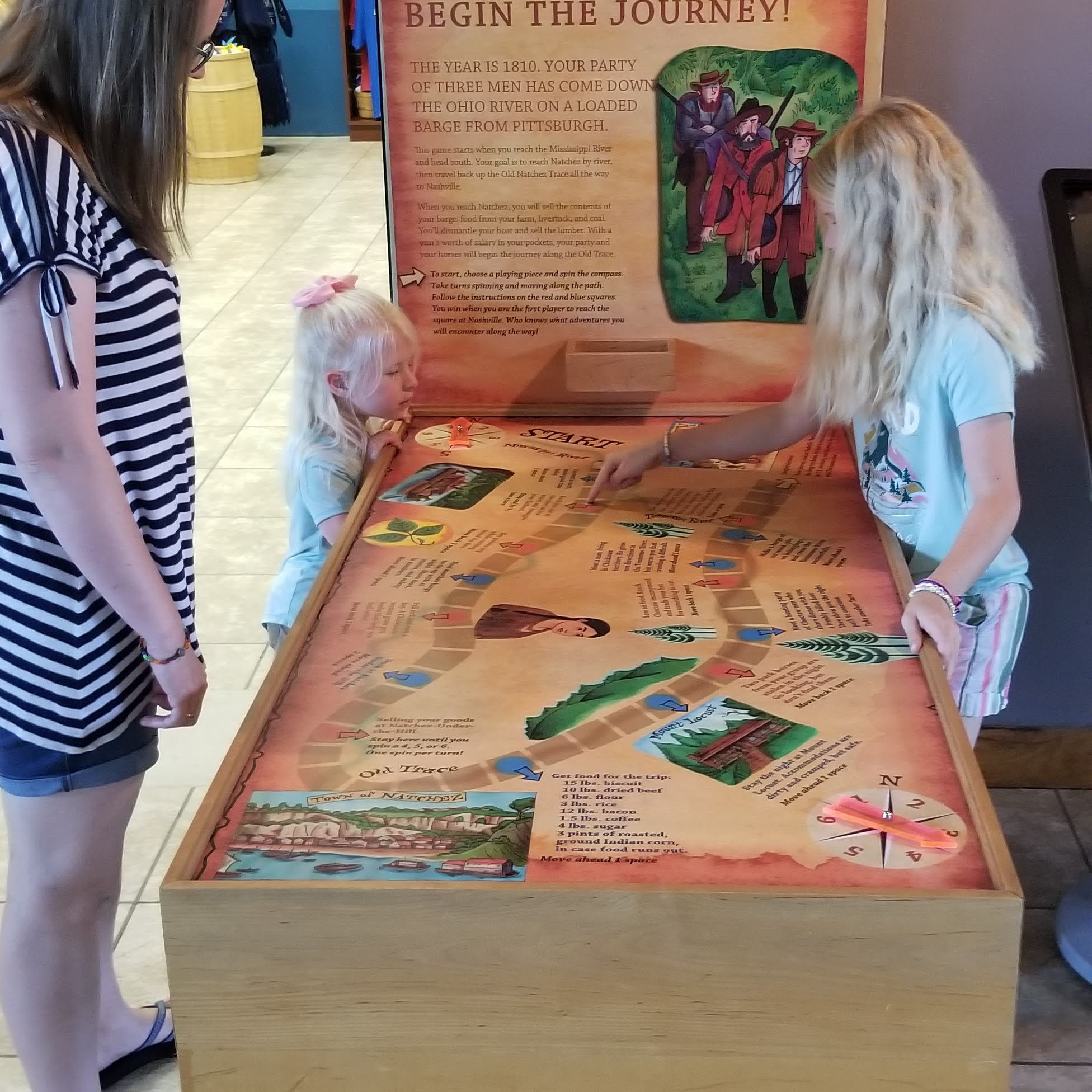
We arrived at the visitors center, located near the Mississippi River bridge. Here, we got our passport stamps, and the girls got their Junior Ranger badges. There were exhibits here talking about the city’s history. Interestingly, some of the signs were in both English and French. I don’t think the A/C was working, which was quite unfortunate on this muggy day.
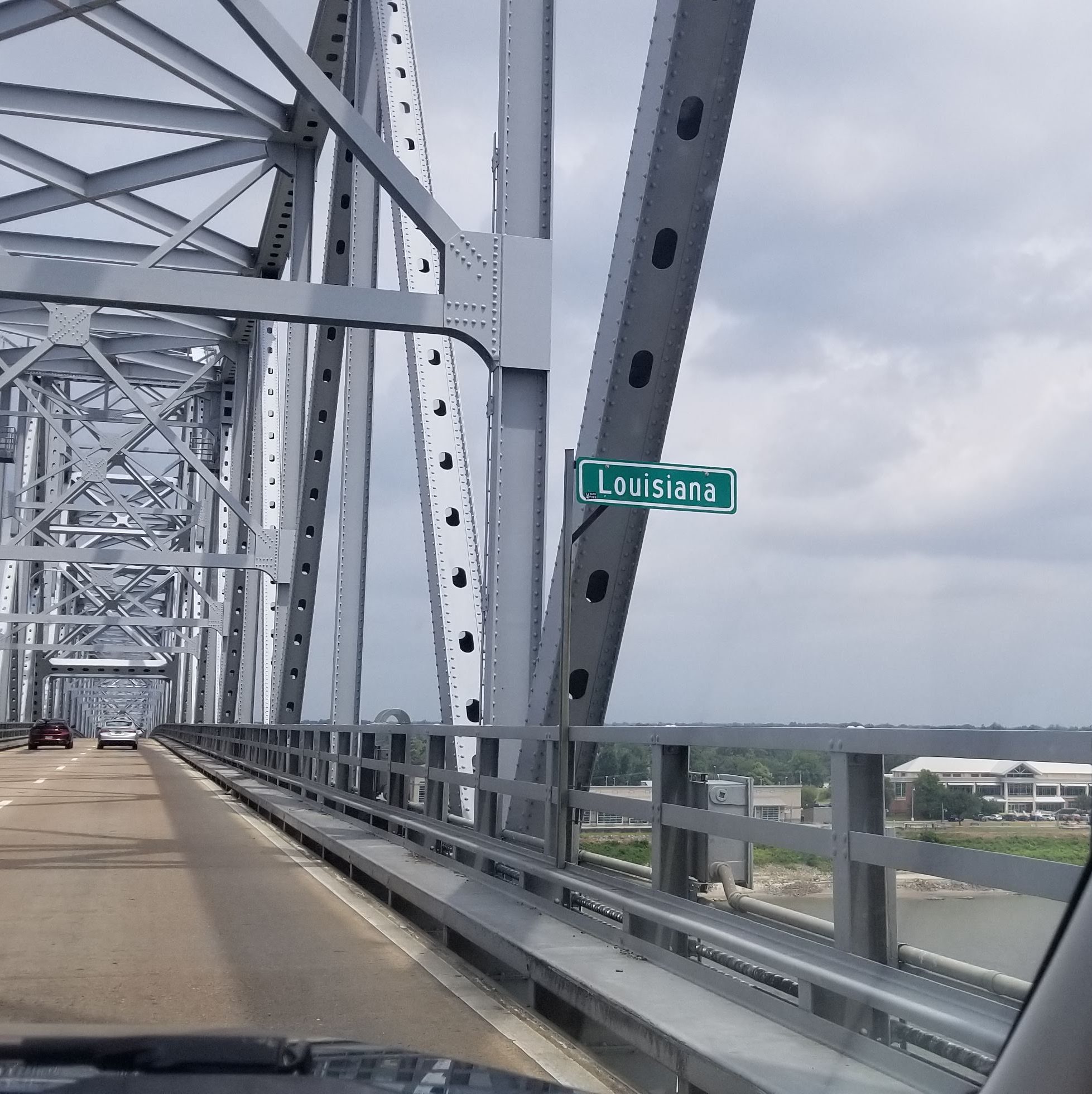
Leaving the VC, we decided to take a quick jaunt across the Mississippi just to say that we had gone to Louisiana (named after the French King Louis XIV, who was king at the time the French were settling here).
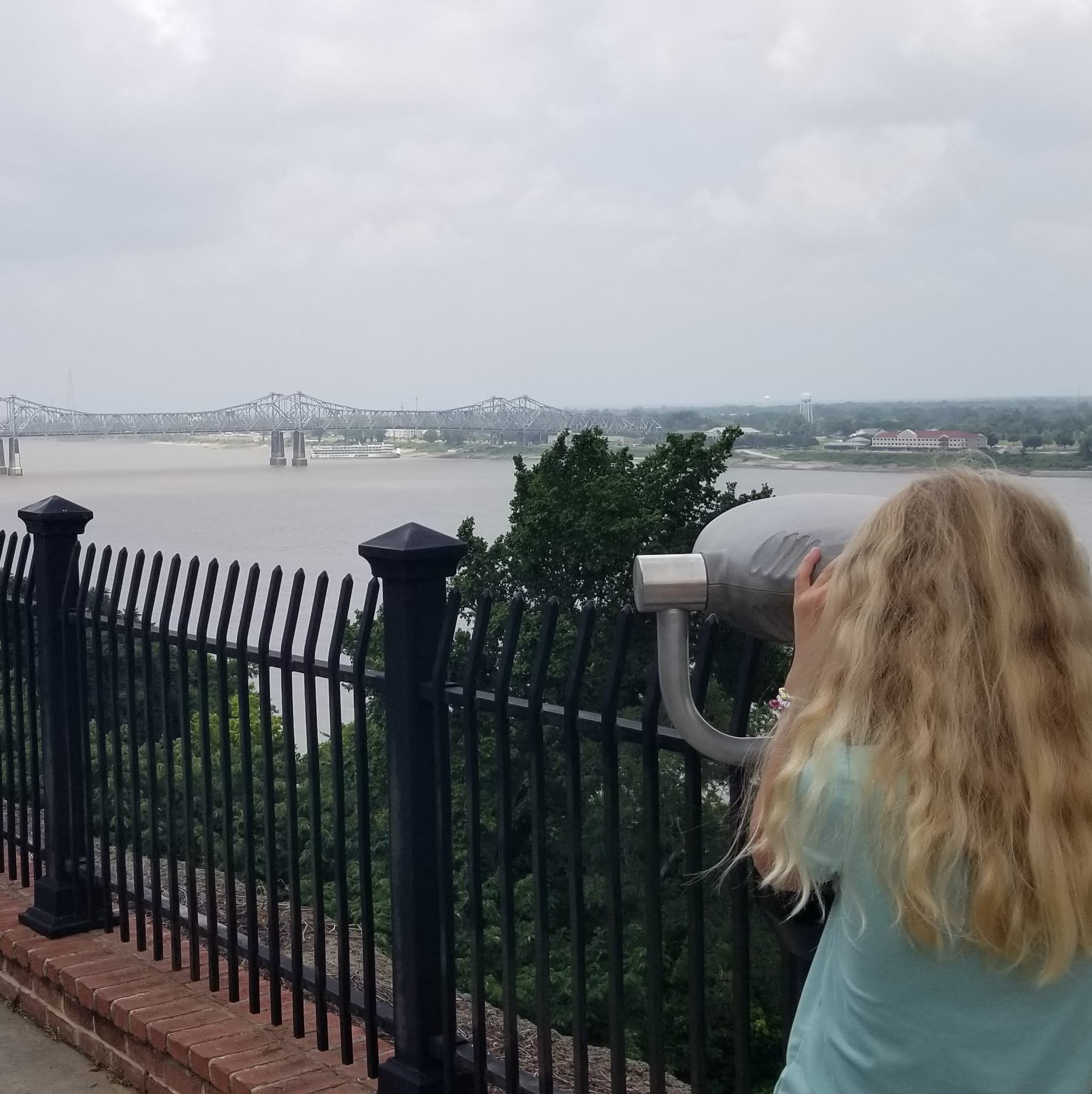
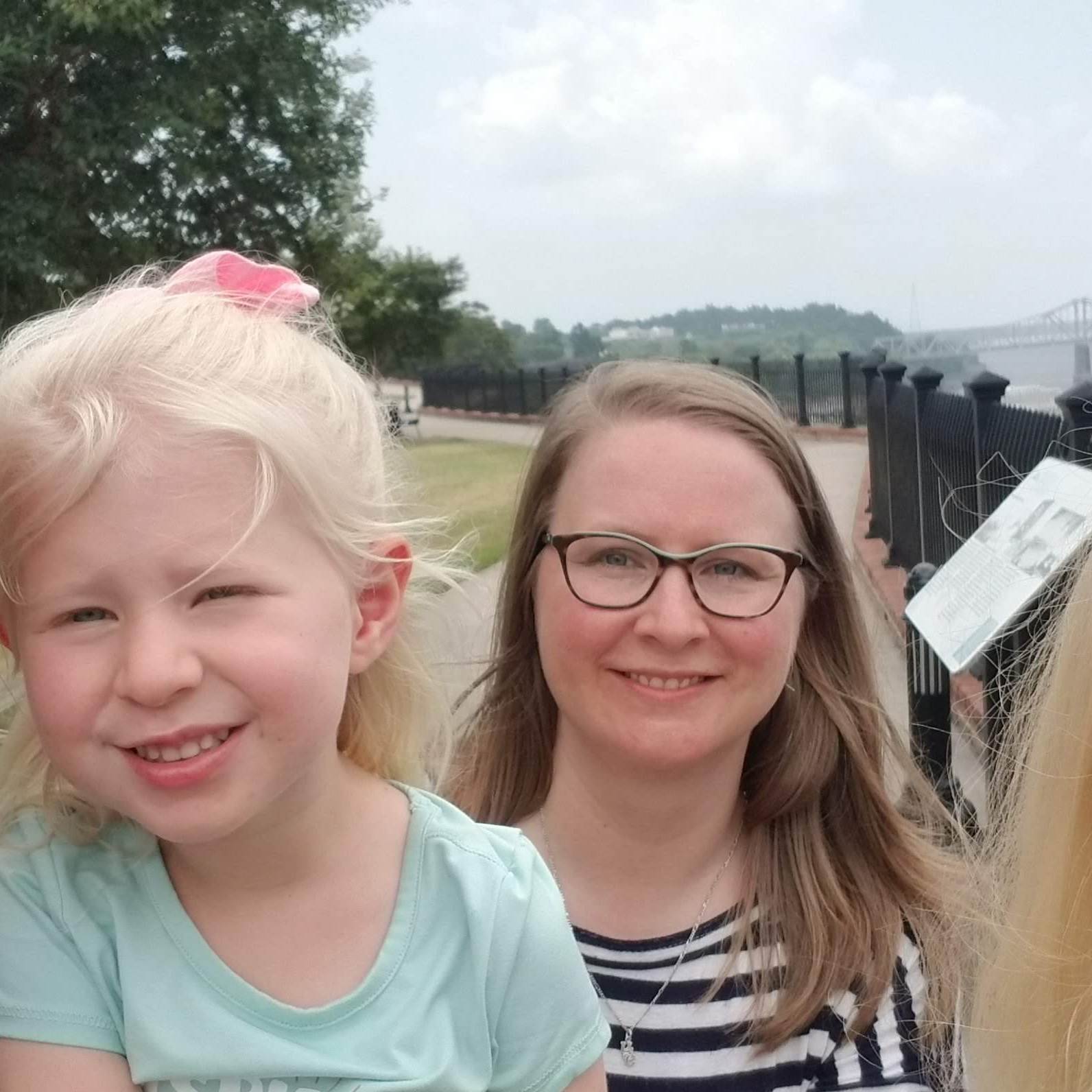
We turned around and headed towards a park on the bluff overlooking the river. Here, we enjoyed a nice picnic lunch while looking at the river. Down below, we saw a casino on a replica steamboat. Teagan in particular enjoyed the binoculars provided that didn’t require a quarter to operate.
From here, we got back in the car and drove past the William Johnson House, which is part of the park, but it was closed the day we were here. William Johnson was a free black man, born into slavery but emancipated by his owner. He became Natchez’s barber and was quite prominent apparently. He himself owned slaves, pointing at some of the complicated nature of race and ownership of other humans. He kept a detailed diary, which the Natchez NHP Facebook page often publishes on the anniversary of a certain page.
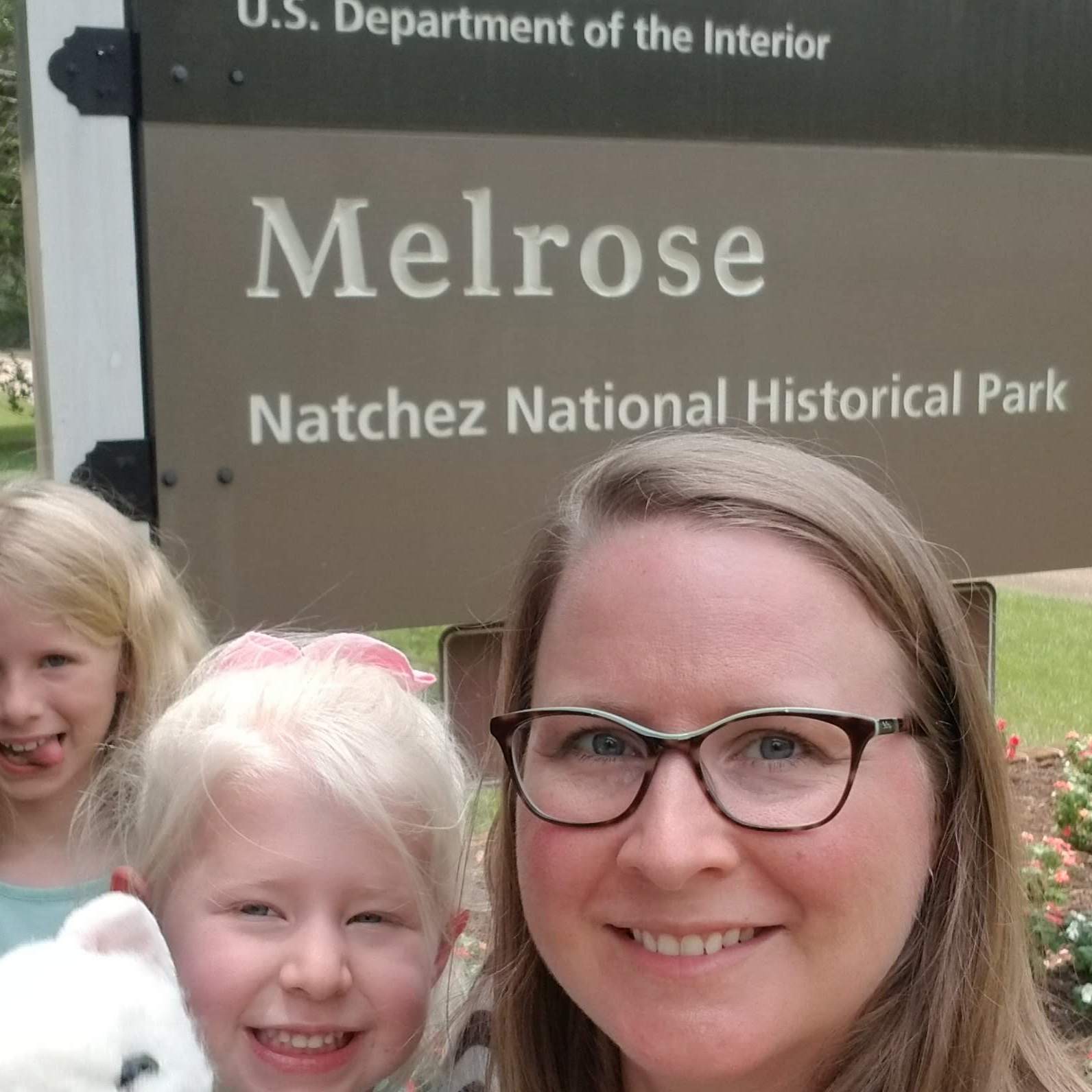
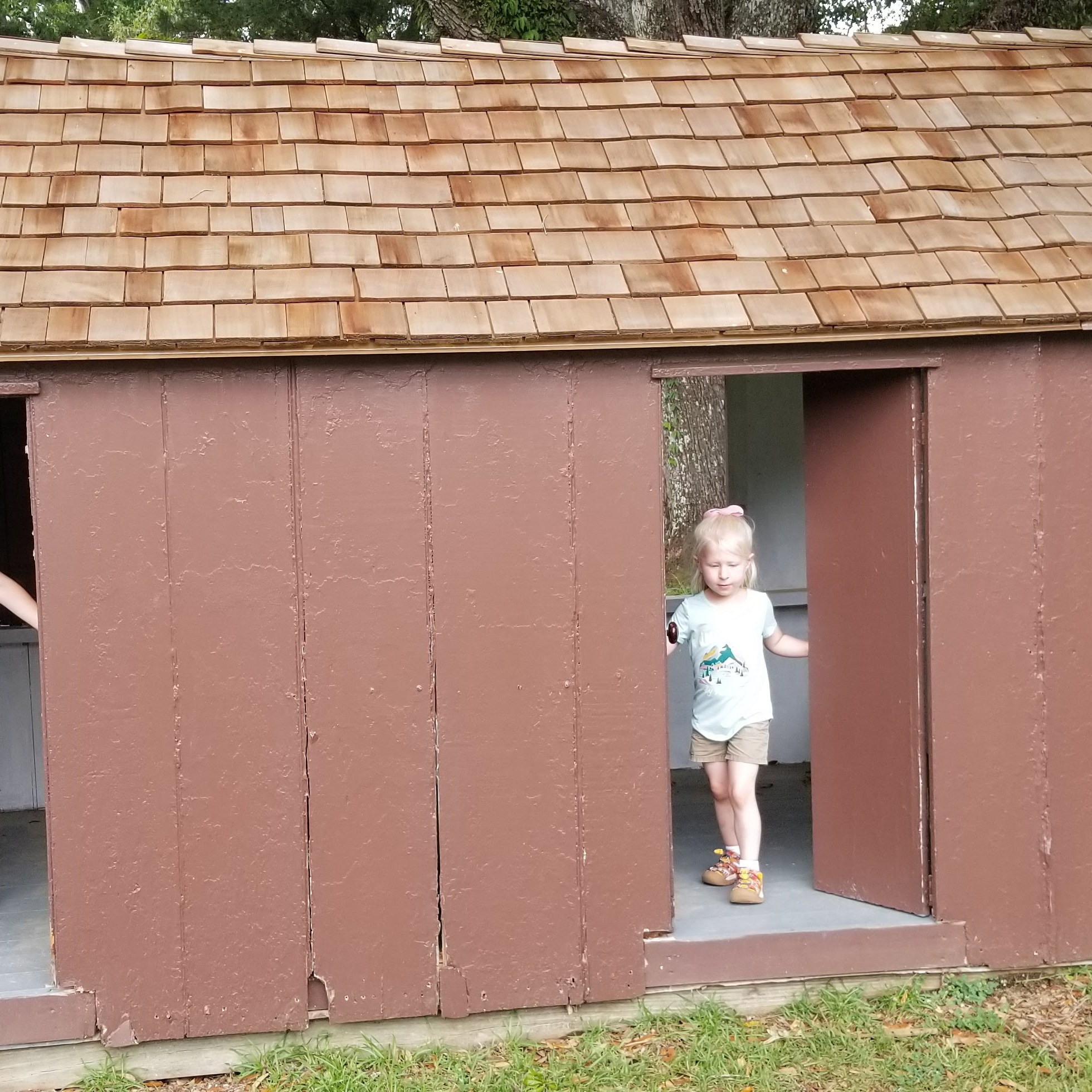
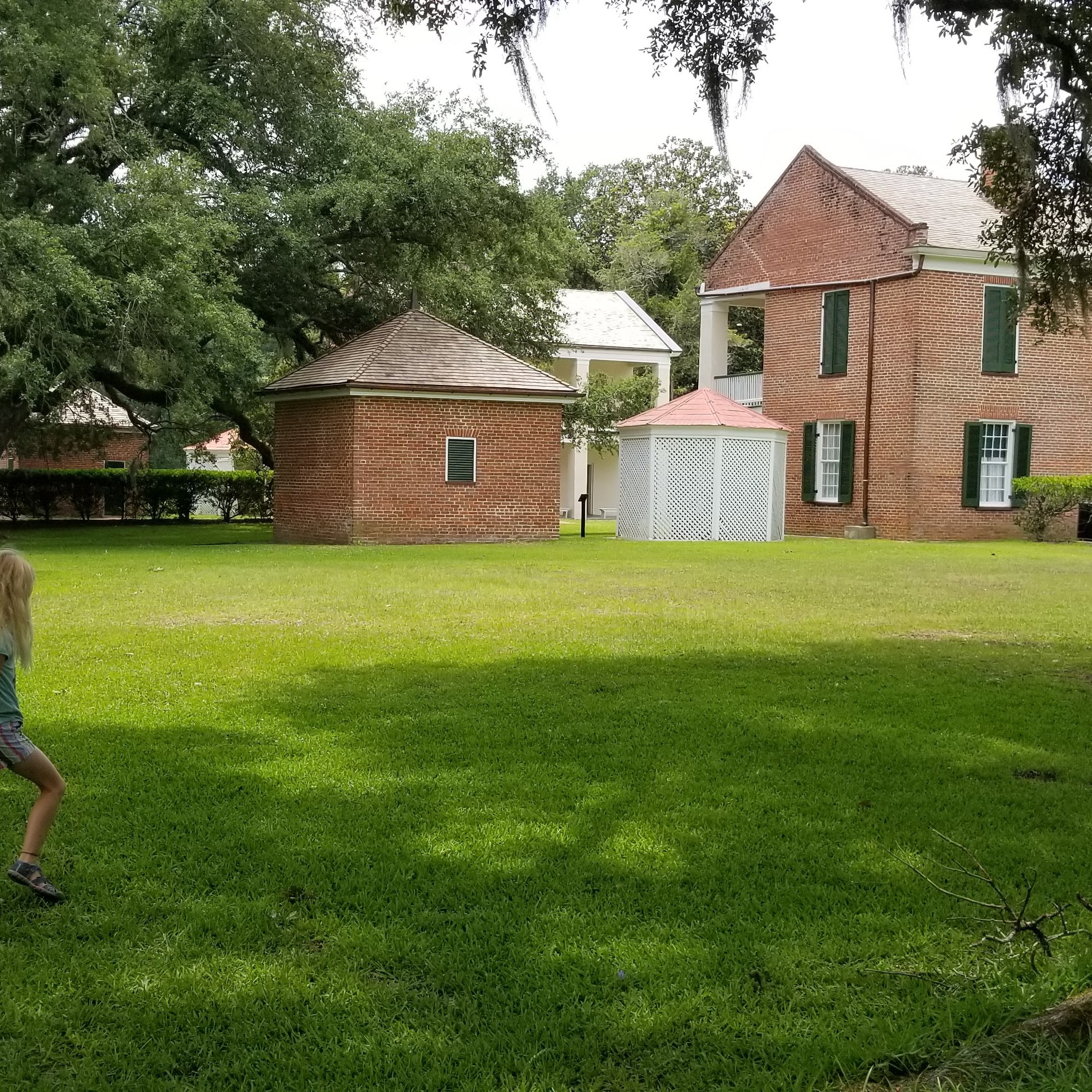
We ended up at Melrose, a former estate home of the prominent McMurran family in the early- to mid-1800s. They owned multiple cotton plantations, of course implying that they also owned slaves. The Melrose grounds still have some of the slave dwellings still standing, along with several other out-buildings. The girls and I got out to explore some, while Tiffany read the unigrid (park pamphlet) and napped in the car. We didn’t pay for a tour of the main house.
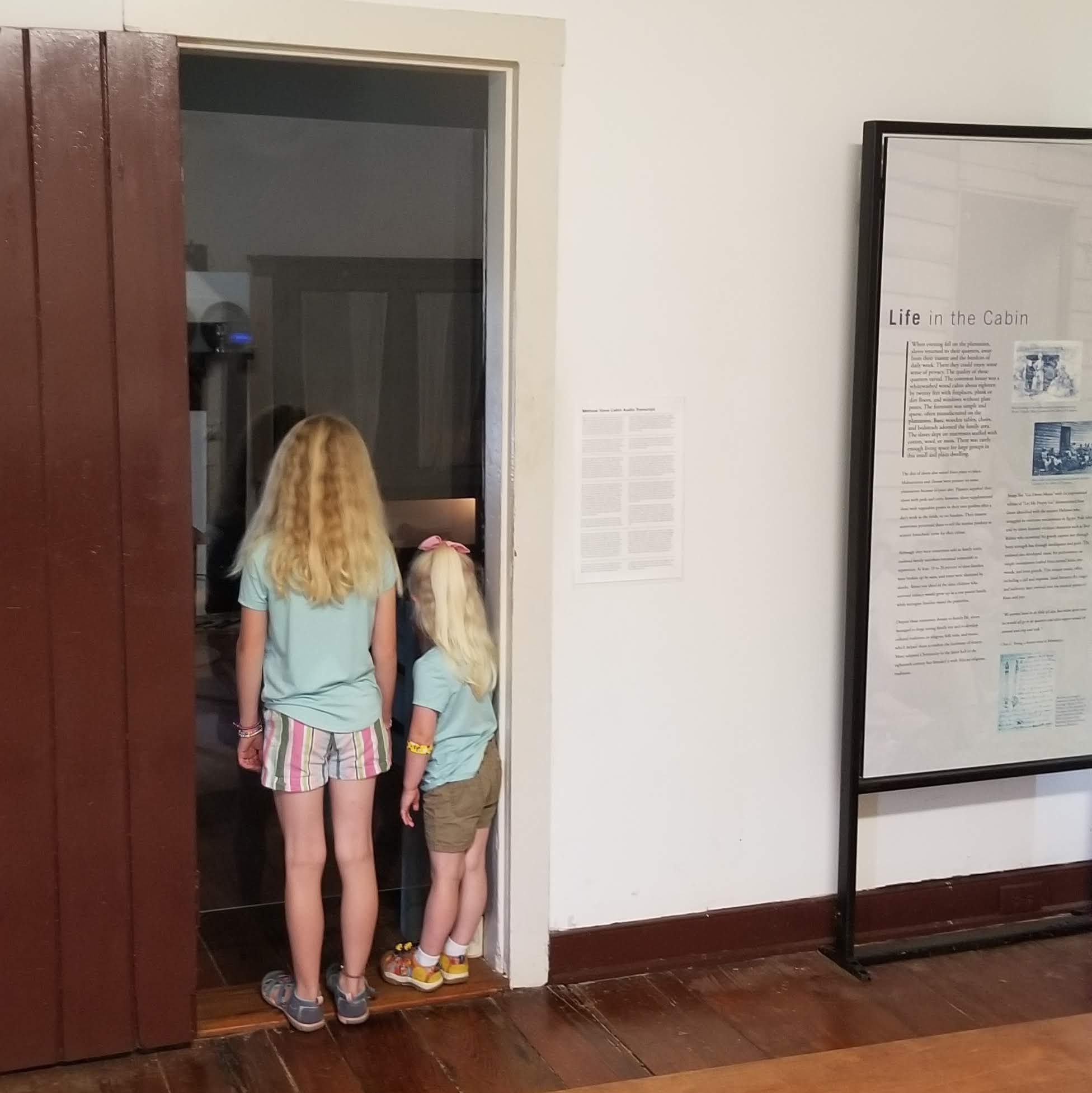
This concluded our visit to Natchez NHP. Our conclusion of Natchez is that it seems like a very tired town now. It wants to be something like a New Orleans or a Charleston, but it’s definitely not there. There is a hop-on-hop-off bus tour in the city, but it almost seems out of place. Perhaps we just didn’t visit on the right day, with the weather being oppressive and Tiffany likewise not feeling 100%. Whereas Natchez used to be at a crossroads of early America, it’s not on an interstate today. Even my uncle, who lives on the Mississippi Gulf Coast, said he only recently went to Natchez for the first time, and it was for a work conference.
Though we didn’t have any more national parks left to hit, we still had much history to explore as we turned our car eastbound.
In addition to Natchez being the end of the Natchez Trace, it was also the end another road that ultimately stretched from Milledgeville, GA around the turn of the 19th century. As I was researching my family’s history, I noticed that my ancestors and many others, living at the time in South Carolina, all packed up and headed to around the same place in southern Mississippi–the town of Monticello along the Pearl River. It struck me as odd, but then I realized that the road system we have today didn’t exist back then. I then researched and found the Three-Chopped Way, a road that was perhaps marked by three chops on trees along the path that headed west out of Georgia and into Mississippi.
When I realized that our route from Natchez to Hattiesburg (where my dad’s family reunion was–the main reason for our trip) was going to take us through Monticello, I decided to intentionally drive by a few places.
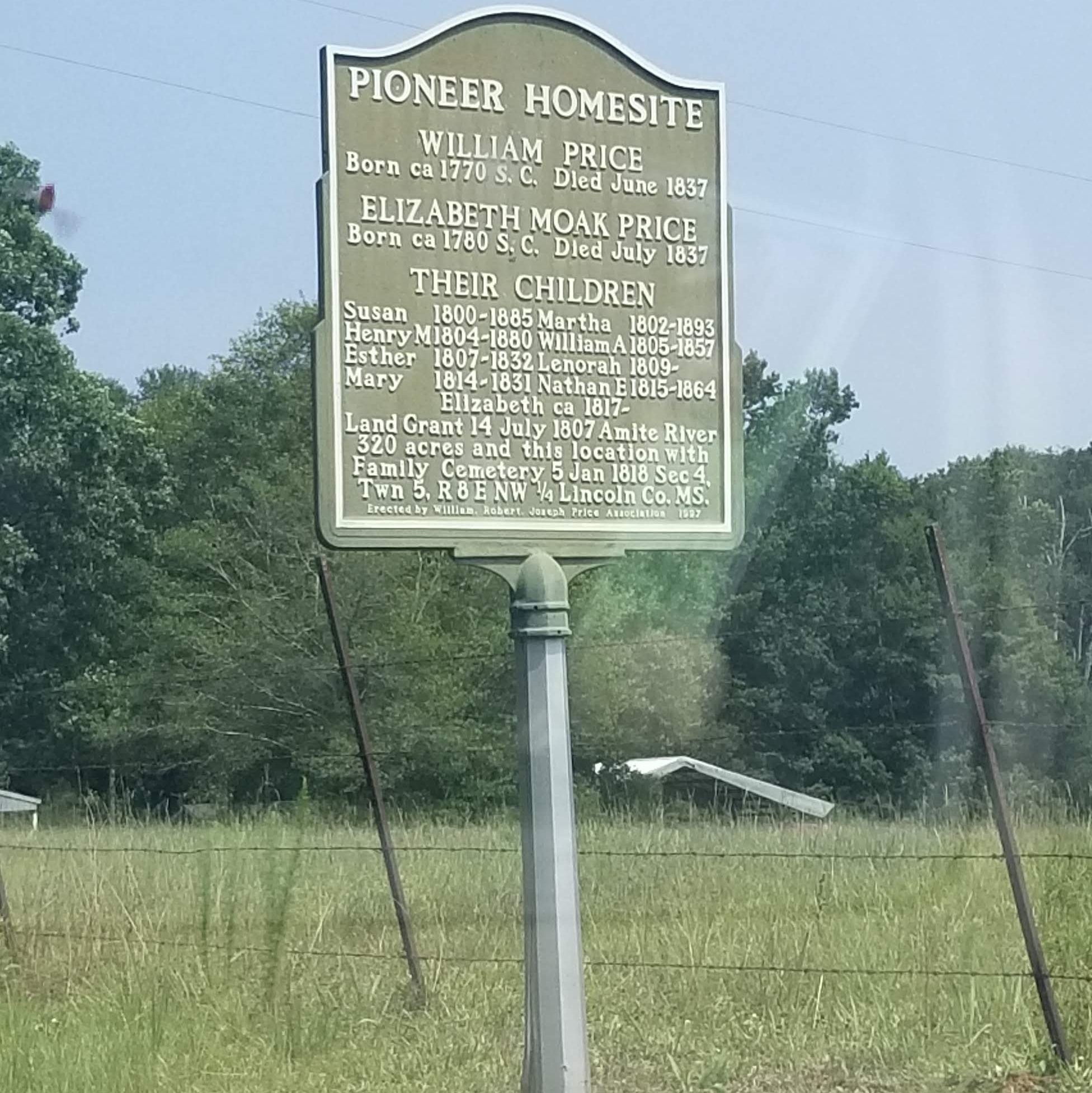
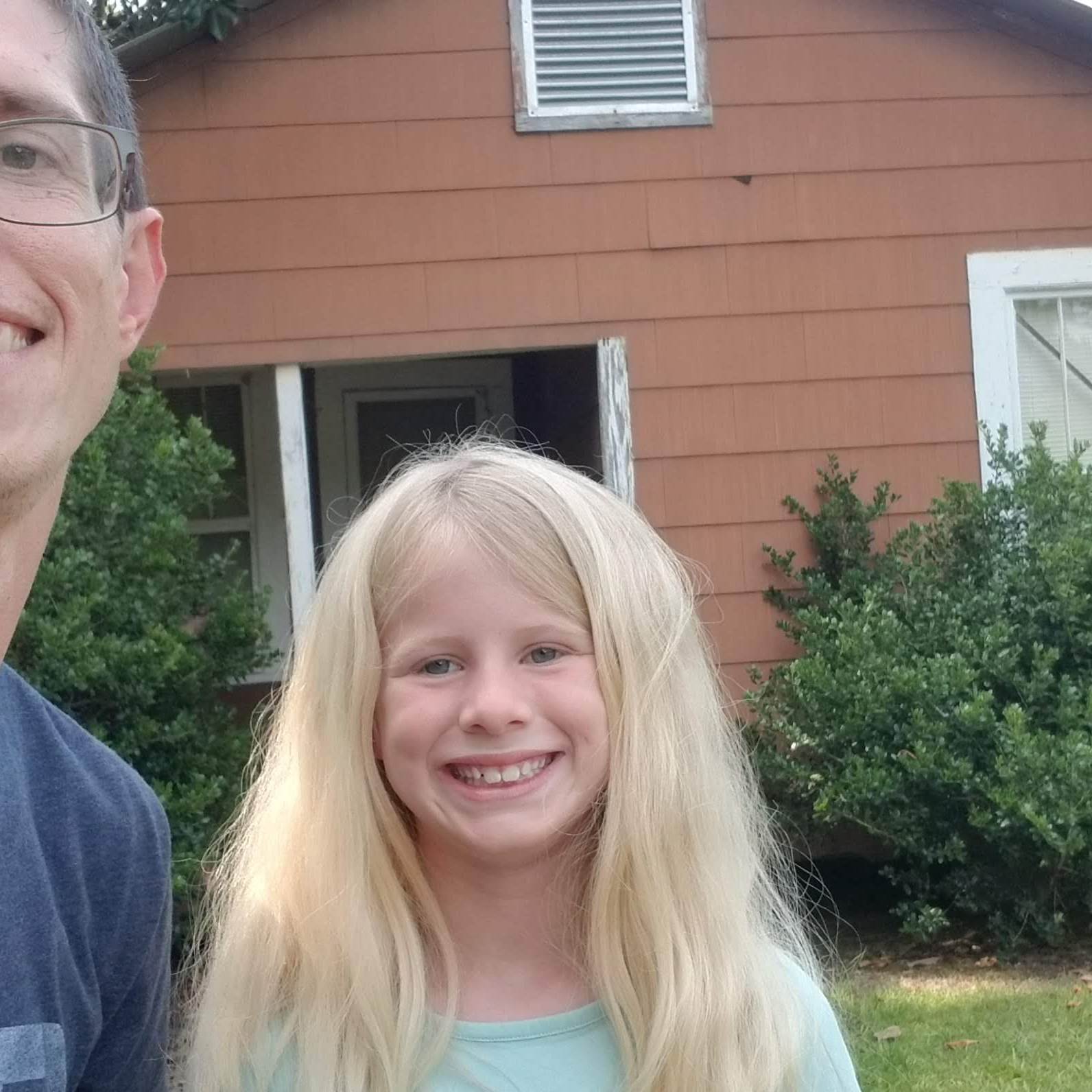
I had ancestors (this is my 6th-great-grandfather pictured) who moved from what is now Columbia, SC (where we live now) to this site out in the sticks in rural Bogue Chitto, Mississippi, near Monticello. Not pictured: the guy who was behind me, then who also stopped when I pulled off the road…and I got a little nervous…he eventually slowly inched beside me then turned into the house that was just ahead. I guess he lived there and wondered why this random family from SC was pulling off the road at his chicken farm.
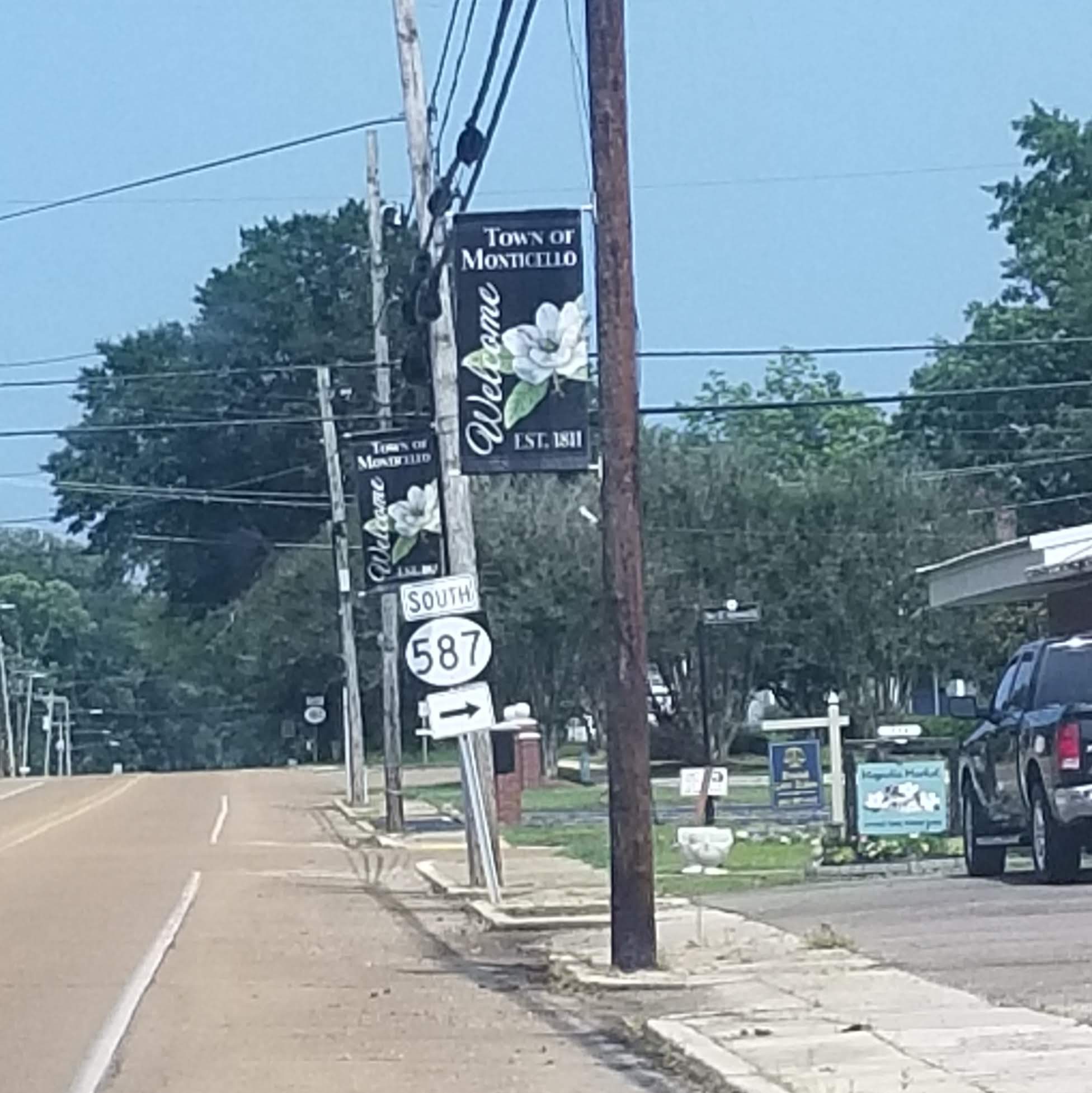
When we passed through Monticello and saw the ‘Est. 1811’ on the signs, it was interesting to think that it was my ancestors that were some of the first people there. They packed up from a couple of places in SC/GA and headed west…pioneers, if you will. I learned that many of them owned slaves (some had a couple of dozen). It made me sad to think about them moving with the slaves, possibly causing family members to be separated by hundreds of miles.
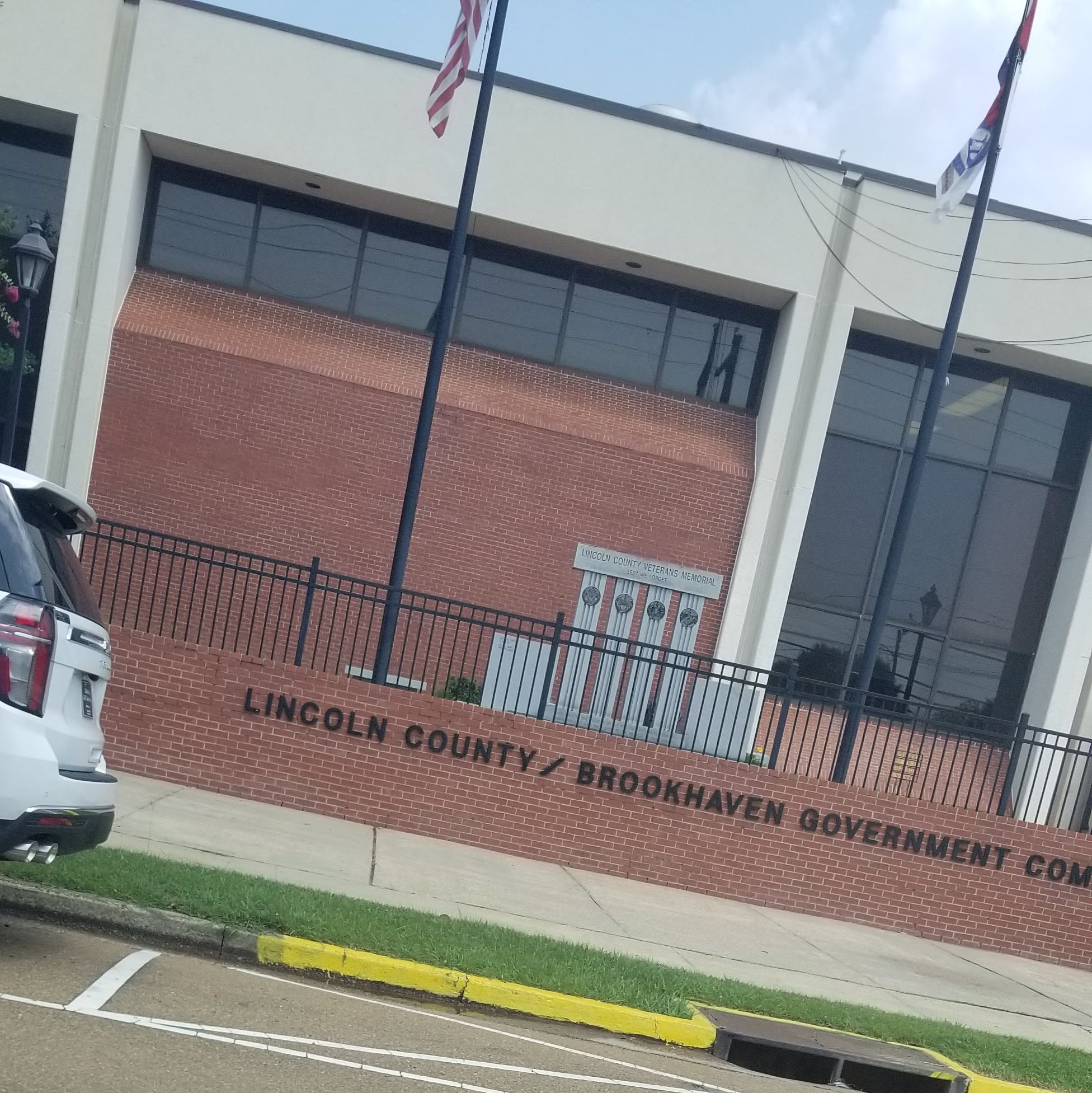
One other stop was Brookhaven, MS. This place is important to me because of an event that happened back in 1868. One of my ancestors had owned slaves on his nearby plantation. After Emancipation, federal troops were in the area, and the Freedman’s Bureau established an office in Brookhaven.
One of the sharecroppers, whose name was William Dotson, was accused by the master of having an affair with his daughter. Members of the KKK (or, at least, neighbors dressed up like the KKK) showed up, beat him, and told him to leave. Mr. Dotson came to the Freedman’s Bureau here in Brookhaven to lodge a complaint and to help settle financially with his boss.
As I drove by the courthouse, I couldn’t help but be thankful that racial relations are better than they were, and hopefully justice is doled out here to all equally, regardless of their skin color.
As we headed towards Columbia, MS, we also passed by my great-grandparents’ houses where they used to live. In fact, one of my great-grandmas was still alive when Teagan was born, though she never got to see her.
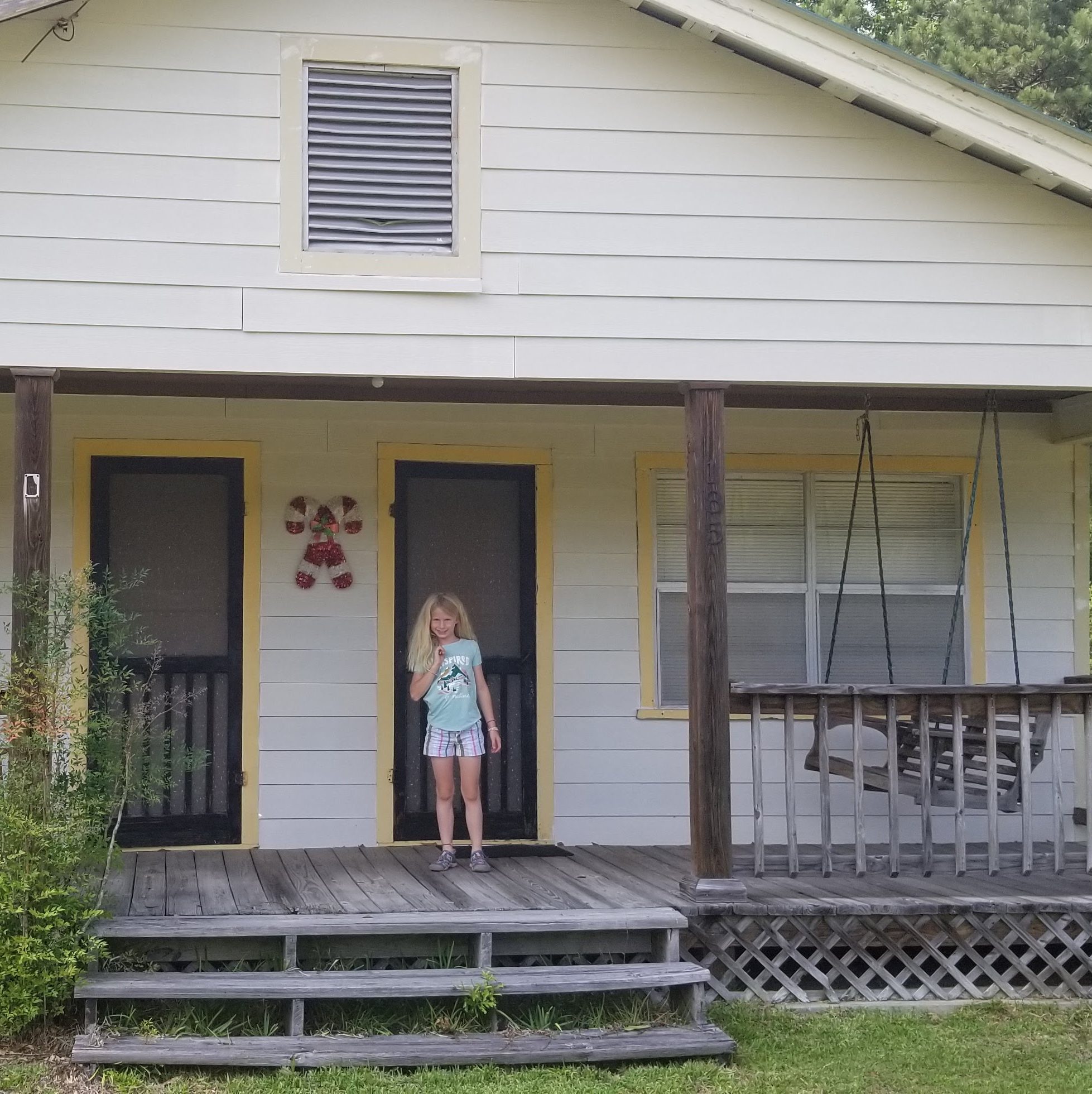
We saw my grandma’s brother and her husband, who still live next door to the above house. It was nice to chat with them for a minute. But then, we headed to Hattiesburg to meet up with my dad and his family. We spent a couple of nights at Paul B. Johnson State Park, where we all had fun catching up.
On our way back to SC, we stopped in Montgomery to the Legacy Museum and National Memorial for Peace and Justice. This is a must-see for anyone interested in civil rights and African-American history. It is not a NPS site, but it is well worth your time. Tiffany wrote about it back on our post from Birmingham.
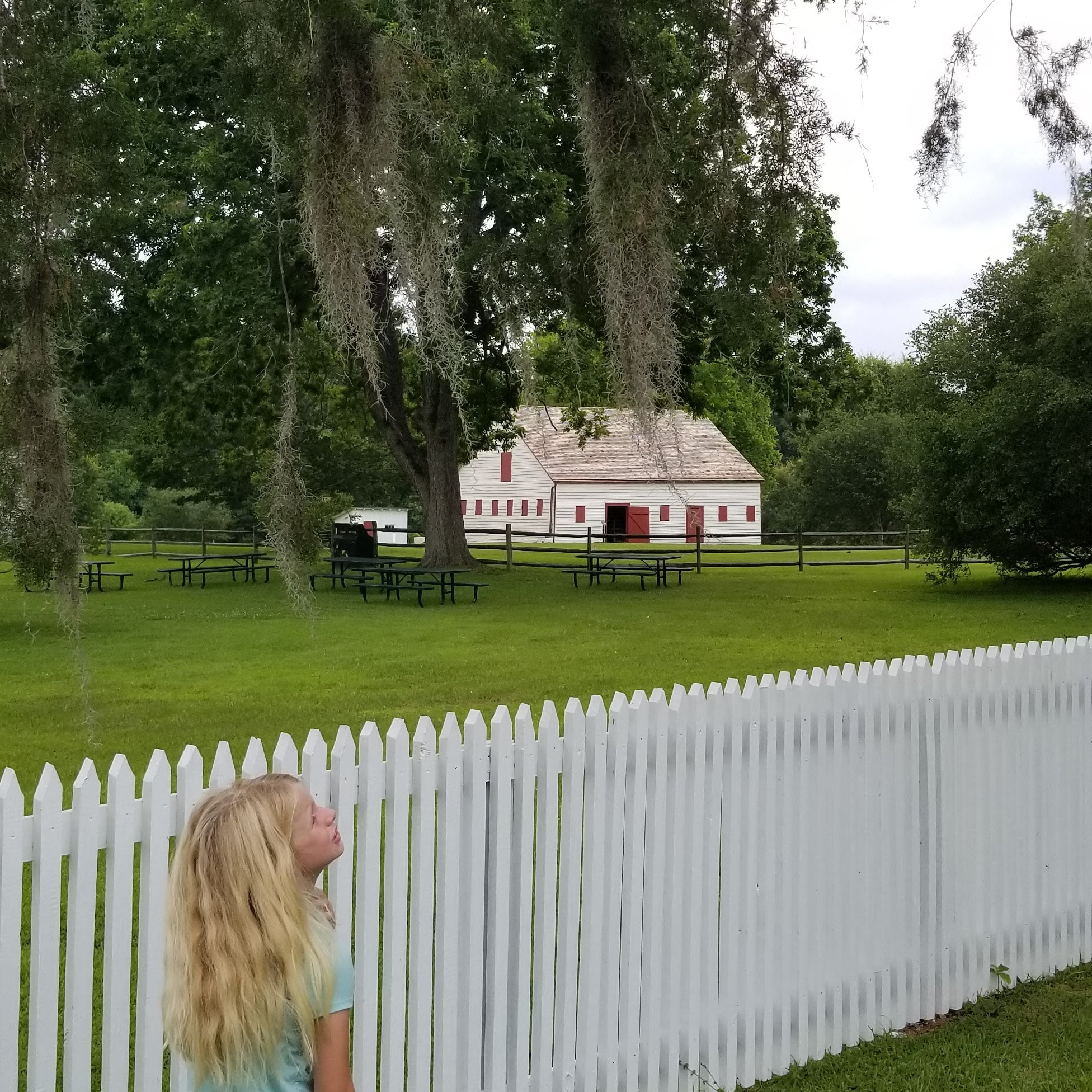
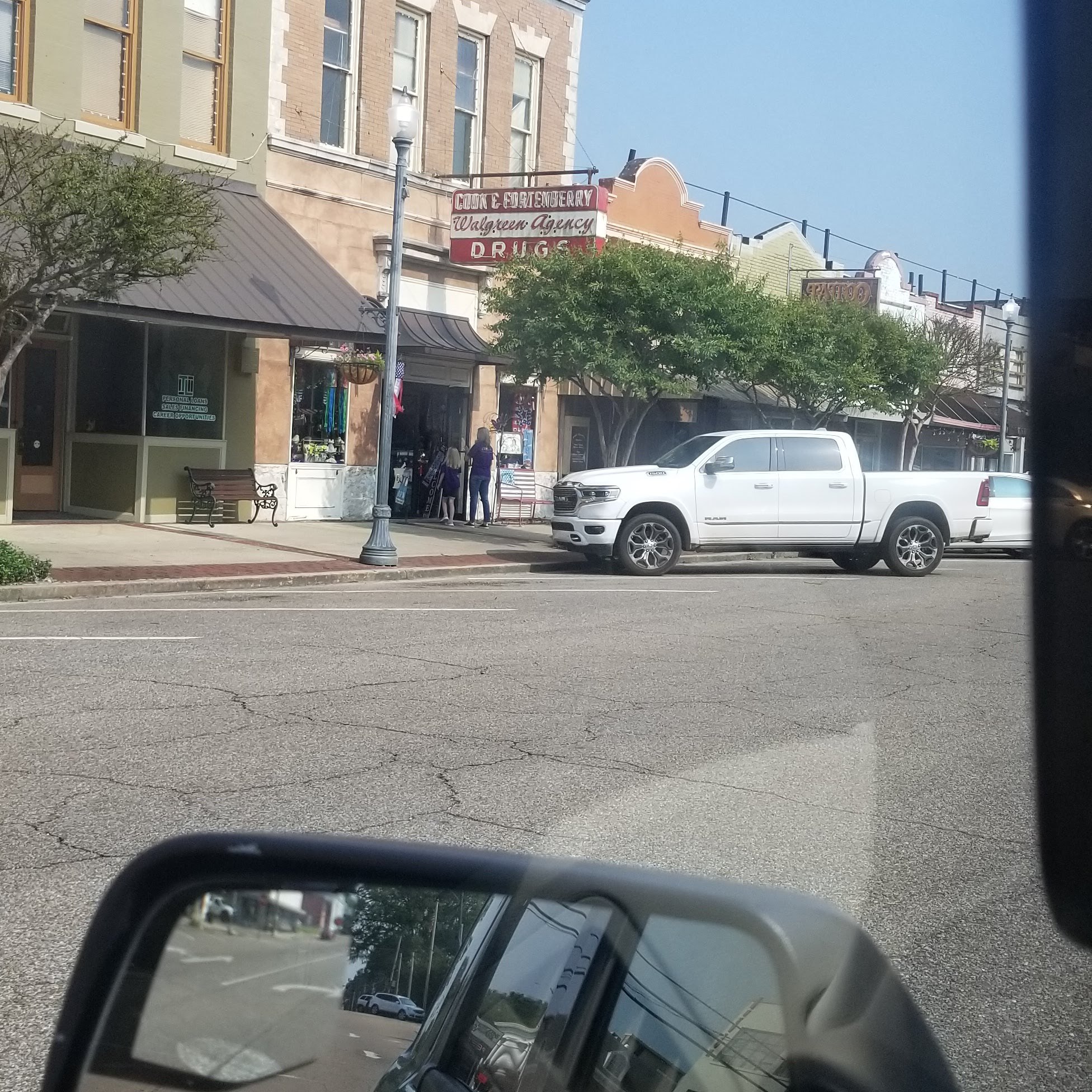
Click below to see full-size versions of a couple of other pictures from Natchez and the road to Hattiesburg.
 Beavers in the Park