Part 3 of our Florida/Georgia trip. For Part 2, click here.
After a night of rest and a delicious, hot breakfast at the Hampton Inn in Kingsland, GA, we hopped down I-95 into Florida. It was both of our girls’ first time in Florida, and the first time in over a decade for either Tiffany or me. (Quick note about the hotel: We normally do AirBnBs. So, the girls immediately reacted ‘this is so tiny’ when we got into our room; however, they gave the free hot breakfast a big thumbs up!)
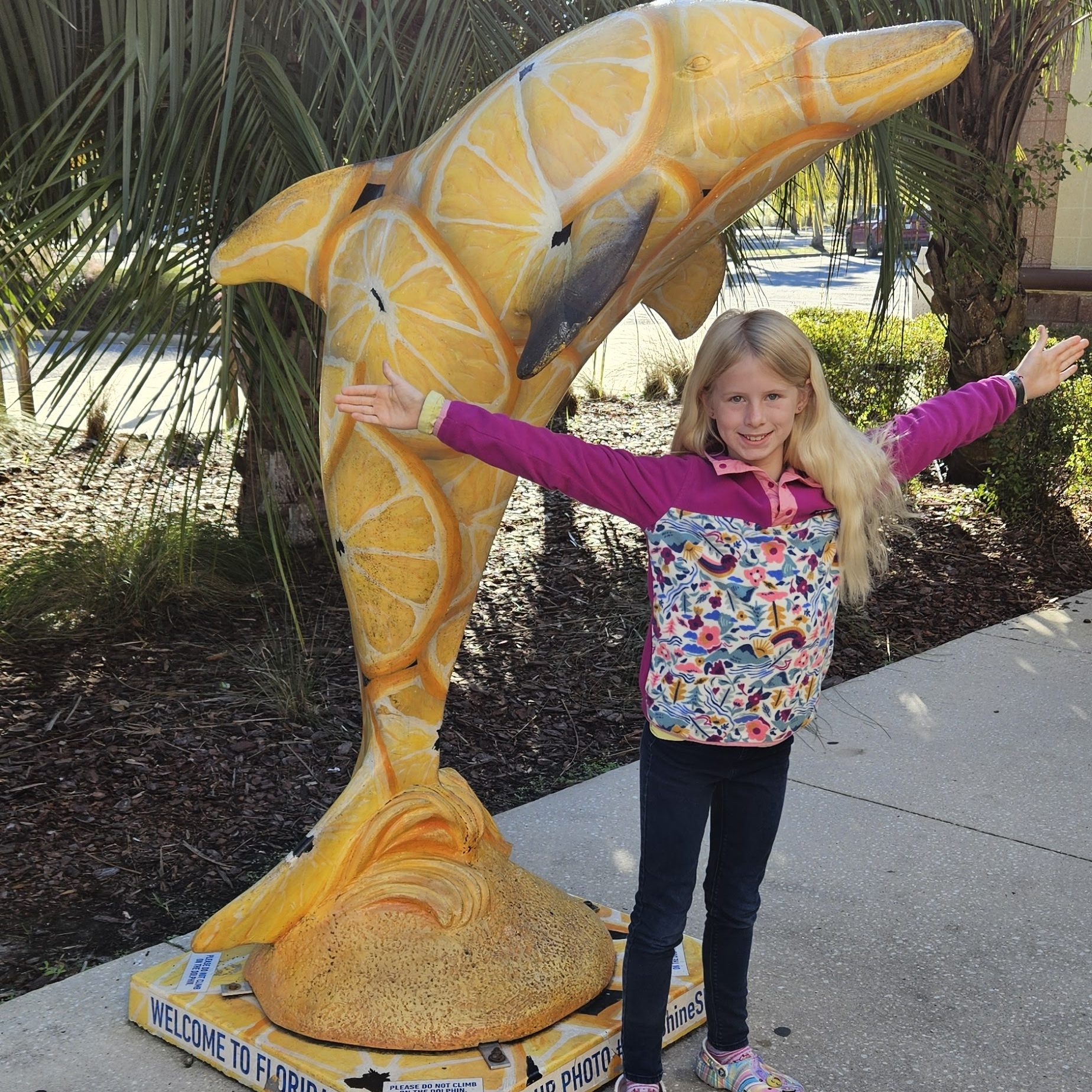
The first stop, naturally, was the Welcome Center. It was a purposeful stop, given that Teagan could take advantage of the Welcome to Florida sign for her school project later this year, and they give out free citrus (orange or grapefruit) juice. (Teagan will be quick to tell you that orange juice is the state drink of Florida.) Sage tried grapefruit, but wasn’t a huge fan.
After snagging some tourist brochures, we headed to a site that has been on my radar a while, simply because of its intriguing name. The word ‘Timucuan’ just seems exotic, and the thought of an ‘ecological preserve’ gets my environmentalist self excited. The name comes from the name of the Timucua , the indigenous group that inhabited the area before the Europeans arrived in the sixteenth century. (I heard it pronounced TIM-uh-kwa by someone in the park, but I also heard it elsewhere on the trip as tih-MOO-kwa.)
The site gets to tell the story of the 46,000 acres of wetlands, forest, and waterways that make up the site. Additionally, it interprets the different people who lived here for the past centuries, whether those people were Indigenous Americans, Europeans, Africans, or Black/White Americans.
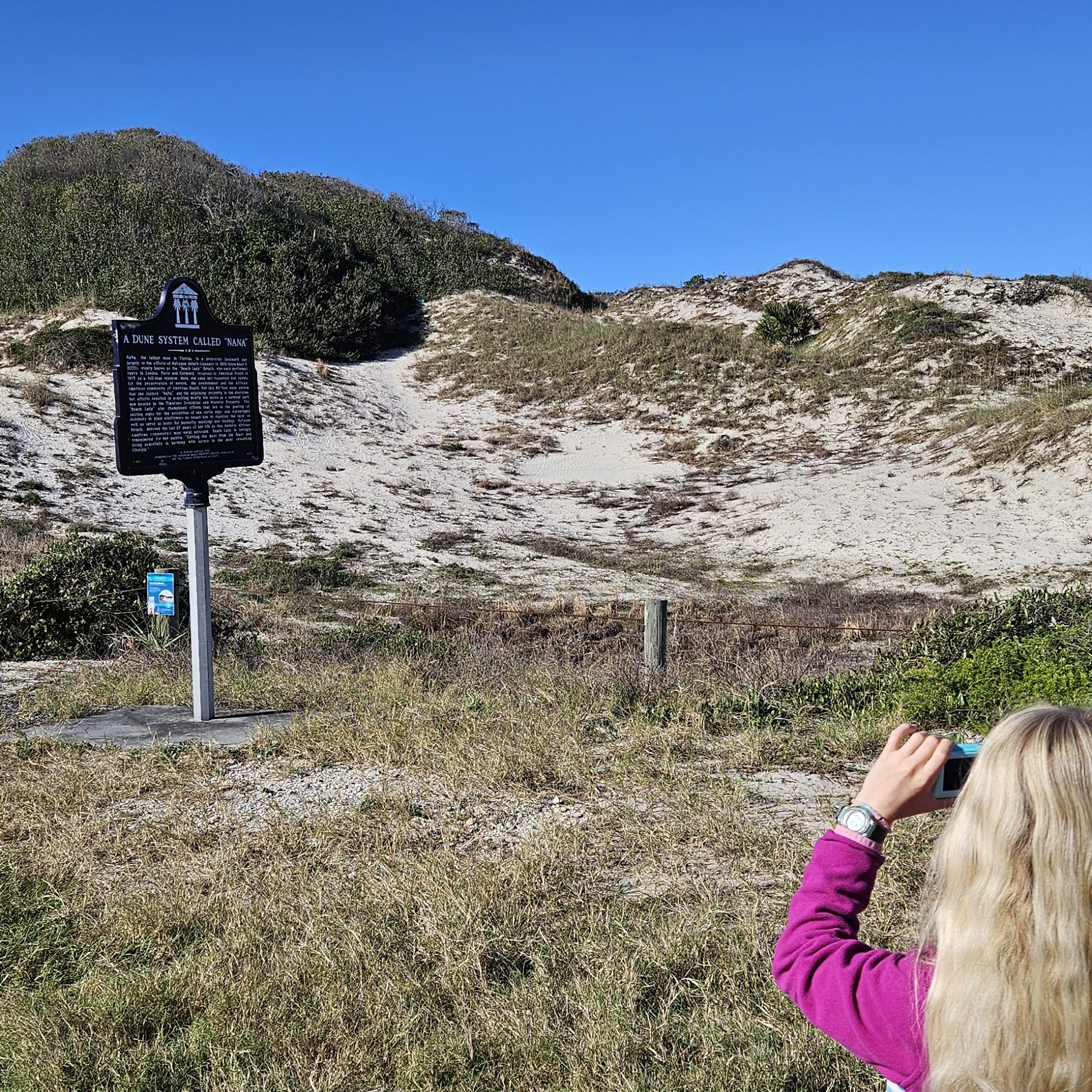
Our first stop was a place called American Beach. This is a small site that preserves the tallest sand dune in Florida, which has the name NaNa. Teagan enjoyed looking at that (it was, admittedly, more impressive than I thought it would be). I also enjoyed reading about the history behind this dune. In the early 20th century during the time of racial segregation, American Beach was where African Americans could enjoy the beach. MaVynee “Beach Lady” Betsch fought to have the site preserved, which the NPS now does.
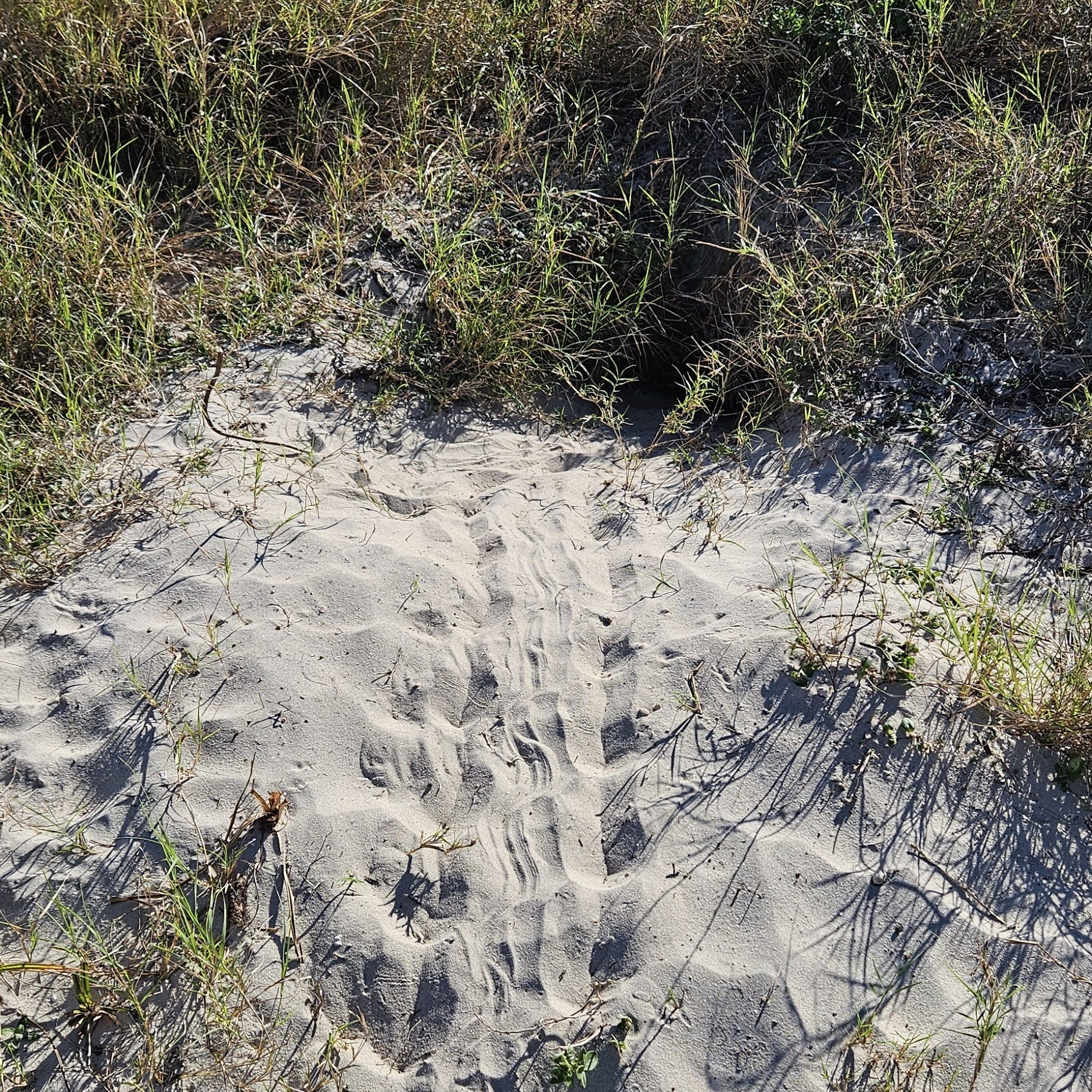
Before continuing down the road, we spotted something that looked like an animal burrow. Thanks to the magic of ChatGPT, I snapped a picture, and it (probably correctly) identified it as a gopher tortoise burrow.
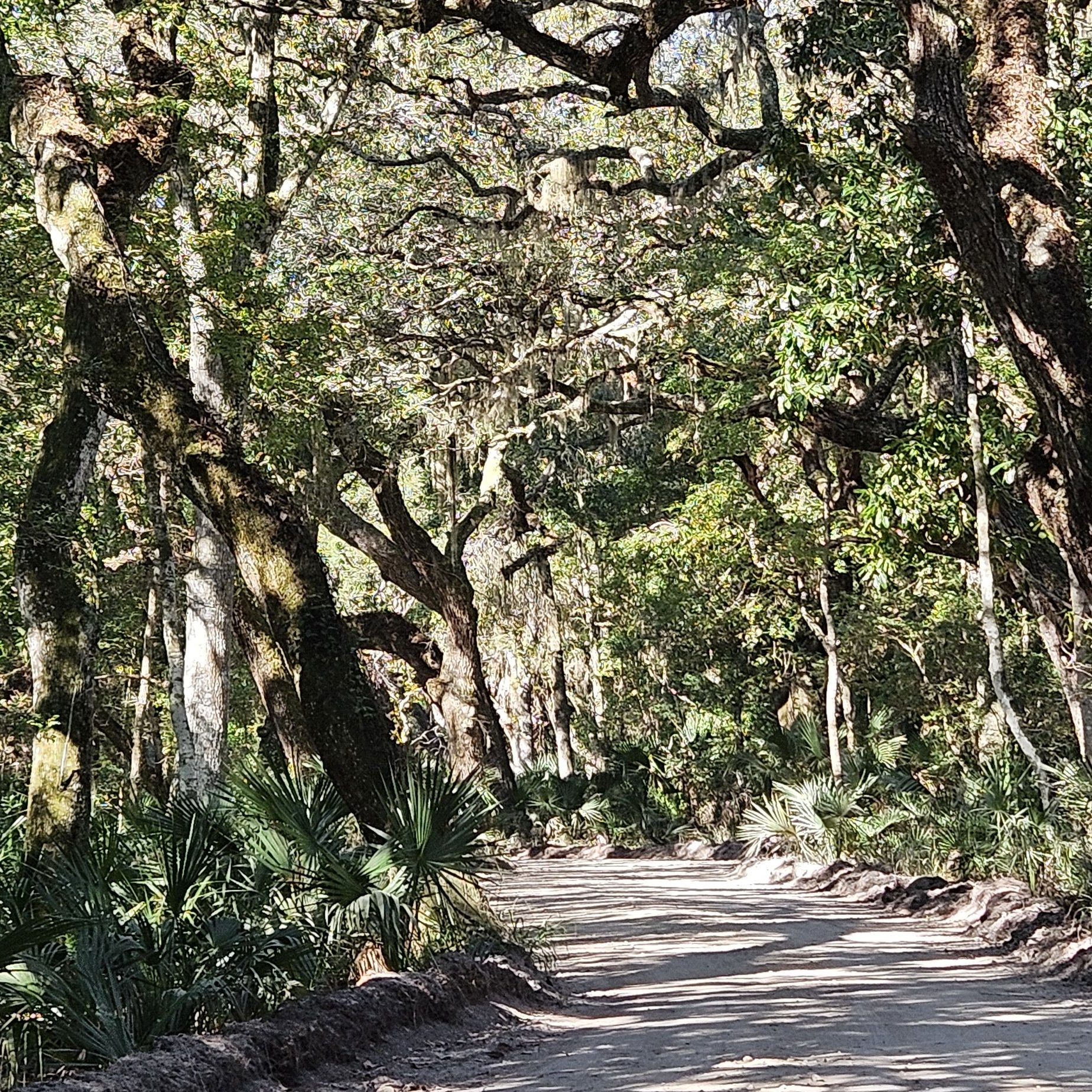
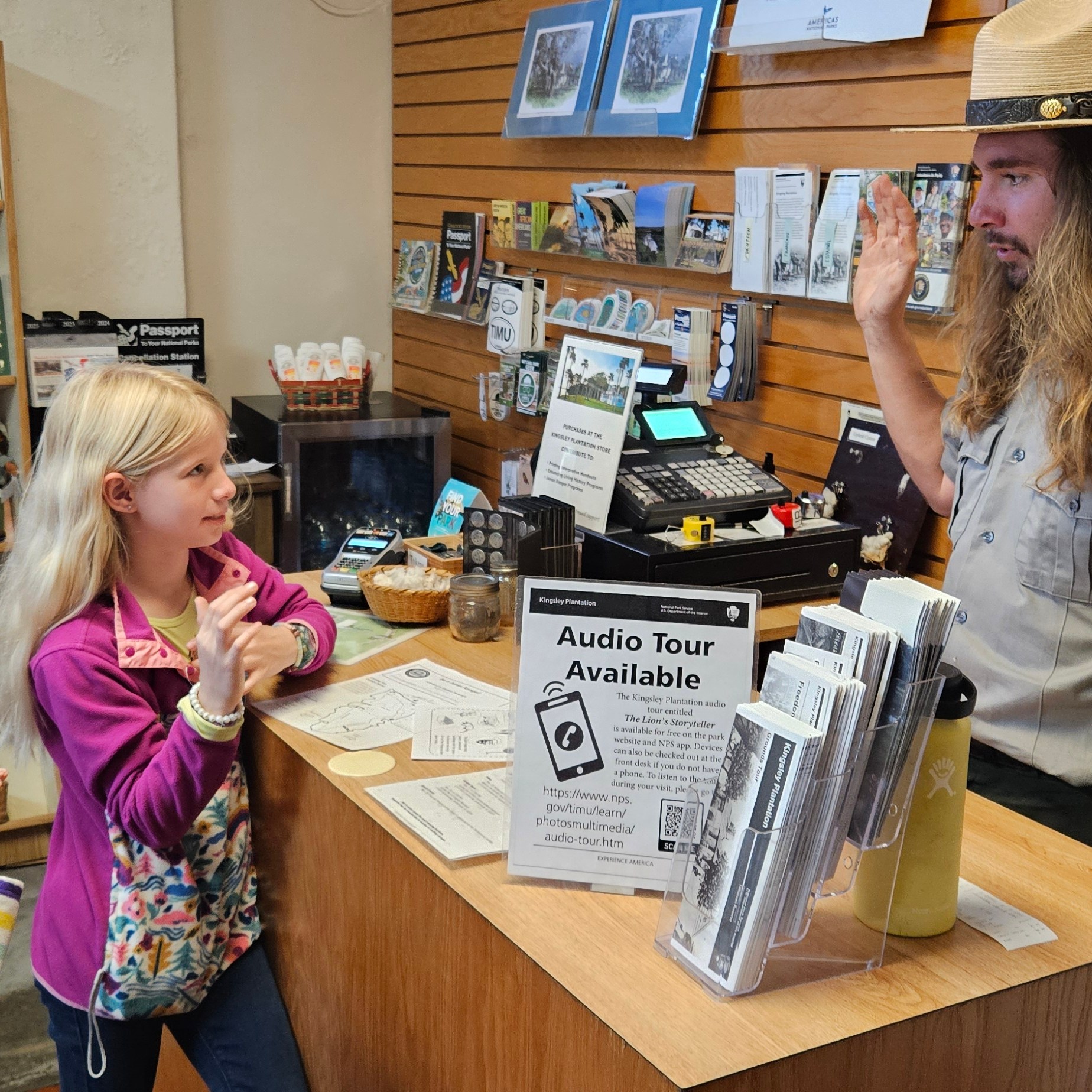
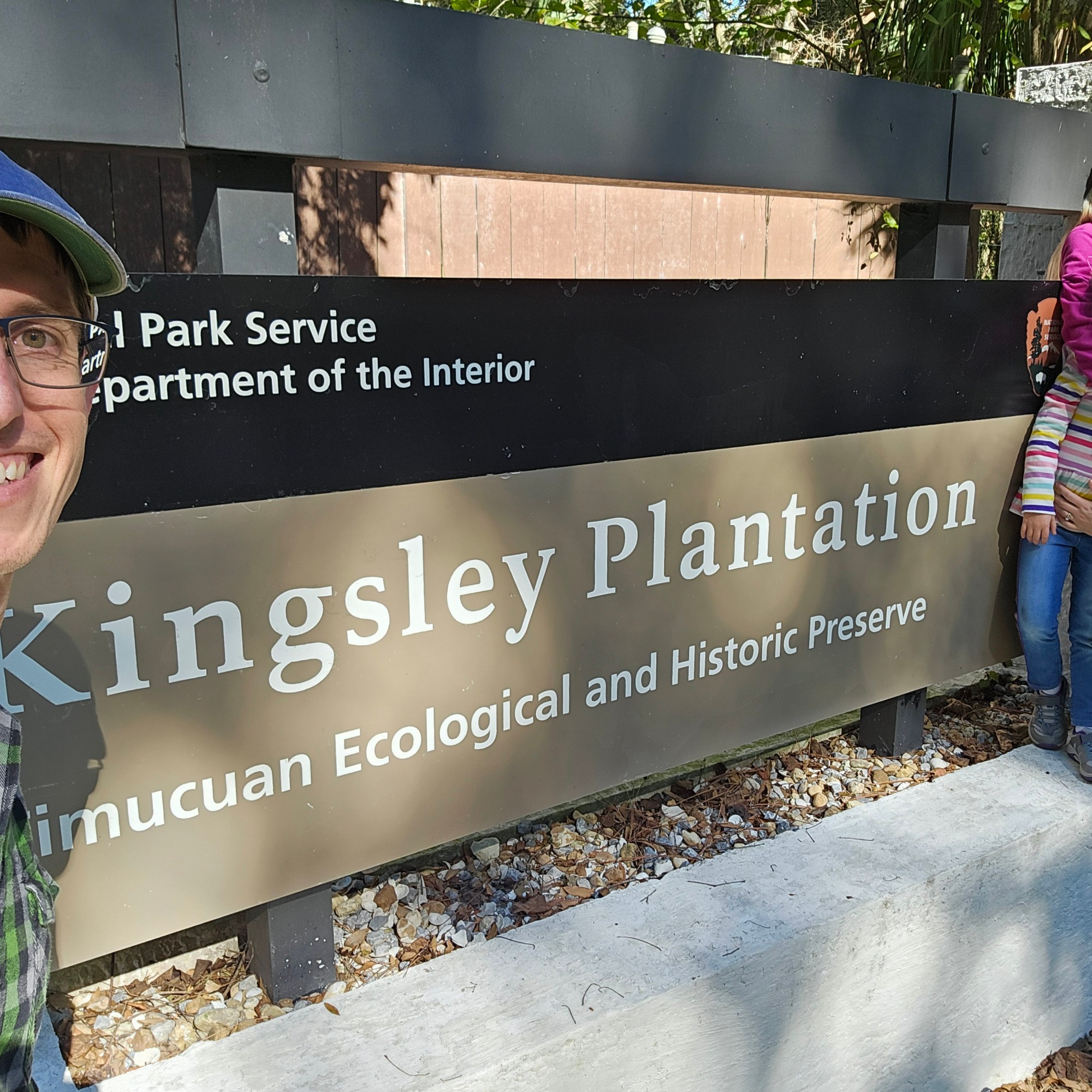
Our next stop was at the Kingsley Plantation. This site, reached today by a narrow, winding path through the dense vegetation (and I just thought that Hunting Island was like a jungle…this definitely took the cake!), finally opened up to the oldest surviving plantation home in Florida, built in the late 1700s. The audio tour (which is quite good, though I actually haven’t finished listening to it) had us think about the fact that the river in front of the house was actually its ‘driveway’. Considering the road we took, I can imagine that an arrival via water was much preferred.
The site gets its name from Zephaniah Kingsley, a British man who came to America in the late 1700s. I want to learn more of his biography, as it seems that he held some interesting views towards slavery. He was married to a Senegalese-born woman, whom he had purchased as a slave in Havana, Cuba (part of Spain, as was Florida during this time). His wife ended up owning slaves herself. Additionally, Zephaniah ended up moving to Haiti once Florida was transferred to the US, due in part, I believed, to his attitudes towards Blacks. (Haiti had recently gone through a revolution, ending as the first sovereign Black state.) (Also, remember ‘Beach Lady’ from the sand dune NaNa? Turns out she’s the great-great-granddaughter of Zephaniah Kingsley.)
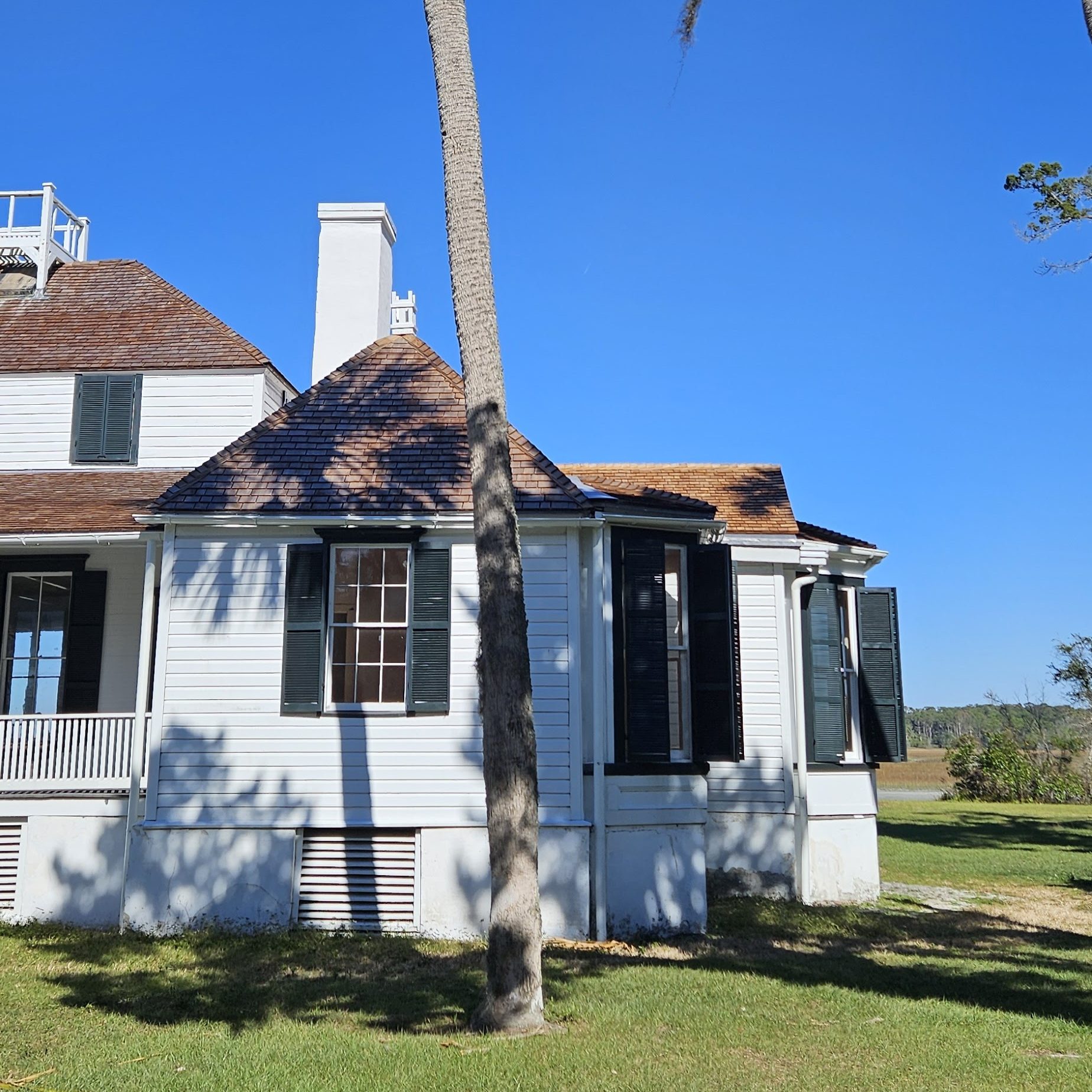
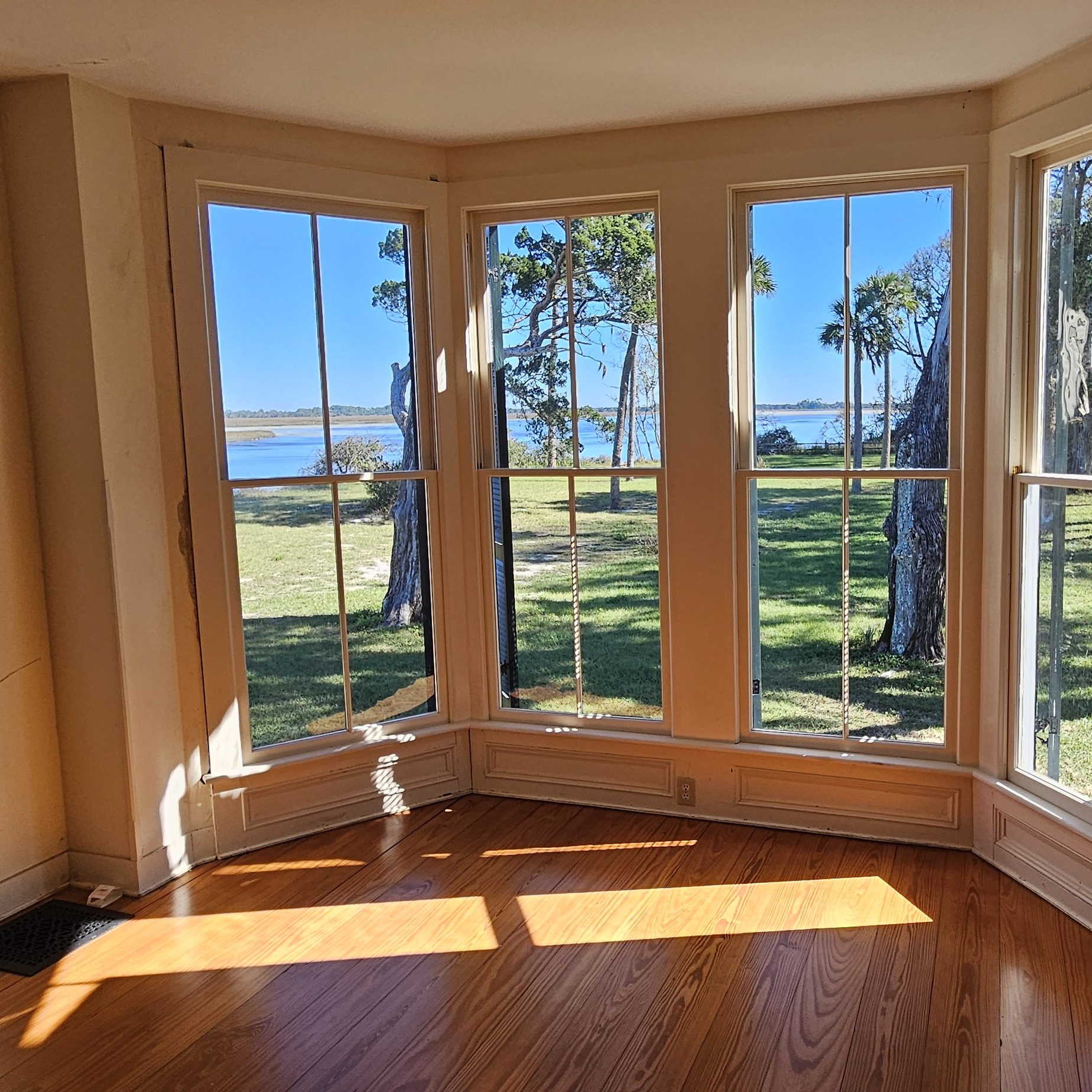
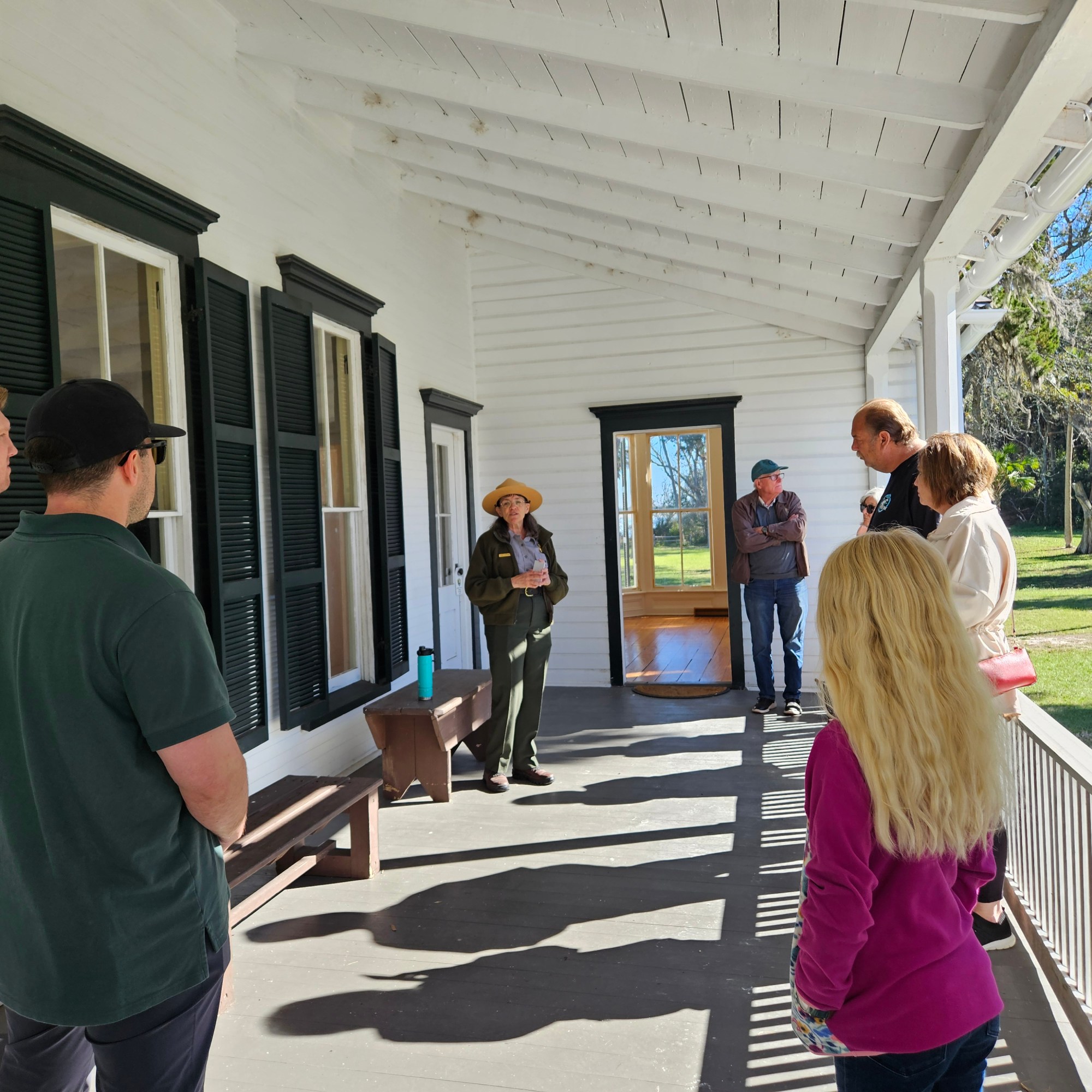
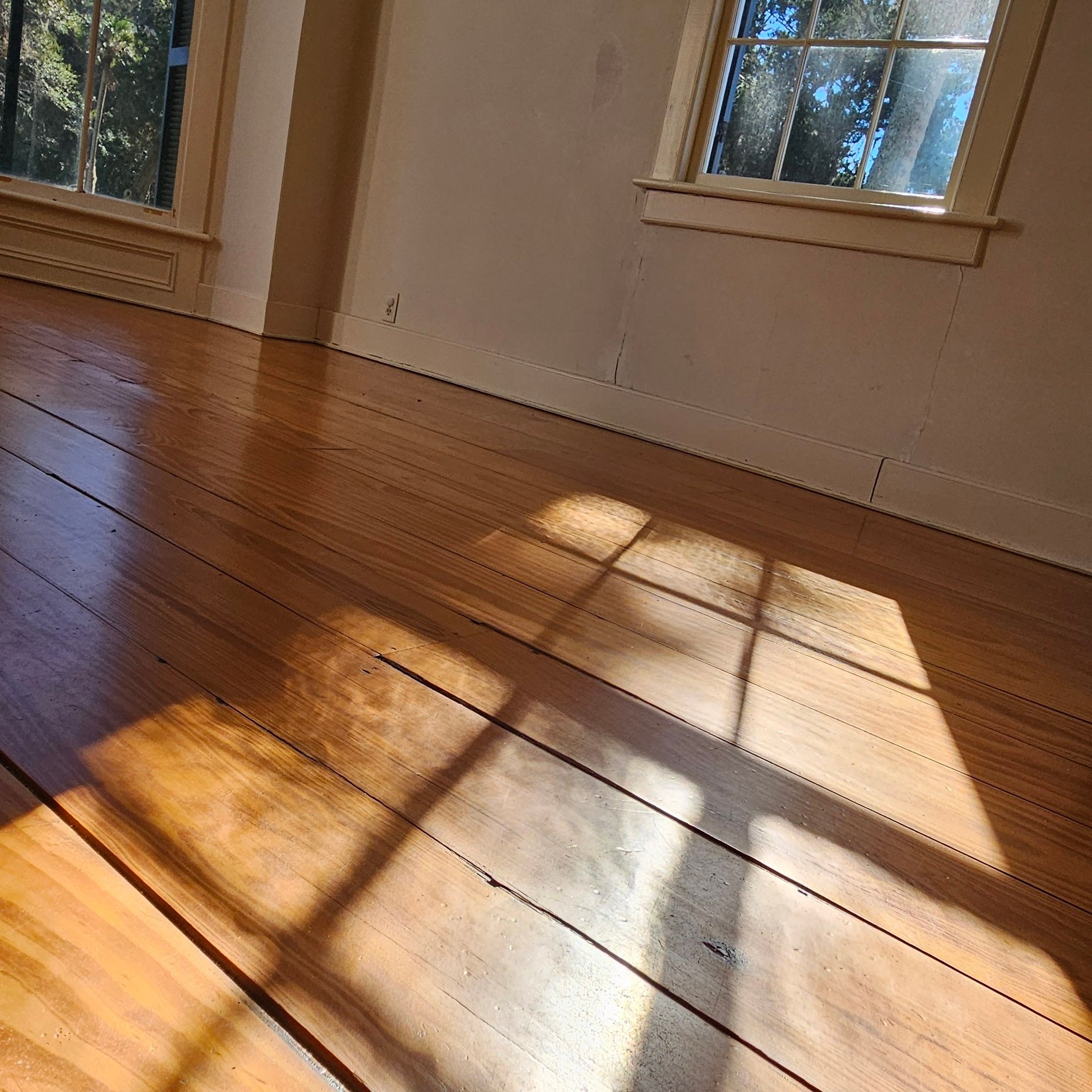
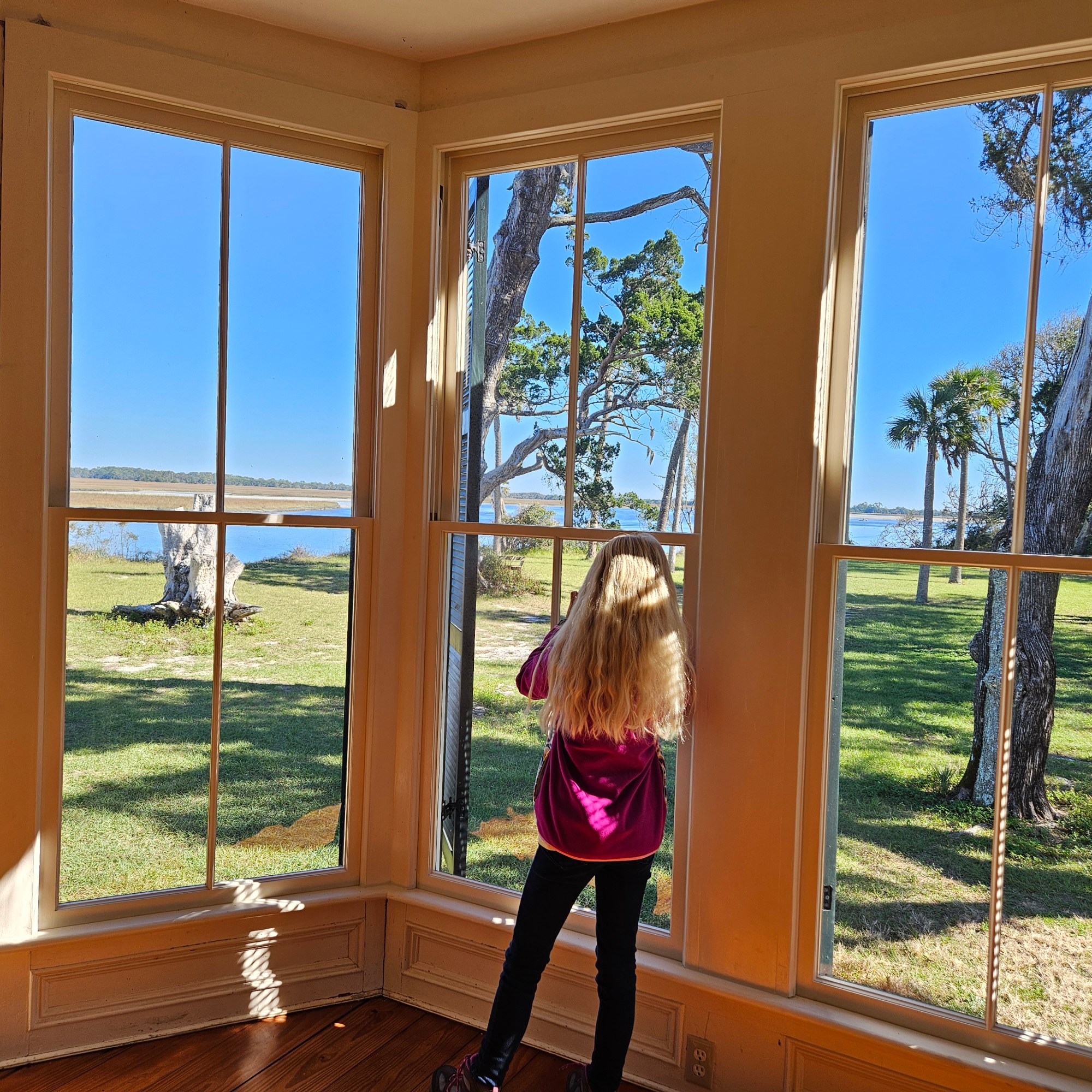
We listened to a ranger give a brief talk about the property, then we explored the main home. The floors were original, and they were beautiful, especially with light coming in from the huge windows. Curiously, the main staircase of the house, put in during the nineteenth or twentieth century (I can’t remember) during renovations, was actually a kit purchased from a Sears Roebuck catalog back in the day.
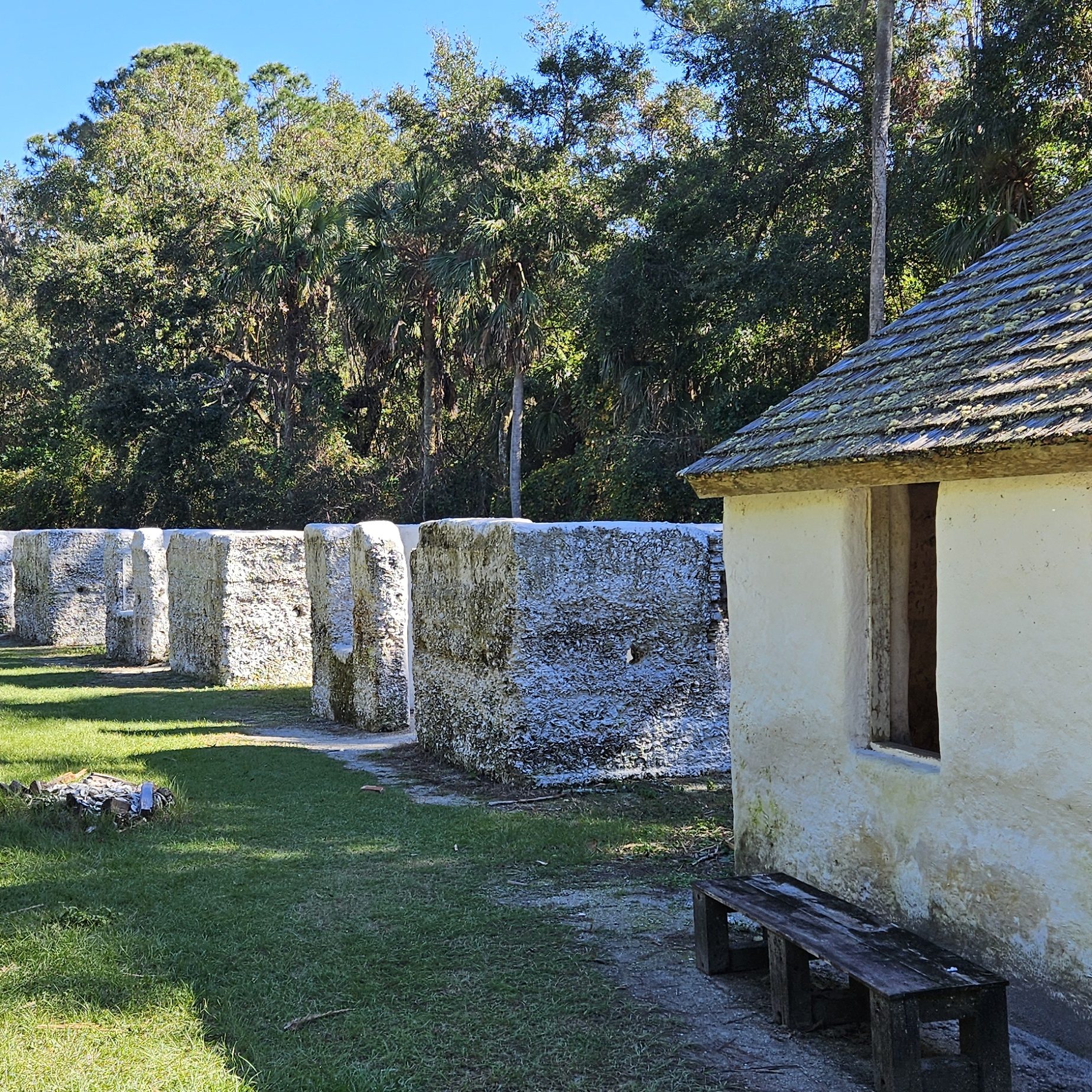
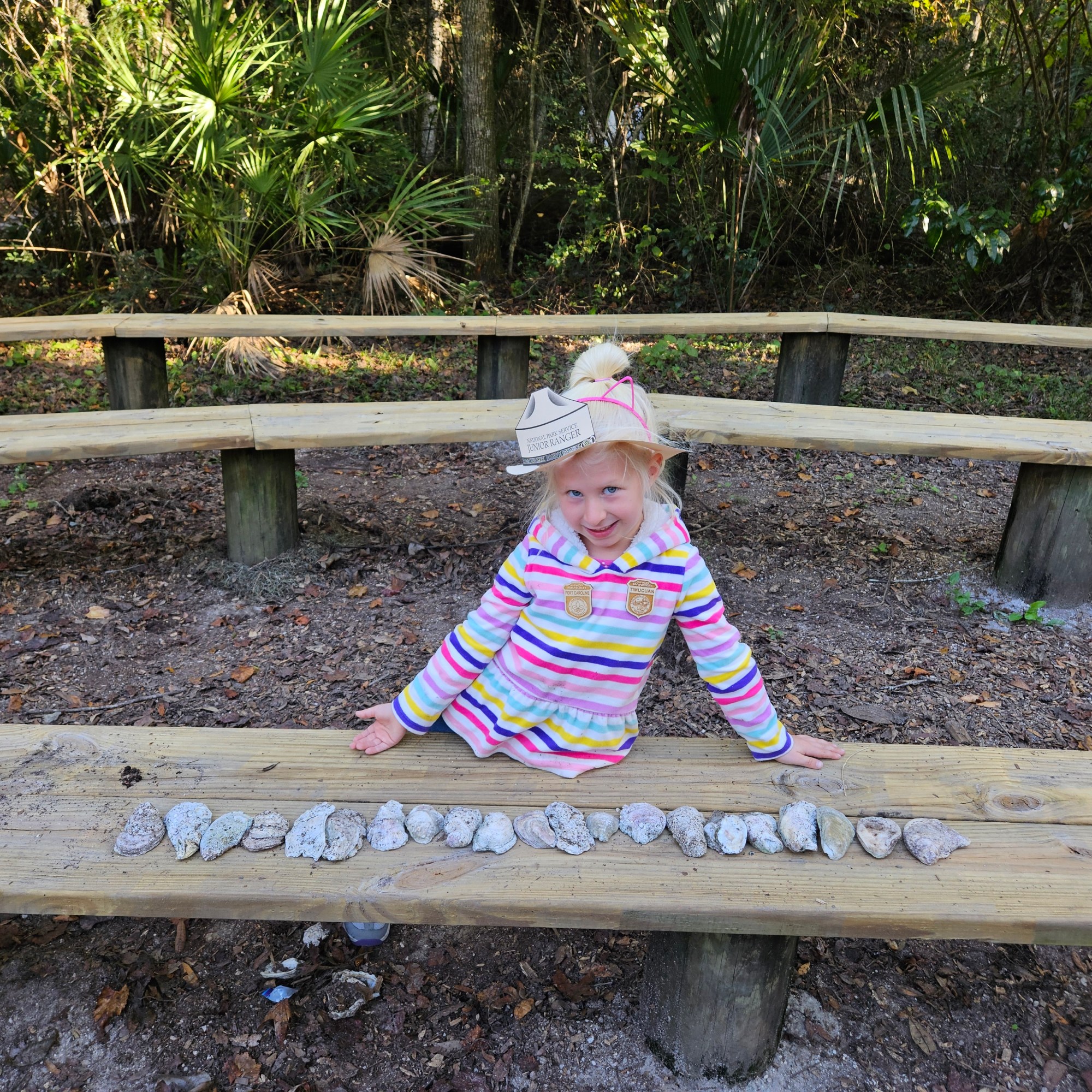
We ate a picnic lunch on the grounds, wandered a bit (including seeing the remains of the slave quarters, built out of tabby), finished up their Junior Ranger pamphlet, and eventually headed out.
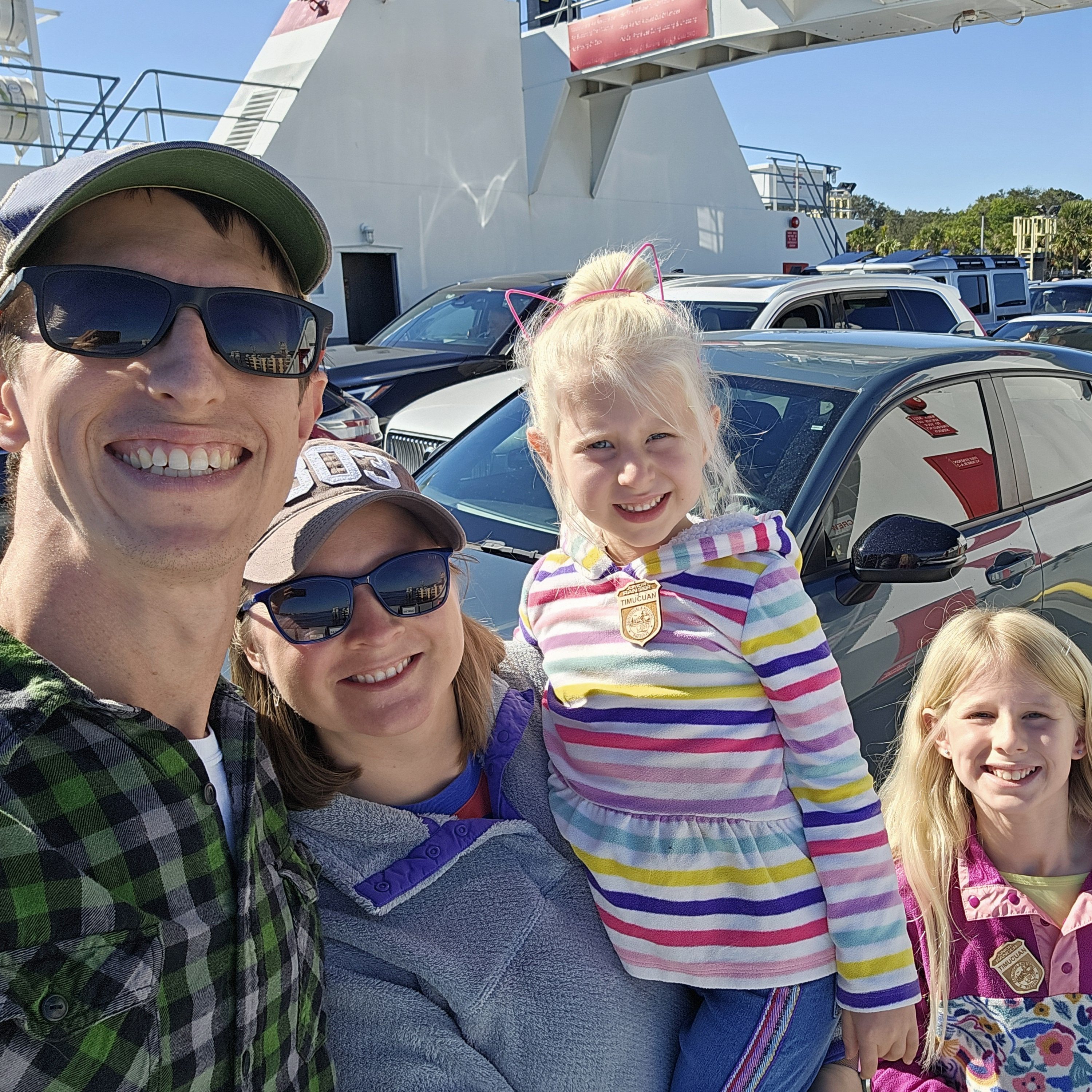
We then crossed the St. John’s River in a new way for the girls…ferry! The boat was called the Jean Ribault, a name which will become more important in my next post. Teagan spotted dolphins as we crossed, which made her day.
We then drove to another site (see the next post) before eventually ending up at the visitors center, which actually serves as the main VC for both Timucuan and Fort Caroline National Memorial.
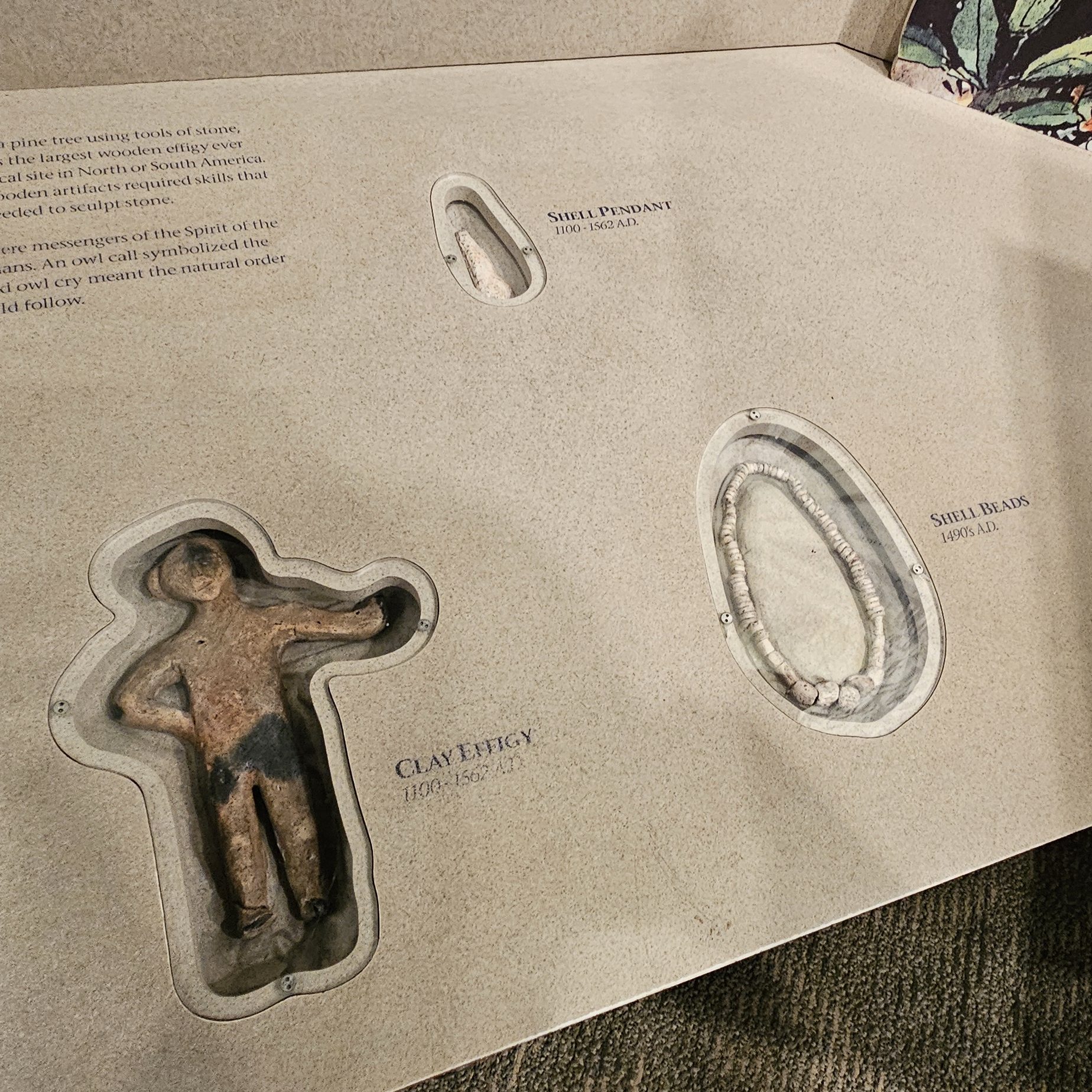
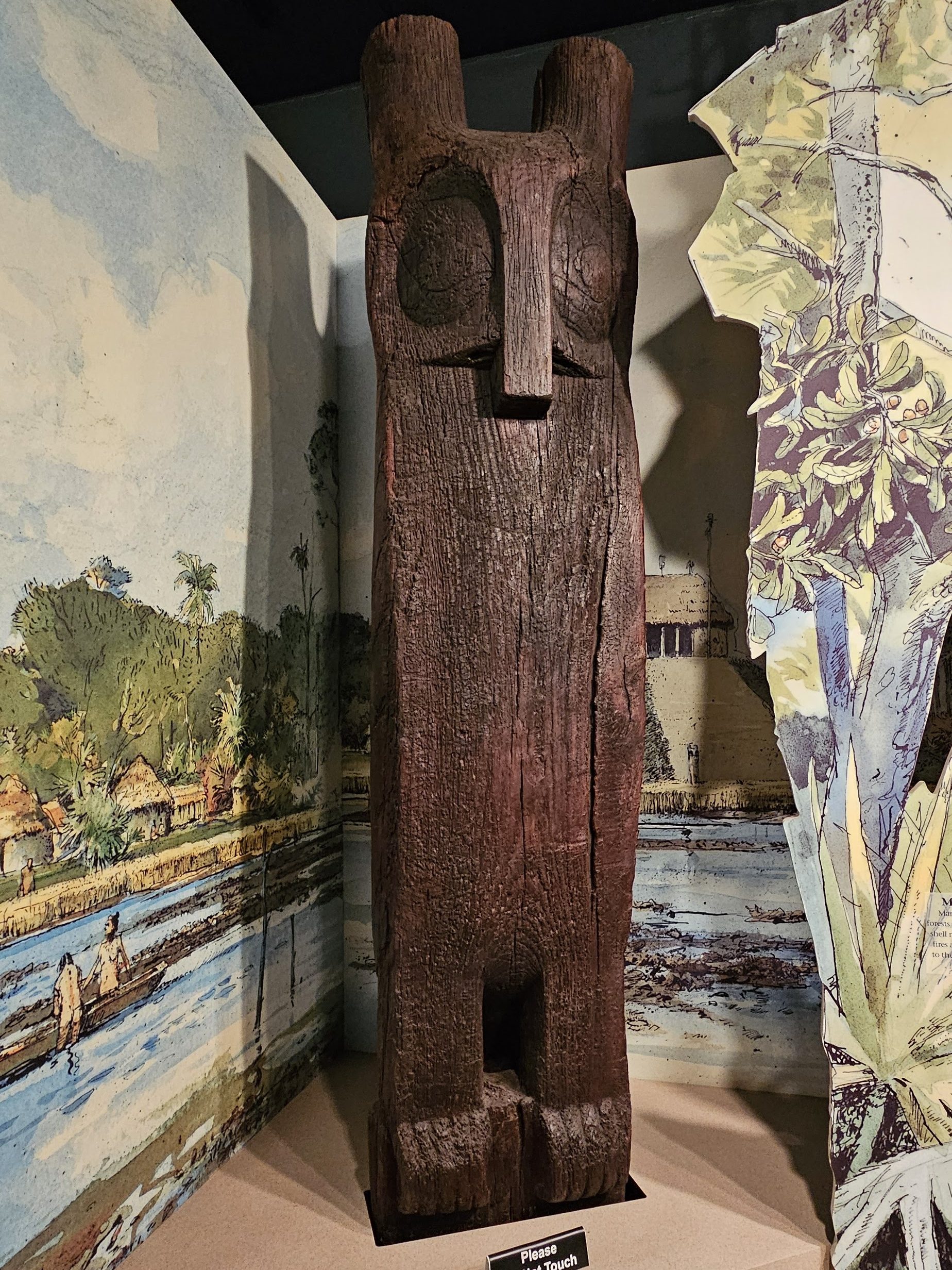
The VC has a couple of great pre-Columbian artifacts from the Timucua people, including the largest wooden effigy ever recovered in North or South America. There was also a small clay effigy which was quite cool, and a 500+ year old canoe. The book store had a Timucuan grammar book, which probably exists due to the interactions the Timucua had with the Europeans and the Europeans subsequently recording their research.
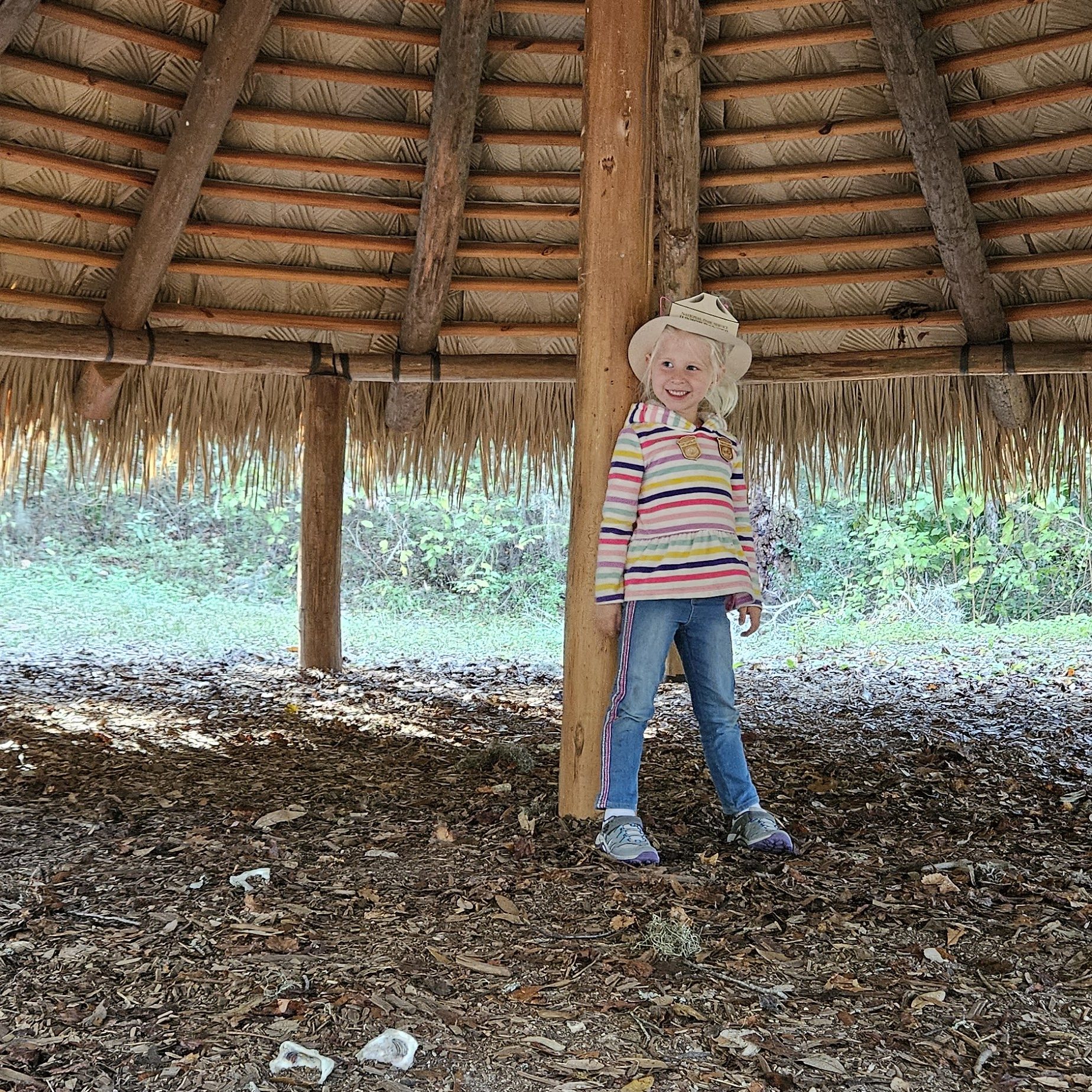
A ranger gave a brief talk overlooking the St. John’s River, and we caught glimpses of a nearby osprey and some dolphins in the river. Down a short trail, they have some example Timucuan dwellings, which Sage enjoyed playing in.
Keep reading in my next post to learn more about Fort Caroline, the other site here, and what makes it important. This was a great park to visit! Click the pictures below to see more.
 Beavers in the Park