The Beavers enjoyed one last breakfast at the Kingsland Hampton Inn before packing up and heading down the road. After visiting Cumberland Island yesterday, our goal today was to explore the historical sites in Saint Augustine.
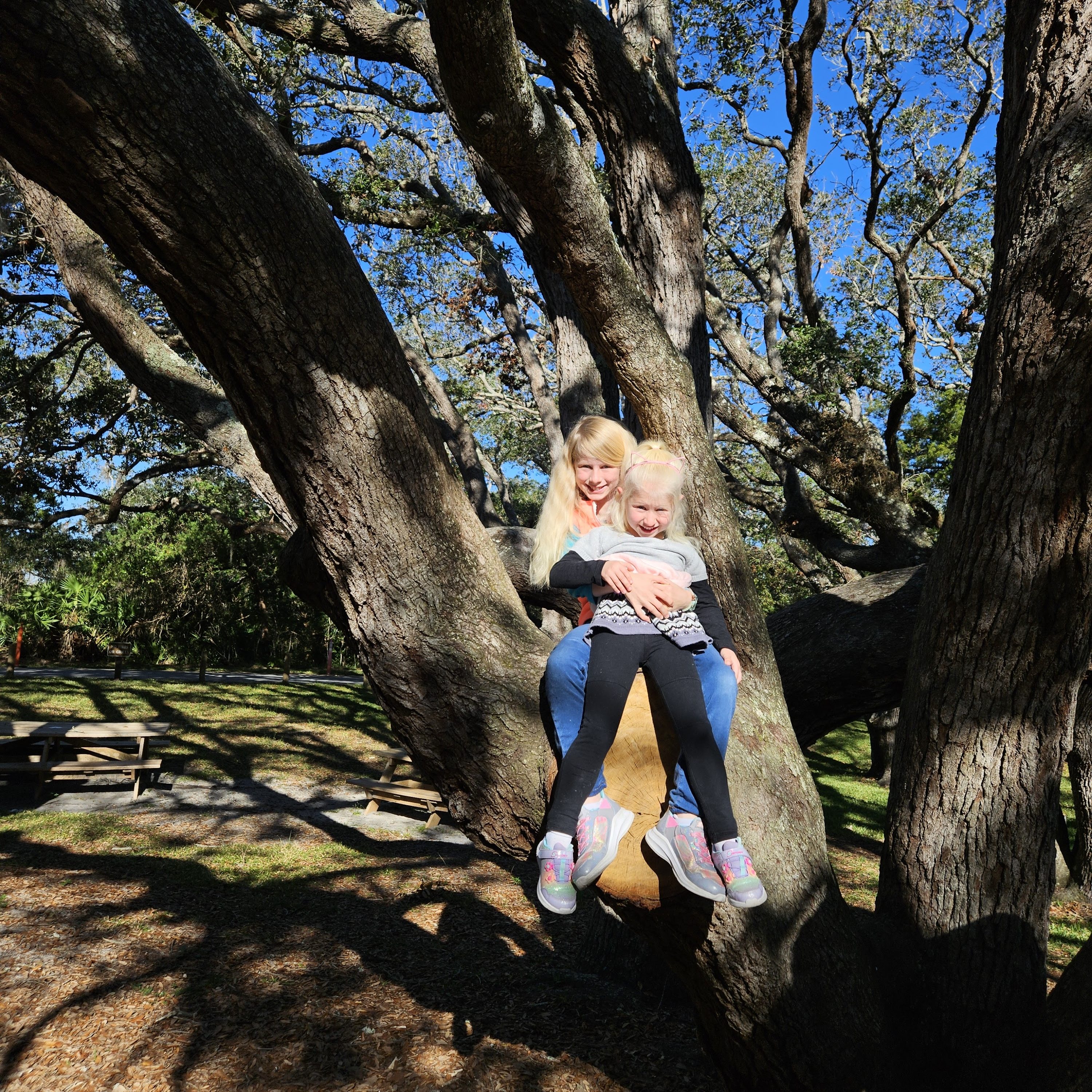
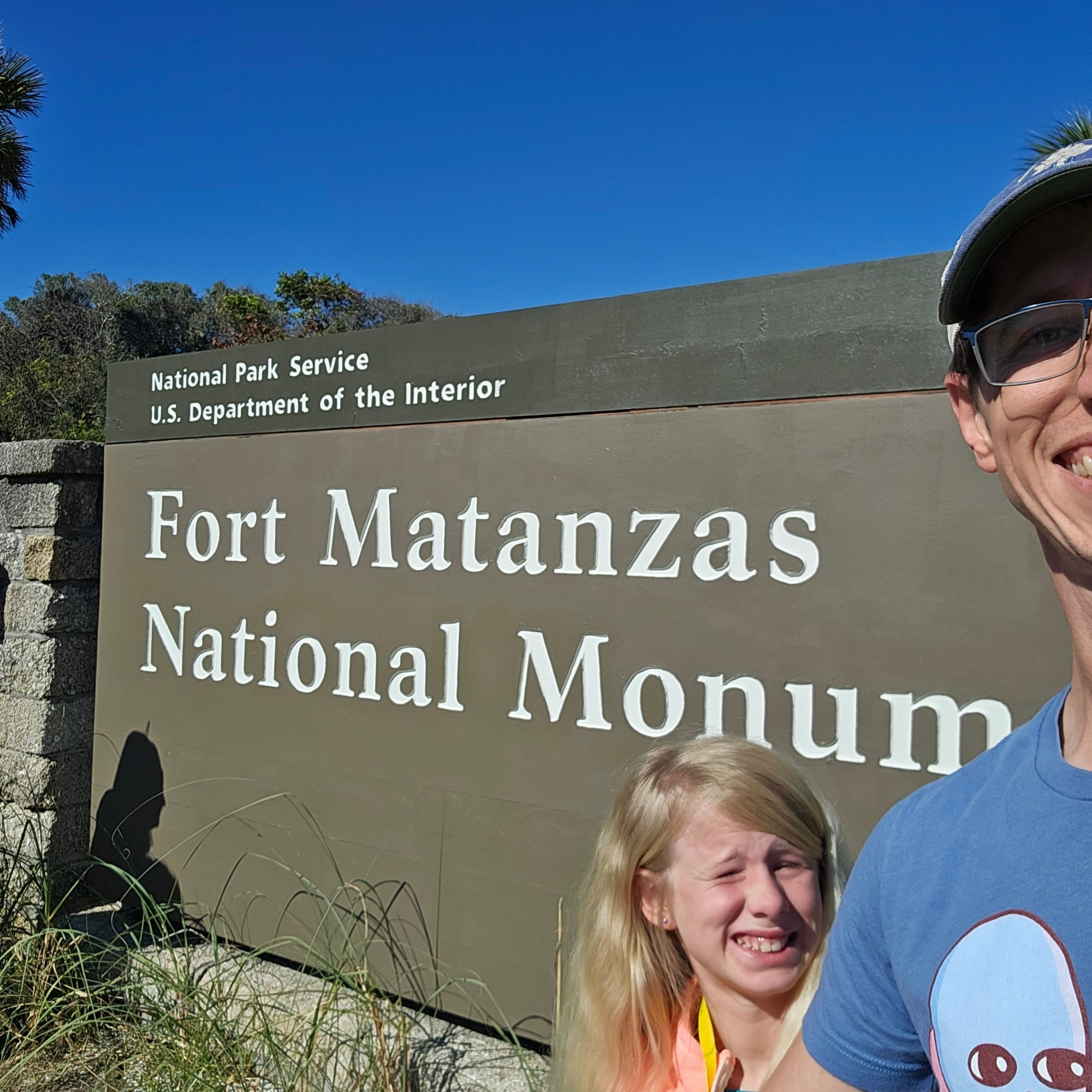
Our first stop was Fort Matanzas National Monument. If you read about our visit to Fort Caroline, you’ll remember that the French, under Jean Ribault, had created a settlement in the early 1560s along what is now the St. John’s River in Jacksonville. Spain, having already made their claim to the land, decided to do something about it in 1565.
Pedro Menéndez and his men attacked Fort Caroline, and then they turned southward to intercept the French who had attempted to sack Saint Augustine. The French had apparently gotten blown off course by a hurricane, and the Spanish finally caught up with them at what we now know as Matanzas Inlet. Why is it called Matanzas Inlet? Because that’s the Spanish word for ‘slaughter’, and that’s what the Spanish did to the French.
The inlet was a strategic site for the Spanish, as the Matanzas River extends from here all the way to Saint Augustine, providing another opportunity for would-be belligerents to reach the town. So, they built various watchtowers or fortifications there for protection.
In 1740, the construction of the fort we can see today began, finishing a couple of years later. It is built out of coquina, which is a rock composed of fossilized shells. (And, wouldn’t you know, coquina is from the Spanish word ‘cockle’, a type of shell.) (P.S. To tie this back to an earlier adventure, we first saw coquina construction in the building of the visitors center at Poinsett State Park back in SC, which is an inland site, but the coquina remains from when the coastline used to extend up to there.)
Apparently, the fort only had to fire its cannon in battle once–in 1742, when the British decided to show up. The British retreated, however, without having fired back. This was part of the larger conflict between Britain and Spain known as the War of Jenkins’ Ear. The attack by the Spanish on the British at Fort Frederica earlier that year likewise was another part.
There’s more to the story (Britain taking Florida between 1763 and 1783, then giving it back to Spain, before being handed to the USA in 1819), but this at least tells some of the initial parts.
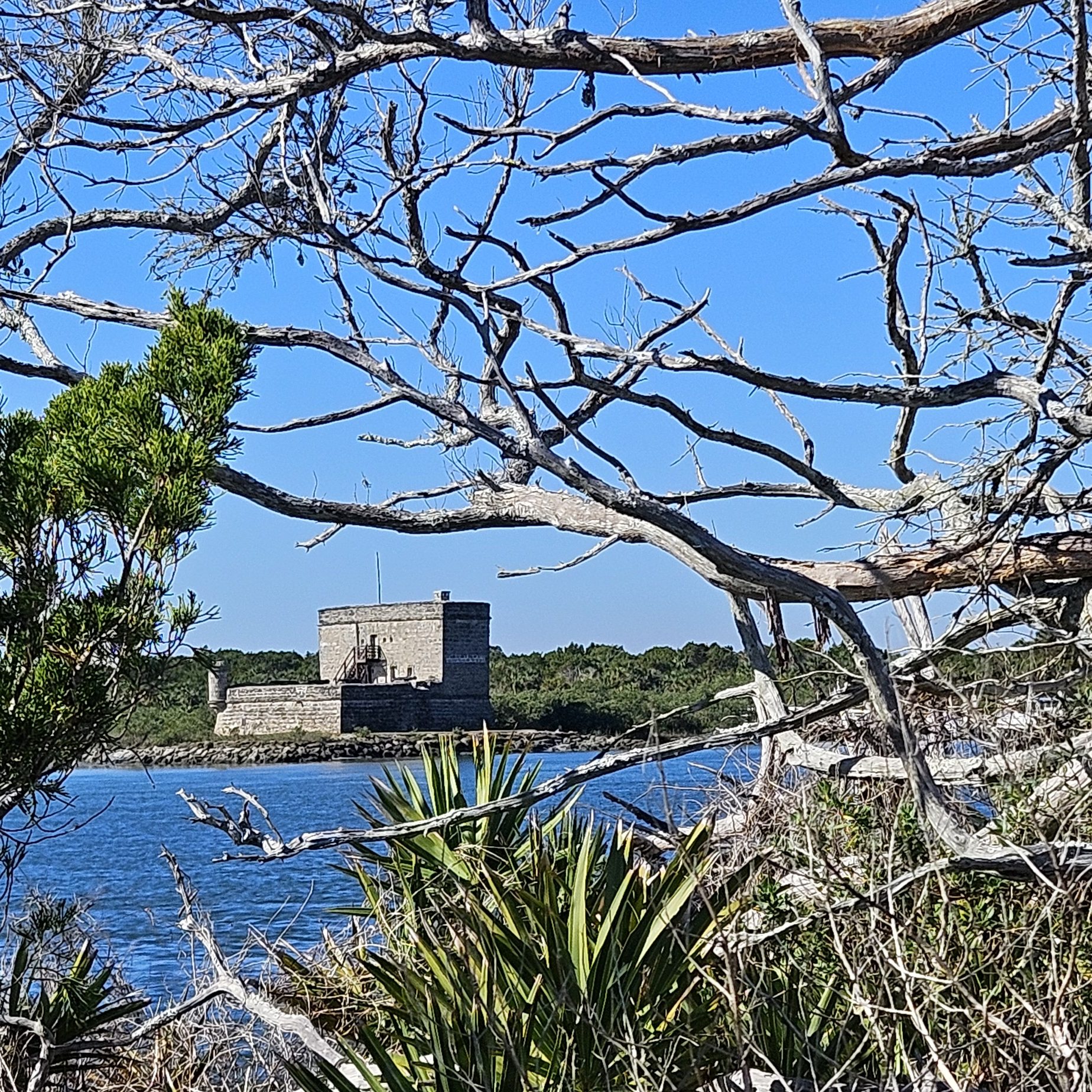
We unfortunately didn’t get a chance to visit the actual fort. You have to take a ferry across the Matanzas Inlet, but the recent hurricanes did damage to the dock. We were able to see the fort, though, from across the inlet.
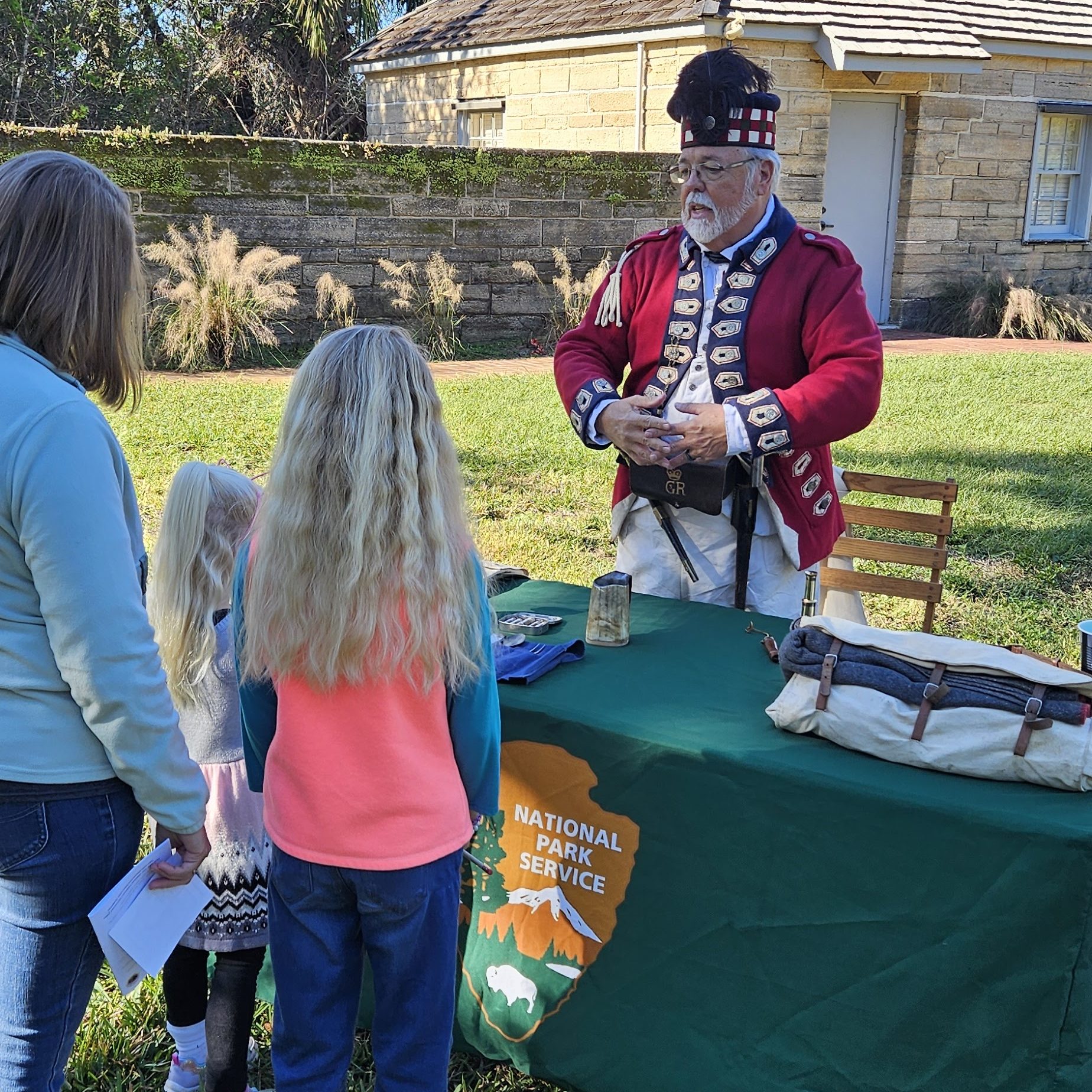
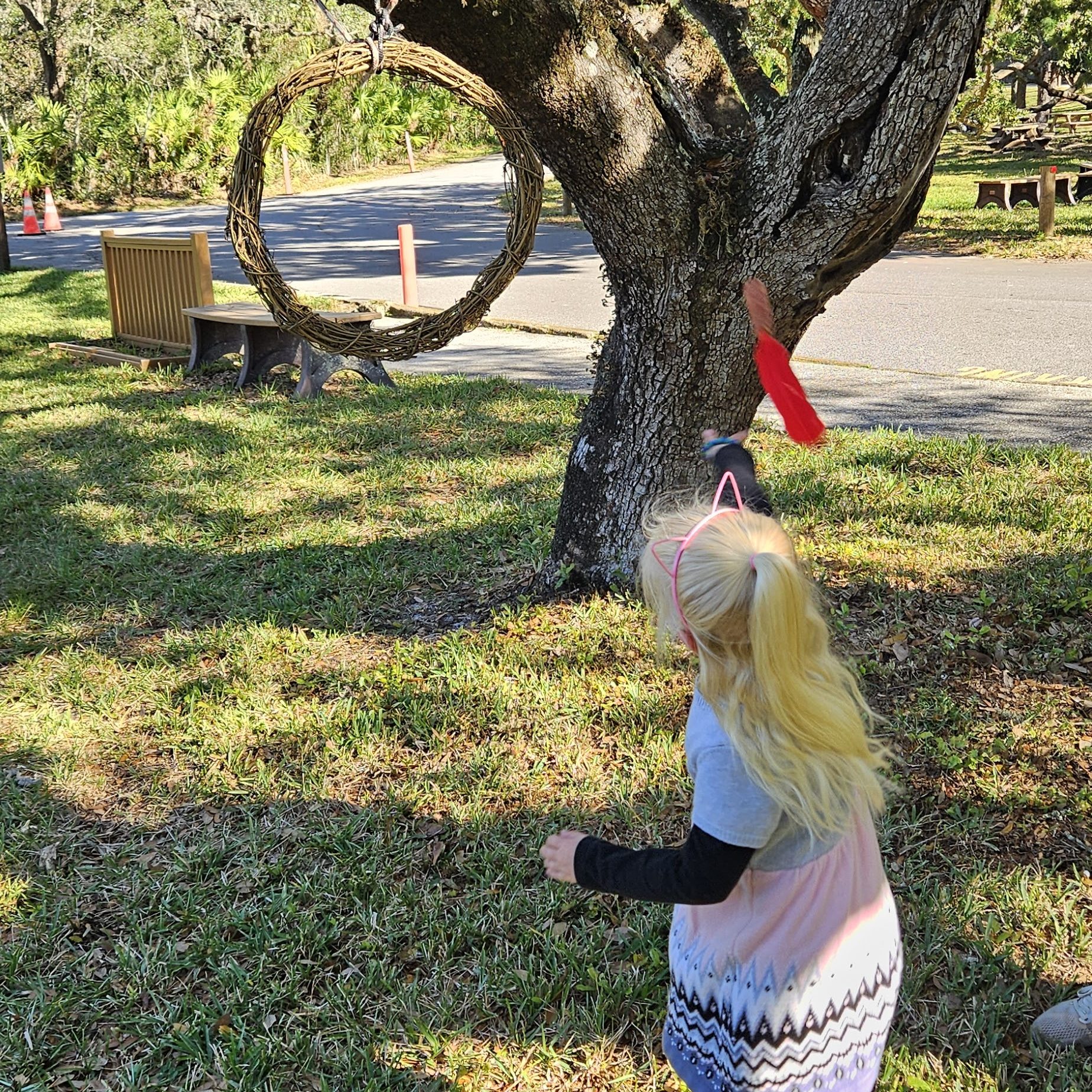
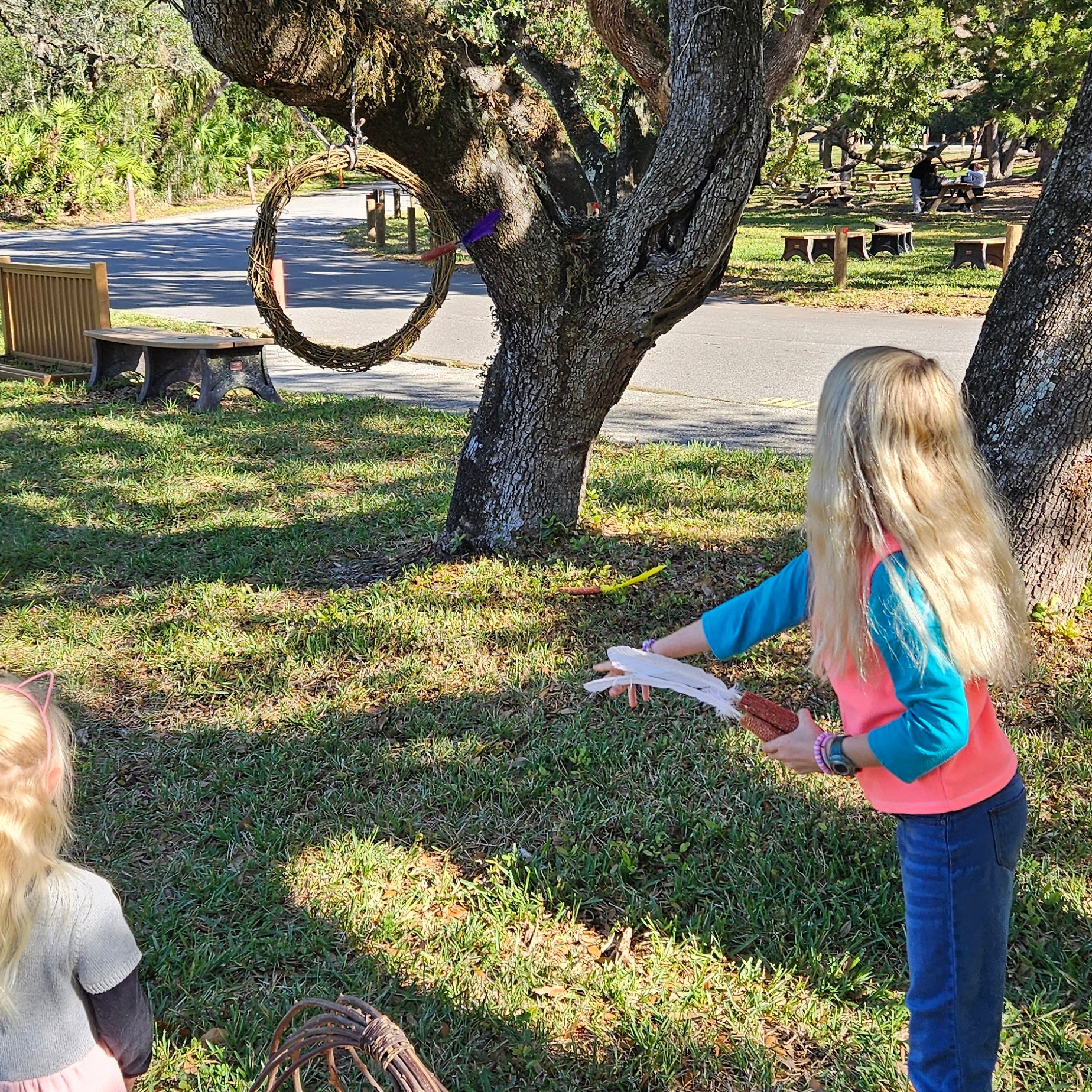
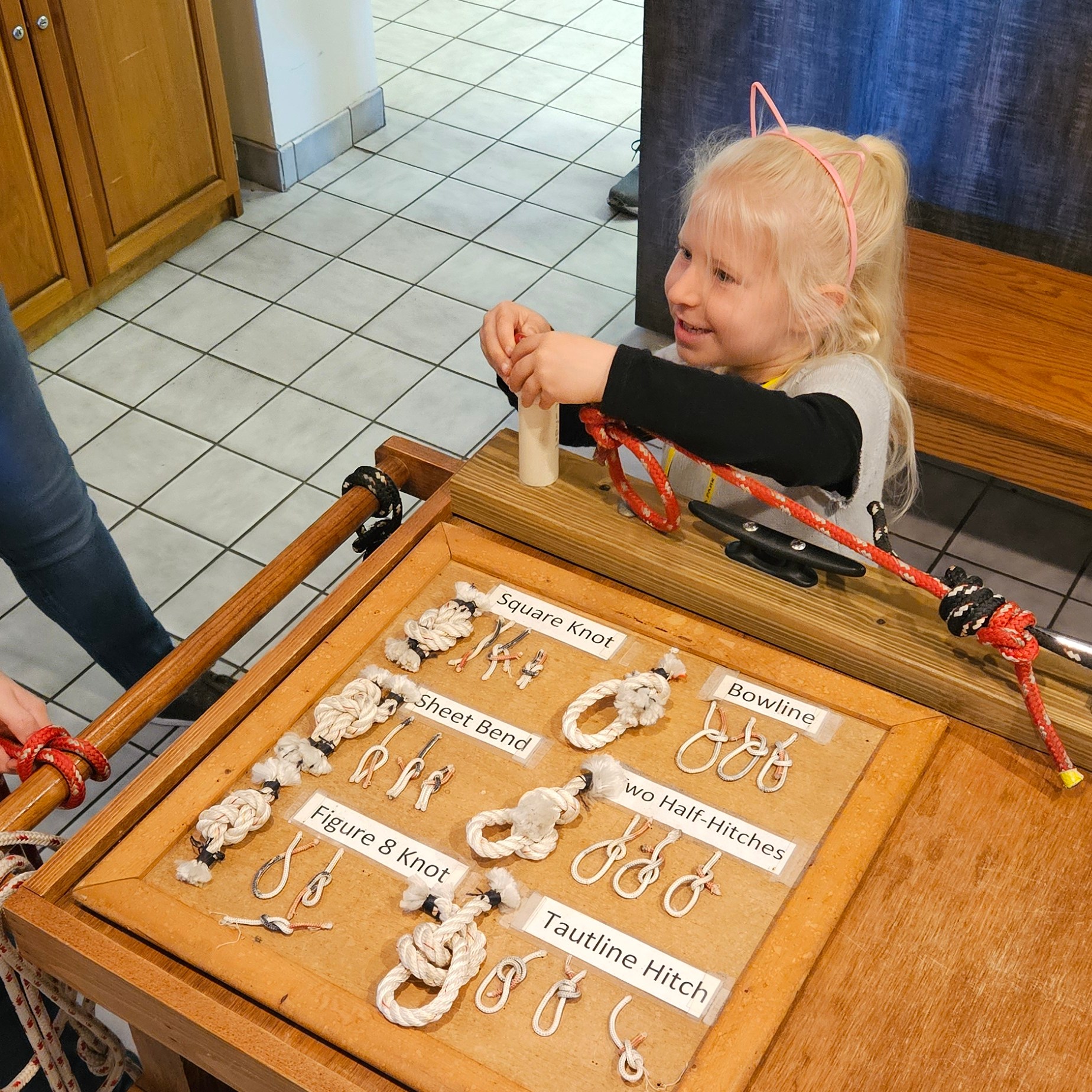
We spent our time around the visitors center, where they were having a Junior Ranger Day. They had someone spinning wool fibers into thread, someone dressed as a British soldier, someone telling about the importance of flags, and another illustrating a type of game that the Timucua people might have played to help their throwing arm. The girls practiced it, throwing a dried corn cob with a feather attached through a hoop.
We went on a very short nature walk as well (so many osprey!), but turned back to finish the Junior Ranger book. The girls got their badges, and we looked around the very small visitors center. From there, we headed up the coastline towards Saint Augustine itself to continue our education of early Spanish roots in America at Castillo de San Marcos.
 Beavers in the Park